

Rajesh Khanna is widely regarded as the first superstar of Hindi cinema. The title reflects not just his success but also the unprecedented level of fan frenzy and box-office dominance he achieved during the late 1960s and early 1970s.
There is some debate around this distinction. Admirers of Ashok Kumar, Dilip Kumar, and Raj Kapoor often argue that these legendary figures were superstars in their own eras. Each of them shaped Hindi cinema in powerful ways and commanded immense popularity.
However, Rajesh Khanna’s phenomenon was different in scale and intensity. His arrival marked a shift in how stardom was experienced in India. At the peak of his career, he delivered a record run of consecutive hit films. The craze surrounding him was unlike anything seen before. Fans gathered outside his home. Letters arrived written in blood. Young women reportedly married his photographs. His screen presence translated into a cultural movement.
Rajesh Khanna Biography
Rajesh Khanna’s Early Life
Rajesh Khanna was born on 29 December 1942 as Jatin Khanna to a railway contractor, Nand Lal Khanna, and his wife, Chandrani Khanna. His family moved from Lahore to Amritsar, then to Bombay.
His father had two more brothers named Munni Lal and Chunni Lal. Nand Lal had four daughters and two sons, while his brother Chunni Lal had no children. So Chunni Lal and his wife Leelawati adopted Jatin at a very young age.
He attended St. Sebastian’s Goan High School, where he met Ravi Kapoor, aka Jeetendra. He then moved to Wadia College in Poona to complete his B. A, and after two years, he returned to K.C College, Bombay.
He was drawn to acting from childhood and often participated in stage dramas in his Mohalla, at school, and at college.
Struggle and Film Career
After returning to Bombay, Khanna joined the theatre and, until then, was not so keen to join films. In the meantime, he met Anju Mahendru, with whom he developed a love relationship.
Jatin was not interested in films until a chance meeting with Geeta Bali changed his mind. Khanna told a magazine how he met Geeta Bali, who had her production office in the same building where Khanna was rehearsing for one of his plays.
Geeta Bali asked him why he hadn’t tried for movies and offered him a role in her next film,’Ek Chadar Maili Si’. But Geeta Bali died soon due to smallpox, and the project was shelved. The movie was later made in 1986.
Although Rajesh Khanna’s film career had not yet begun, he was now determined to start one. After the incident, he gave many auditions. There was something special about Rajesh Khanna: in those days, when most strugglers were finding it hard to even get proper food, he was visiting studios in his sports car for auditions.
Though Rajesh Khanna’s parents supported him and provided him with the financial cushion he needed, his father gave him a deadline.
The real change came when he entered the talent hunt organised by Filmfare and United Producers. The panel of producers consisted of B.R. Chopra, Bimal Roy, Devendra Goel, F.C. Mehra, G.P. Sippy, H.S. Rawail, Hemant Kumar, Nasir Husain, J. Om Prakash, Mohan Saigal, Shakti Samanta, and Subodh Mukherji.
Those were huge names in Hindi cinema then, and the winner was supposed to get a lead role in all the producers’ movies.
Not only was his application shortlisted, but he was also among the six finalists of the contest. Though there were six finalists in the contest for the final spot, the real contest was between two extremely good-looking boys: Rajesh Khanna and Vinod Mehra.
Rajesh Khanna beat Vinod Mehra by one point and was crowned the winner. Farida Jalal was crowned as the winner in the ladies’ part while 15-year-old Leena Chandavarkar finished as the runner-up.
Though Khanna had 12 films in his hand as a result of winning the talent hunt, practically no producer had a ready script for a newcomer at that time. In the meantime, Khanna signed Chetan Anand’s ‘Aakhri Khat’ opposite Indrani Mukherjee.
The low-budget movie released in 1966 did not make it big at the box office.
His next two movies, Raaz and Baharon Ke Sapne, did not do that well at the box office. Both movies were part of his talent hunt contract.
Then came 1969, a year Rajesh Khanna never forgot, nor did Hindi film lovers. Shakti Samantha’s ‘Aradhana’ was released and overnight Rajesh Khanna became India’s first superstar. The film achieved tremendous success at the box office.
Aradhana initially had a different story, and Rajesh Khanna was supposed to play the father’s role. Samantha was looking for a second actor for the son’s role. But at the last moment, the story was changed because Samantha felt the climax matched ‘Ek Shrimaan Ek Shrimati‘.
After the change in the story, Rajesh Khanna played the double role. Though Sakti Samantha wanted Shaker-Jaikishan to direct the music, he could manage S.D Burman and R.D Burman.
Subash Ghai also shared the screen with Rajesh Khanna in Aradhana; he was also part of the ‘Talent Hunt’ organised by Filmfare.
After this, Rajesh Khanna gave 15 consecutive superhit films, a record that still stands.
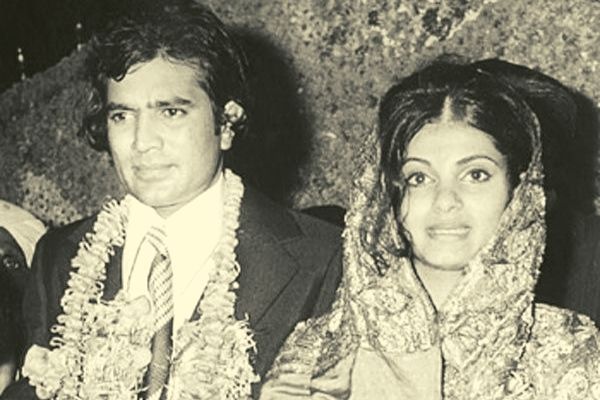
Khanna gained so much popularity that Film Magazines reported that girls used to put car dust on their heads, and some even married his photo. He used to get mobbed wherever he went, and some female fans sent him letters written in blood.
Rajesh Khanna also bought the bungalow of Rajendra Kumar which he later renamed as ‘Ashirwad’. He lived there till his death.
| Year | Movie Title | Director | Producer | Budget (INR, Approx.) | Box Office Collection (INR, Approx.) | Opposite Actress | Notes |
|---|---|---|---|---|---|---|---|
| 1966 | Aakhri Khat | Chetan Anand | Himalaya Films | 3 lakh (est.) | 20 lakh (moderate) | Indrani Mukherjee | Debut film; India’s Oscar entry |
| 1967 | Raaz | Ravindra Dave | G.P. Sippy | 4 lakh (est.) | 25 lakh (hit) | Babita | Talent contest prize film |
| 1967 | Aurat | S.S. Balan | S.S. Balan | 3.5 lakh (est.) | 30 lakh (hit) | Padmini | Early success |
| 1969 | Aradhana | Shakti Samanta | Shakti Samanta | 50 lakh (est.) | 7 crore (blockbuster) | Sharmila Tagore | Superstardom begins; dual role |
| 1969 | Ittefaq | Yash Chopra | B.R. Chopra | 50 lakh (est.) | 1.7 crore (hit) | Nanda | Songless thriller |
| 1969 | Do Raaste | Raj Khosla | Raj Khosla | 60 lakh (est.) | 6 crore (all-time blockbuster) | Mumtaz | UK gross: £100,000 |
| 1969 | Bandhan | Narendra Bedi | Narendra Bedi | 40 lakh (est.) | 2 crore (superhit) | Mumtaz | Romantic drama |
| 1969 | Doli | Adurthi Subba Rao | Adurthi Subba Rao | 45 lakh (est.) | 1.5 crore (hit) | Babita | Family drama |
| 1970 | The Train | Ravikant Nagaich | Ramesh Behl | 70 lakh (est.) | 3 crore (hit) | Nanda | Suspense thriller |
| 1970 | Sachaa Jhutha | Manmohan Desai | Manmohan Desai | 60 lakh (est.) | 5 crore (blockbuster) | Mumtaz | Dual role; comedy hit |
| 1970 | Kati Patang | Shakti Samanta | Shakti Samanta | 55 lakh (est.) | 4 crore (superhit) | Asha Parekh | Romantic drama |
| 1970 | Safar | Asit Sen | Mushir-Riaz | 50 lakh (est.) | 3 crore (hit) | Sharmila Tagore | Emotional classic |
| 1971 | Anand | Hrishikesh Mukherjee | Hrishikesh Mukherjee, N.C. Sippy | 40 lakh (est.) | 2 crore (hit) | Sumita Sanyal | Filmfare Best Actor; iconic role |
| 1971 | Haathi Mere Saathi | M.A. Thirumugham | Chinnappa Devar | 1 crore (est.) | 7 crore (blockbuster) | Tanuja | Highest grosser of 1971 |
| 1971 | Andaz | Ramesh Sippy | G.P. Sippy | 60 lakh (est.) | 3 crore (hit) | Hema Malini | Multi-starrer with Shammi Kapoor |
| 1971 | Maryada | Aravind Sen | Aravind Sen | 50 lakh (est.) | 2 crore (hit) | Mala Sinha | End of 15-hit streak |
| 1972 | Bawarchi | Hrishikesh Mukherjee | Hrishikesh Mukherjee, N.C. Sippy | 45 lakh (est.) | 1.5 crore (hit) | Jaya Bhaduri | Comedy classic |
| 1972 | Mere Jeevan Saathi | Ravikant Nagaich | Vinod Shah | 60 lakh (est.) | 2 crore (hit) | Tanuja | Romantic thriller |
| 1973 | Daag | Yash Chopra | Yash Chopra | 80 lakh (est.) | 4 crore (superhit) | Sharmila Tagore, Rakhee | Filmfare Best Actor; Yash debut as producer |
| 1974 | Aap Ki Kasam | J. Om Prakash | J. Om Prakash | 70 lakh (est.) | 3 crore (hit) | Mumtaz | Emotional drama |
| 1974 | Avishkaar | Basu Bhattacharya | Basu Bhattacharya | 50 lakh (est.) | 1 crore (average) | Sharmila Tagore | Critically acclaimed |
| 1976 | Mehbooba | Shakti Samanta | Shakti Samanta | 1 crore (est.) | 2 crore (average) | Hema Malini | Reincarnation drama |
| 1979 | Amardeep | K. Vijayan | K. Balaji | 1 crore (est.) | 2.5 crore (hit) | Shabana Azmi | Comeback hit |
| 1980 | Thodisi Bewafaii | Esmayeel Shroff | S.M. Sagar | 1.2 crore (est.) | 3 crore (hit) | Shabana Azmi | Emotional drama |
| 1983 | Souten | Saawan Kumar Tak | Saawan Kumar Tak | 1.5 crore (est.) | 4 crore (superhit) | Tina Munim | Major 1980s hit |
| 1985 | Aakhir Kyon? | J. Om Prakash | J. Om Prakash | 1.5 crore (est.) | 3 crore (hit) | Smita Patil | Family drama |
| 1991 | Ghar Parivaar | Mohanji Prasad | Mohanji Prasad | 2 crore (est.) | 1 crore (flop) | Rishi Kapoor (co-star) | Last lead role before politics |
| 2014 | Riyasat | Ashok Tyagi | Vijay Sirohi | 5 crore (est.) | 50 lakh (flop) | Gauri Kulkarni | Posthumous release |
Rajesh Khanna and Anju Mahendru

Rajesh Khanna and Anju Mahendru were among the most talked about off screen couples of the late 1960s and early 1970s. Their relationship was intense, highly visible, and often discussed in film magazines. What began as a promising romance eventually ended in a painful separation that remained a subject of public fascination for decades.
How they met and their early years
They reportedly met around 1966 through theatre and film circles in Mumbai. At that time, Rajesh Khanna was still establishing himself in the industry, while Anju Mahendru was already active as a model and actress. Their relationship soon became serious. They lived together for several years, from roughly 1966 to 1972, which was considered bold for that era.
Their bond was open and widely acknowledged within the film community. They were seen together at events and gatherings, and their relationship was rarely hidden from public view.
Stardom and shifting dynamics
Everything changed when Rajesh Khanna rose to extraordinary fame. After delivering a remarkable string of hit films, he was widely labelled as Hindi cinema’s first superstar. The scale of attention and adulation he received was unprecedented.
With stardom came lifestyle changes. Industry accounts describe late-night gatherings at his home, often referred to as informal durbars, where friends, colleagues, and admirers would gather. Reports suggest that Anju felt uncomfortable with this new environment. She reportedly felt sidelined, reduced to hosting rather than being treated as an equal partner.
Several journalists later described Rajesh Khanna as increasingly difficult after achieving superstardom. Anju, on the other hand, was known to be independent and outspoken. She was not willing to revolve her life entirely around his fame. This difference in temperament created constant friction.
There were also claims that he became possessive and tried to influence her professional choices. According to later interviews, Anju resisted pressure to give up projects or limit her career.
Proposal, jealousy, and rumours
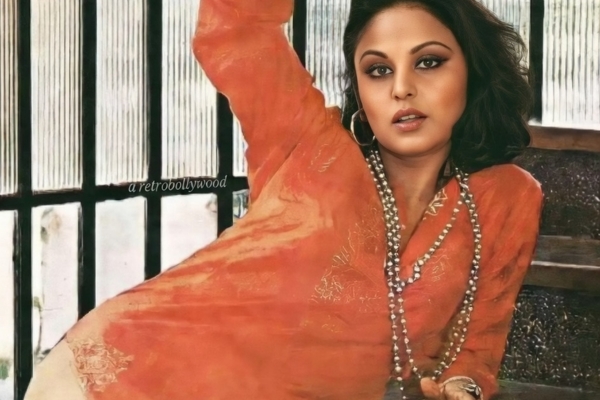
Around 1971, Rajesh Khanna reportedly proposed marriage. Anju is said to have declined, stating that she wanted to focus on her acting career. The rejection reportedly hurt him deeply and intensified existing tensions.
During the same period, Anju was linked in the press to West Indies cricketer Gary Sobers. Reports suggested that she briefly accepted an engagement ring before ending that association. These rumours added fuel to tabloid speculation and are believed to have further strained her relationship with Rajesh Khanna.
Breakup and marriage to Dimple Kapadia
By 1972, their relationship was nearing its end. At the same time, stories began circulating about Rajesh Khanna’s growing closeness to Dimple Kapadia. According to later accounts, a final confrontation led to a complete break.
Rajesh Khanna later shared in an interview that when he returned from a trip, he found that Anju had cut off contact entirely. She reportedly asked him not to call or visit her again. The separation left him deeply affected.
Soon after, he married Dimple Kapadia. One widely repeated story claims that his wedding procession passed by Anju’s residence, a gesture that attracted enormous media attention and symbolised the final chapter of their romance.
Aftermath and later reflections
Following his marriage, Rajesh Khanna and Anju Mahendru reportedly did not speak for many years, often cited as nearly seventeen. Some later reports suggest there may have been limited and distant communication much later in life.
In interviews, Anju has spoken candidly about their differences. She described him as traditional in outlook, yet drawn to modern personalities. She suggested that disagreements over her clothing, independence, and career were frequent sources of tension.
A legendary unfinished story
Rajesh Khanna and Anju Mahendru’s relationship remains one of Bollywood’s most discussed romances. It combined ambition, love, ego, and the overwhelming pressure of sudden superstardom. Their story reflects how fame can magnify personal differences and strain even deep emotional bonds.
Even decades later, their romance is remembered as a passionate but fragile chapter in the history of Hindi cinema.
Rajesh Khanna, Anju Mahendru, and Dimple Kapadia
One of the most discussed episodes in Rajesh Khanna’s personal life involves a tense exchange between Anju Mahendru and Dimple Kapadia at a birthday celebration hosted for him. The incident has often been described in film gossip columns as a symbolic turning point in his relationships.
What reportedly triggered the tension
By the time the party took place, Rajesh Khanna’s closeness to Dimple Kapadia had become the subject of industry rumours. His long relationship with Anju Mahendru was already under strain.
According to accounts repeated in magazines and later interviews, Anju was managing the arrangements for the birthday gathering, including the guest list. Dimple and her family were allegedly not included among the invitees. Rajesh Khanna is said to have intervened and personally invited Dimple, which created further tension. This move reportedly undermined Anju’s authority over the event and signaled a visible emotional shift.
The exchange at the party
When Dimple arrived, a brief but sharp exchange reportedly took place at the entrance. Anecdotes suggest that Dimple asked, in a pointed tone, whether she was allowed to enter if she had been invited. Anju is said to have responded that if she had indeed been invited, she could come in; otherwise, she should leave.
There are no verified transcripts of the exact words spoken. The story survives largely through retellings in entertainment journalism. However, the episode has been widely cited as a moment when private tensions became public.
Aftermath and its lasting image
The party incident soon entered Bollywood folklore. It came to represent the visible shift in Rajesh Khanna’s emotional life. Not long after, his relationship with Anju Mahendru ended. He went on to marry Dimple Kapadia in 1973.
In later interviews, Anju spoke about the complexities of her relationship with Rajesh Khanna and suggested that personality differences and differing expectations played a role in their breakup. The narrative of rivalry between the two women was amplified by media coverage at the time.
In essence, the confrontation was not a physical altercation but a tense exchange shaped by changing loyalties and public scrutiny. Over the years, it has remained one of the most talked-about moments in the personal history of Hindi cinema’s first superstar.
Rajesh Khanna’s Marriage Date
Rajesh Khanna was a superstar and had many female fans. Once he met a girl during a flight, and the girl could not believe that Superstar Rajesh Khanna was sitting beside her.
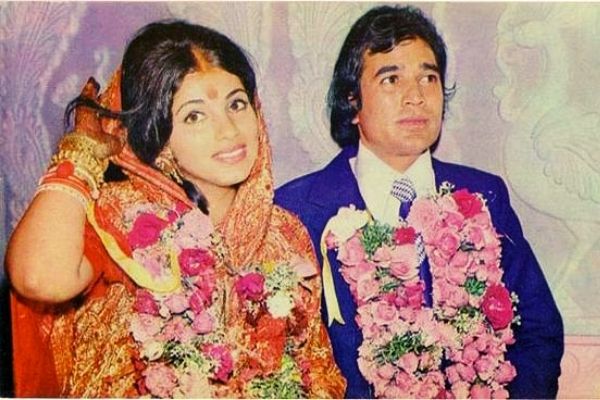
The girl was Dimple Kapadia, and at that time she was shooting for Raj Kapoor’s Bobby. Even Rajesh Khanna’s wedding procession passed in front of ex-girlfriend Anju Mahendru’s house. Many media houses claimed that it was Khanna’s idea, as he wanted to grab as much attention as he could from this marriage.
Dimple and Rajesh got married in March 1973. ‘Bobby’ was a superhit when released in September 1973 but Dimple left Hindi cinema as Khanna did not want his wife to act in films.
The couple has two daughters, Twinkle and Rinkie Khanna. But soon after the arrival of their younger daughter Dimple left Khanna’s home with her daughter.
She blamed Rajesh Khanna’s flamboyant nature and infidelity for this separation. She started her acting career again after leaving Rajesh Khanna’s house.
Late 70s and 80s
Though Rajesh Khanna was still a superstar, in the late 70s and early 80s, his career was not at the peak it had been in the early 70s. With the arrival of Amitabh Bachchan, Kaka was not the only superstar in the industry. In the early 80s, Hindi cinema saw new generations coming in, especially star sons like Sanjay Dutt, Kumar Gaurav, and Sunny Deol.
In the early 80s, though Rajesh Khanna was giving hits, he had shifted from his lover role. He was then doing a mixed bag of movies, including social or mature roles.
Khanna was closely associated with Kishore Kumar and R.D Burman. Most of his songs were sung by Kishore Kumar. Khanna did a number of movies with Mumtaz and then with Tina Munim.
Tina Munim and Rajesh Khanna appeared in 11 movies, and soon, there was news of them dating. Tina even moved into Rajesh Khanna’s bungalow, as Dimple already left the place. But soon she realised that Khanna was in no mood to give a divorce to his wife.
‘Aap Ki Kasam’ was one of Khanna’s last big hits before his downfall, and the director blames his failure on fate. Four beautiful Lata–Kishore duets were featured in the film’s music.
Rajesh Khanna, Tina Munim, and Sanjay Dutt
Another chapter of controversy in Rajesh Khanna’s personal life involved actress Tina Munim and actor Sanjay Dutt. The situation was widely discussed in film magazines during the late 1970s and early 1980s.
Rajesh Khanna and Tina Munim shared strong on-screen chemistry in several films. Around the same time, reports suggested that their relationship extended beyond professional collaboration. Industry gossip claimed that this closeness overlapped with Tina’s reported romance with a young Sanjay Dutt.
When news of Tina’s growing proximity to Rajesh Khanna became public, it reportedly left Sanjay Dutt embarrassed. In later interviews, Sanjay acknowledged feeling hurt during that period and suggested that he felt made to look foolish within the industry circle. These remarks added to the perception that the situation had been emotionally difficult for him.
The episode fueled tabloid narratives portraying Rajesh Khanna as a powerful and private figure whose personal relationships often unfolded behind closed doors. At the height of his fame, every association attracted scrutiny. Even unconfirmed reports gained traction in the press.
Like many celebrity relationships of that era, the full details remain shaped by media interpretation and personal recollection. What is clear is that the triangle intensified gossip around all three actors and contributed to the larger mythology surrounding Rajesh Khanna’s personal life.
In retrospect, the incident reflects the pressures of stardom, public visibility, and the way private relationships in the film industry often became subjects of widespread speculation.
Politics
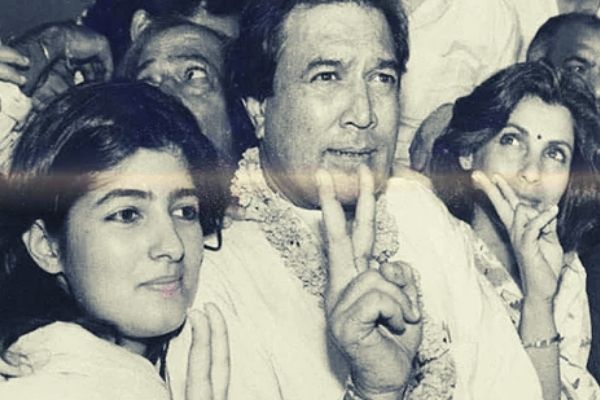
In 1991, Congress fielded Rajesh Khanna from Delhi against L.K Advani, but Khanna lost the election. Though the fight was quite close, the winning margin was very small.
Rajesh ran for the by-election on a Congress ticket in 1992, while Shatrughan was a member of the Bharatiya Janata Party (BJP). There were over 100 candidates, the majority of whom ran on their own. Rajesh defeated Shatrughan by more than 28,000 votes and retained his seat until 1996.
Rajesh Khanna’s Death Reason and Date
His liver became infected. After a certain point, he was unable to digest his food. He couldn’t eat solid food in his final days, so he had to rely on liquids.
He lost a lot of weight in his last days. On 18th July 2012, Rajesh Khanna took his last breath. In his last days, his wife Dimple Kapadia was by his side. Also, Akshay Kumar and Twinkle Khanna were seen with Rajesh Khanna many times during his last days, when he was hospitalised.
Rajesh Khanna’s age at the time of death was 69 years.
Even after his death, controversy never left him. His live-in partner in the last days, Anita Advani, claimed her stake in the iconic bungalow, Ashirwad, at Carter Road. Anita even claimed that Khanna’s last wish was to convert the bungalow into a public museum.
But his family denied any knowledge of such a wish, and even Anita was not allowed to attend Kaka’s last rite. Finally, the court ruled in favour of Khanna’s two daughters, and they sold the property for more than 90 crore rupees.
Rajesh Khanna and the Debate Around His On-Set Conduct
During the 1970s and 1980s, as Rajesh Khanna’s box office dominance began to decline and younger stars such as Amitabh Bachchan rose to prominence, stories about his alleged unprofessional behaviour became more frequent in film journalism. Several colleagues later described working with him as increasingly difficult, particularly during the later phase of his career.
It is important to note that many of these accounts come from retrospective interviews and entertainment reporting, which often blend fact with personal interpretation. However, certain themes appear repeatedly in industry narratives.
Chronic lateness and lifestyle habits
Multiple filmmakers and crew members claimed that Rajesh Khanna had a habit of arriving late to film sets. Units would reportedly wait for hours, leading to frustration and production delays. Some accounts describe a social circle at his residence where producers and associates gathered late into the night.
Director Yash Chopra later suggested in interviews that working with him became challenging. After collaborating on films such as Daag, Chopra reportedly chose not to continue professional ties, citing difficulty managing what were described as superstar demands.
On-set tensions with co-stars
Actor Amol Palekar recalled friction during the filming of Aanchal in 1980. In later interviews, Palekar alleged that Khanna attempted to assert dominance in certain scenes. He also claimed there were disagreements over a sequence in which his character was to be humiliated, which led to conflict between the actors.
These recollections added to the perception that, in his later years, Rajesh Khanna struggled with insecurity as his position at the top of the industry weakened.
Clash with Mehmood
One of the most widely repeated anecdotes involves veteran comedian Mehmood during the making of Janta Hawaldar. According to reports, Khanna’s repeated late arrivals frustrated the production team. In some retellings, Mehmood confronted him strongly on set, even slapping him in anger. The story suggests that after this confrontation, Khanna became more punctual and completed the film without further delays.
While dramatic, such accounts are largely drawn from media narratives and personal memories shared years later.
Ego, drinking, and damaged relationships
As his superstardom faded, reports increasingly described Rajesh Khanna as sensitive to perceived slights. Journalists portrayed him as possessive, quick to anger, and deeply protective of his image. His alleged late night gatherings and drinking habits were often cited as contributing factors to professional strain.
The contrast between his early disciplined rise and later reported behaviour became a common theme in commentary about his career trajectory. Some directors gradually distanced themselves, and new collaborations became less frequent.
A complex legacy
Rajesh Khanna’s reputation for starry tantrums forms part of his larger, complicated legacy. At his peak, he commanded unmatched adoration and reshaped Hindi cinema’s idea of stardom. In his later years, however, stories of ego clashes and professional difficulties often overshadowed his achievements.
Like many larger-than-life figures, he reflects both brilliance and vulnerability in his career. The same intensity that fueled his superstardom may also have contributed to the turbulence that followed.
FAQs
Amitabh Bachchan and Rajesh Khanna movie list?
The measure two movies are Namak Haram and Anand. In Bawarchi, Rajesh Khanna was in the lead role while Amitabh Bachchan gave the voice-over. In Naseeb, Amitabh Bachchan was in the lead role while Rajesh Khanna appeared in a guest role for a movie as himself.
List of movies of Rajesh Khanna and Mumtaz?
Movies are
-Do Raaste
-Bandhan
-Apna Desh
-Dushman
-Sacha Jhutha
-Roti
-Aap Ki Kasam
-Prem Kahani
Rajesh and Vinod Khanna in which films get together?
-Aan Milo Sajna
-Kudrat
-Sacha Jhutha
-Rajput