
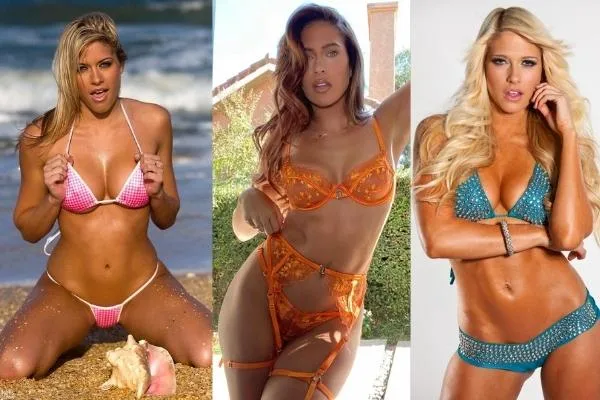
In the summer of 2006, when World Wrestling Entertainment was experimenting with bold reinventions and edgy programming, a 19-year-old fitness model from Jacksonville, Florida, walked onto the ECW stage with a name that would soon echo across arenas worldwide.
She was introduced simply as Kelly Kelly. Behind that bright persona stood Barbara Jean Blank, a former competitive gymnast whose athletic discipline had already shaped her long before the lights of WWE found her.
She joined WWE at a time when stars like Trish Stratus, Sable, Torrie Wilson, and other well-known Divas from the Attitude Era were nearing the end of their careers.
What began as a brief experiment in character-driven entertainment would evolve into one of the most recognisable journeys of the late 2000s Divas era.

Kelly Kelly did not enter professional wrestling through the independent circuit or through years of regional training. She arrived as a fresh-faced newcomer during a period when WWE’s women’s division prioritized glamour, personality and crossover appeal. The so-called Divas era was defined by its hybrid identity.
Women were athletes, performers and brand ambassadors at once. Storylines often leaned toward entertainment and spectacle rather than sustained in-ring competition. Within that environment, Kelly Kelly quickly emerged as a breakout presence.
Her early appearances on ECW were built around character segments, yet behind the scenes, she was training relentlessly to earn legitimacy in the ring. Over time, audiences watched her grow from a novelty act into a full-time competitor capable of holding her own against the division’s most dominant names.
By 2011, that evolution reached its defining milestone. On June 20, 2011, Kelly Kelly captured the WWE Divas Championship on Raw, defeating Brie Bella in a moment that symbolised both personal growth and corporate endorsement. For a performer once introduced through weekly exhibition segments, the championship victory marked validation.
It signalled that she was no longer simply a marketable face of the division but a central figure within it. Her reign may not have been the longest in history, yet it carried symbolic weight. She had climbed from developmental obscurity to the summit of WWE’s women’s division during one of its most commercially visible periods.
Her first WWE chapter closed in 2012 when she requested and was granted her release. Unlike some departures that fade quietly, Kelly Kelly’s exit felt transitional. She pursued modelling, brand collaborations and a more private life away from weekly touring.
Her personal life also drew public attention when she married former NHL defenseman Sheldon Souray in 2016. The marriage later ended in divorce, yet it reflected her shift from a full-time wrestling personality to a mainstream public figure navigating life beyond the squared circle.
Then came reinvention. In 2018, when WWE launched the first-ever Women’s Royal Rumble match, the company publicly celebrated what it called the Women’s Evolution. The division had transformed. Athleticism, long-form storytelling and headline main events had replaced the constraints of the Divas branding.
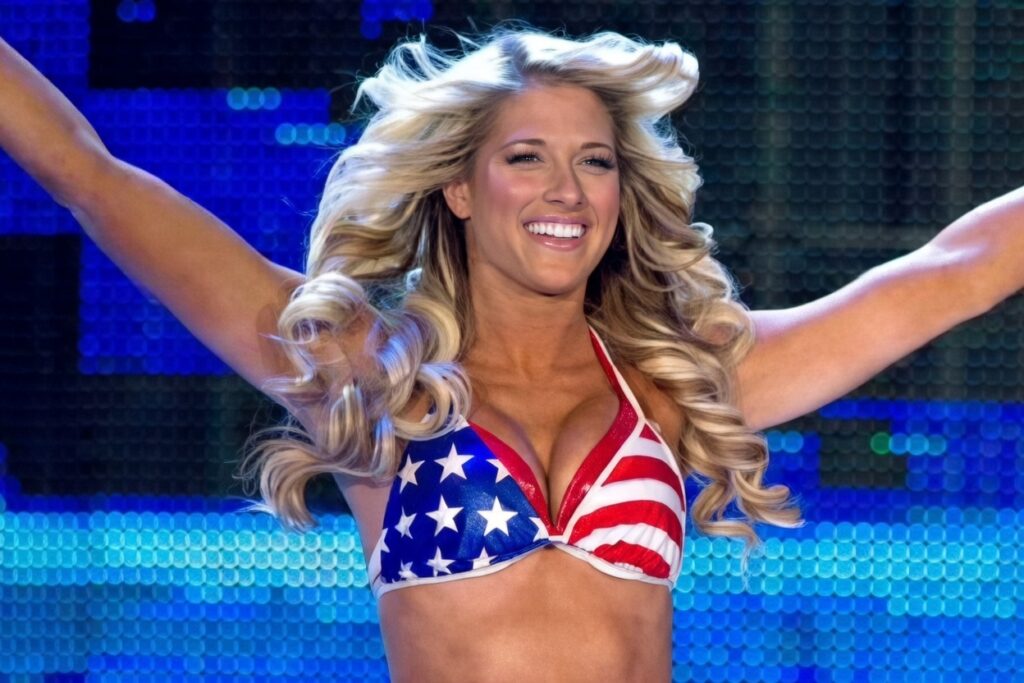
When Kelly Kelly appeared as a surprise entrant in that historic Royal Rumble, it was more than nostalgia. It was connective tissue between eras. She returned again in subsequent Royal Rumble matches, embracing a Legends role while acknowledging the growth of a division she once helped sustain.
Her life beyond wrestling continued to evolve. In 2021, she married Joe Coba, and in 2023 she welcomed her first child. Motherhood added another dimension to a public narrative that had long been defined by youth, glamour and athletic performance. Now she represents balance, transformation and longevity.
Kelly Kelly’s career cannot be measured solely in championship statistics or technical accolades. Instead, it must be understood within the broader arc of WWE’s women’s wrestling history. She stands as a transitional figure. She flourished in an entertainment-driven Divas landscape, yet she returned to witness and participate in a new era defined by athletic credibility and main-event respect.
Her journey reflects WWE’s own transformation. In that sense, Kelly Kelly represents the bridge between a period when women were branded primarily as Divas and today’s division where female superstars headline WrestleMania.
Her story is not merely about titles won or matches wrestled. It is about adaptation, perception and timing. It is about how a young gymnast turned fitness model navigated the entertainment spectacle of WWE, matured under scrutiny, stepped away at the height of her visibility, and re-emerged in a new chapter of wrestling history. In tracing Kelly Kelly’s biography, one also traces the cultural evolution of women’s wrestling itself.
Quick Facts and Personal Information
| Field | Details |
|---|---|
| Full Name | Barbara Jean Blank |
| Ring Name | Kelly Kelly |
| Married Name | Barbara Blank Coba |
| Date of Birth | January 15, 1987 |
| Age | 39 (as of 2026) |
| Birthplace | Jacksonville, Florida, United States |
| Nationality | American |
| Profession | Professional wrestler, model, television personality |
| WWE Debut | June 13, 2006 (ECW brand) |
| WWE Divas Championship | 1-time (Won June 20, 2011) |
| Years Active in WWE | 2006–2012, 2018–present (part-time appearances) |
| Height | 5 ft 5 in (165 cm) |
| Marital Status | Married |
| Spouse | Joe Coba (m. 2021) |
| Children | 1 (son, born 2023) |
| Former Spouse | Sheldon Souray (m. 2016–2017) |
| Net Worth | Estimated $1–3 million (public estimates) |
| Social Media | Active on Instagram and Twitter |
Early Life and Background of Kelly Kelly
Childhood in Jacksonville, Florida
Barbara Jean Blank was born on January 15, 1987, in Jacksonville, Florida, a coastal city whose athletic culture and competitive youth sports programs would quietly shape her early ambitions. Long before she became known worldwide as Kelly Kelly, Blank was a gymnast with disciplined routines and national aspirations.
Raised in Jacksonville, she gravitated toward gymnastics at a young age. The sport demanded more than flexibility. It required balance, repetition, resilience and a tolerance for physical strain that most children never experience. For nearly a decade, Blank trained and competed in gymnastics, committing herself to a demanding schedule that revolved around practice sessions, conditioning drills and competitions.
Her aspirations were serious. Gymnastics was not a hobby. It was a potential future. Yet like many elite-level athletes, her trajectory was interrupted by injury. A significant setback forced her to step away from competitive gymnastics, bringing an abrupt end to what she once envisioned as her athletic path. For a teenager whose identity had been tied to performance and precision, the injury was more than physical. It required reinvention.
That moment of disruption would later echo in her professional wrestling journey. The discipline she developed as a gymnast did not disappear. It simply awaited a new stage.
Education and Early Ambitions
Blank attended Englewood High School in Jacksonville, where she balanced academics with athletic pursuits. Following graduation, she briefly enrolled at Florida Community College, though her interests were already drifting toward modeling and entertainment.
Her look and athletic physique soon opened doors in the modeling industry. Before WWE, she worked with Venus Swimwear, a Jacksonville-based swimwear retailer known for national catalog distribution. The work required camera confidence and poise, two traits that would later serve her well in front of WWE’s global television audience.
At this stage, professional wrestling was not part of her plan. She was navigating early adulthood with a blend of athletic ambition and modeling opportunity. The transition from local model to WWE performer would come unexpectedly and quickly.
Athletic Foundation
Gymnastics shaped more than her flexibility. It built spatial awareness, body control and performance composure. In wrestling, these traits translate into clean landings, fluid transitions and comfort under bright lights.
When she eventually entered WWE, critics would initially question her in-ring experience. What they often overlooked was the athletic base beneath the surface. Years of tumbling, strength training and performance under pressure created muscle memory that eased her adaptation to wrestling fundamentals.
The discipline learned in Jacksonville gyms and competition halls became the quiet engine of her WWE growth.
Entry into WWE
WWE Developmental Contract in 2006
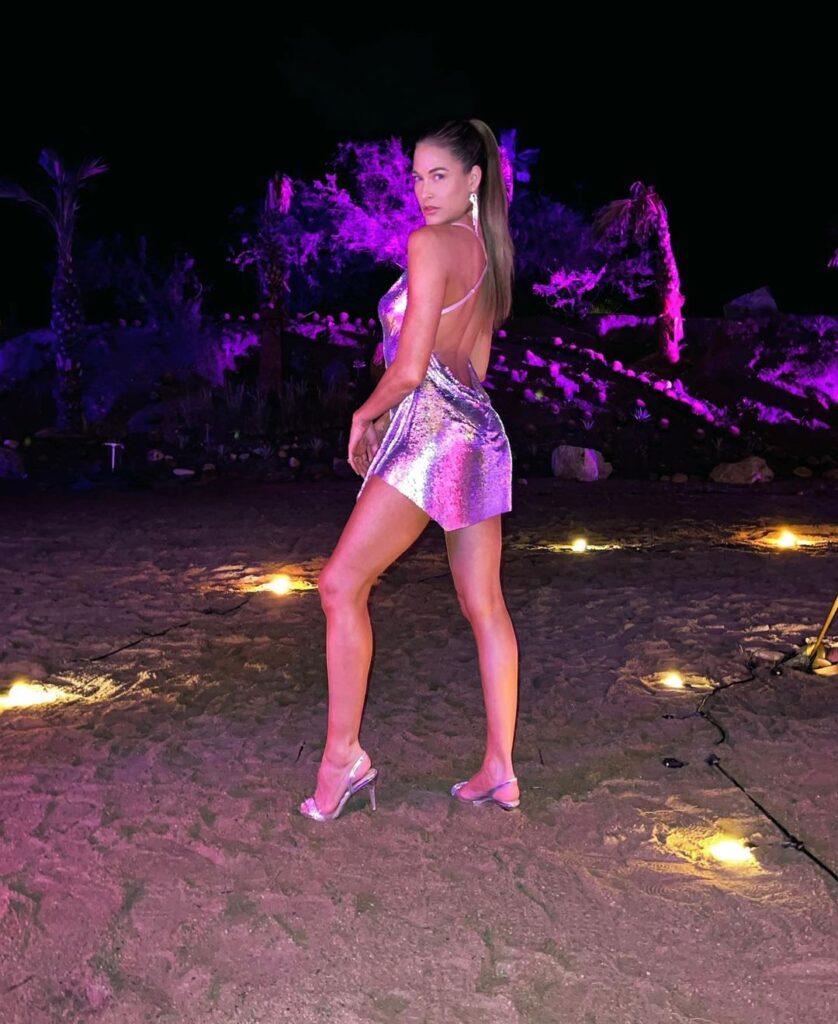
In 2006, at just 19 years old, Barbara Blank signed a developmental contract with World Wrestling Entertainment. The opportunity came during a period when WWE was actively scouting models and athletes to populate its women’s division. She became one of the youngest performers hired into the Divas roster at the time.
Her signing reflected WWE’s broader Divas-era recruitment philosophy, which often blended athletic potential with marketable presence. Unlike many traditional wrestlers who spent years on the independent circuit, Blank entered the system with limited formal wrestling experience.
She was initially assigned to Ohio Valley Wrestling, WWE’s developmental territory at the time. OVW served as a training ground where new recruits learned ring psychology, timing and the fundamentals of match storytelling. For Blank, it was an accelerated education. The learning curve was steep. The national spotlight would arrive sooner than expected.
ECW Debut on June 13, 2006
On June 13, 2006, she made her televised debut on WWE’s revived ECW brand under the ring name Kelly Kelly. The ECW reboot aimed to blend nostalgia with edgier contemporary presentation. Within that framework, Kelly Kelly was introduced as a character-driven performer.
Her early segments were titled “Kelly’s Exposé.” These weekly appearances emphasized entertainment over athletic competition. Managed on-screen by Mike Knox, her role aligned with ECW’s more provocative tone during its relaunch period.
The character quickly drew attention. Some viewers saw her as emblematic of the Divas era’s emphasis on glamour. Others questioned whether she would evolve beyond introductory segments. What was not visible to television audiences was the parallel development taking place behind the curtain.
Transition from Manager to Wrestler
While her early appearances were largely character-focused, Blank began intensive in-ring training soon after her debut. The shift from on-screen personality to competitive wrestler required technical refinement and mental adjustment.
She worked closely with WWE trainers to improve fundamentals such as footwork, selling, timing and match structure. Unlike veterans who entered the company with years of independent experience, she was building her wrestling identity in real time on national television.
Gradually, her role expanded. She moved from managing to participating in tag matches and singles competition. The transformation was incremental but deliberate. By committing to the craft rather than relying solely on presentation, Kelly Kelly began to reshape audience perception.
Her early WWE chapter was not defined by instant mastery. It was defined by visible growth. That evolution would become a central theme of her career and ultimately lead to championship recognition.
Rise Through WWE Brands

ECW Era Growth
Kelly Kelly’s early months on ECW were defined by spectacle, but her real development unfolded in the ring. After debuting in mid-2006, she gradually transitioned from performing weekly “Kelly’s Exposé” segments to active competition. One of her first notable rivalries came against Ariel, the gothic valet associated with Kevin Thorn. Their feud marked an early turning point. It required Kelly Kelly to engage in structured matches rather than brief showcase appearances, forcing rapid adaptation to timing and crowd psychology.
During this period, she formed an on-screen alliance with Layla and Brooke Adams. The trio operated within ECW’s entertainment-driven tone, often positioned in tag team scenarios that allowed Kelly Kelly to gain match experience without carrying full singles bouts. These early tag team matches were crucial. They exposed her to live crowd dynamics while limiting pressure, enabling steady growth rather than overwhelming scrutiny.
Observers who revisited her ECW matches over time noted measurable improvement. Her movement became cleaner. Transitions between holds grew more fluid. Selling and pacing matured. The athletic foundation from her gymnastics background began to surface more clearly. What initially appeared to be a casting decision rooted purely in presentation slowly evolved into a developing in-ring career.
SmackDown and Raw Appearances
By 2008, WWE’s brand draft system repositioned Kelly Kelly to Raw, the company’s flagship program. The move increased her visibility and placed her alongside some of the division’s most physically dominant competitors.
Her feuds with Beth Phoenix became particularly defining. Phoenix, known for her power-based style and technical proficiency, represented a stark contrast to Kelly Kelly’s lighter frame and evolving skill set. Their matches framed Kelly Kelly as the resilient underdog facing overwhelming strength. While outcomes often favored Phoenix during this phase, the dynamic contributed to Kelly Kelly’s growing fan support. Audiences responded to her persistence.
Beyond formal rivalries, she participated in multiple Divas Battle Royals and multi-woman matches, staples of the era’s booking structure. These contests were often fast-paced and chaotic, yet they provided valuable experience in ring positioning and crowd engagement.
Storylines occasionally extended beyond traditional women’s division rivalries. At one point, she became entangled in segments involving Randy Orton. These interactions reflected WWE’s Divas-era formula, where female performers were frequently woven into broader male storylines to heighten drama. While such angles drew attention, they also underscored the limitations placed on women’s narrative autonomy during that period.
Relationship Storylines and The Nexus Era
The Divas era frequently leaned into romance-driven storytelling, and Kelly Kelly was no exception. Her on-screen relationship with Justin Gabriel unfolded during the rise of The Nexus faction in 2010. Gabriel’s membership in the rebellious group added narrative tension, positioning Kelly Kelly indirectly within one of WWE’s most talked-about story arcs of the year.
Though she was not an active Nexus member, her association with Gabriel reflected WWE’s creative formula at the time. Relationships were used to humanize characters, generate sympathy or heighten rivalries. For Kelly Kelly, these angles reinforced her babyface identity. She was portrayed as sincere, emotionally invested and often caught between competing loyalties.
While some critics argued that such storylines overshadowed in-ring storytelling, they undeniably expanded her television presence. More importantly, as her character matured, her wrestling continued to improve. By the end of 2010, she was no longer viewed merely as a Divas-era personality. She was positioned as a legitimate contender within the division.
WWE Divas Championship Victory in 2011
Build-Up to the Title Win
Early 2011 marked a noticeable shift in Kelly Kelly’s trajectory. WWE began presenting her more consistently as a top babyface within the Divas division. Crowd reactions grew louder and more supportive. Her underdog persona was refined rather than exaggerated.
Opposite her stood technically dominant champions and physically imposing challengers. The narrative was clear. Kelly Kelly represented heart and perseverance against strength and experience. WWE’s booking leaned into that contrast, building sympathy and anticipation.
Her performances gained confidence. Timing improved. Selling became more deliberate. The years of gradual development were converging at the right moment.
Championship Victory on June 20, 2011
On the June 20, 2011 episode of Raw, Kelly Kelly challenged Brie Bella for the WWE Divas Championship. In a decisive moment, she secured the victory and captured her first singles championship in WWE.
The win carried symbolic weight. It was not framed as a fluke. It was presented as earned progression. For a performer who debuted at 19 with minimal wrestling experience, the championship represented validation of five years of growth under public scrutiny.
Title Reign and Rivalry with Beth Phoenix
Kelly Kelly held the Divas Championship for approximately four months. During her reign, she defended the title against several challengers, most notably Beth Phoenix. Their renewed rivalry deepened the underdog narrative. Phoenix’s dominance provided a formidable obstacle, reinforcing the idea that Kelly Kelly’s reign would be tested by the division’s strongest competitor.
At Hell in a Cell 2011, Beth Phoenix defeated Kelly Kelly to capture the championship. The loss concluded her title run but did not diminish its significance. By that point, she had firmly established herself as one of the division’s leading figures.
Significance in WWE History
Kelly Kelly’s championship victory represented more than a single accolade. It marked the culmination of a five-year transformation from developmental prospect to divisional centrepiece.
Her reign symbolised recognition of tangible in-ring improvement. It affirmed that she was no longer solely a product of the Divas branding model but a competitor who had earned audience support and company confidence.
In the broader context of WWE history, her ascent reflected the Divas era’s internal evolution. While the period is often critiqued for prioritising glamour over athleticism, Kelly Kelly’s career demonstrated that growth within that system was possible. She became one of its most recognisable faces and, at her peak, one of its most trusted champions.
By 2011, she was not simply a personality. She was a top Diva of her era, positioned at the intersection of entertainment appeal and emerging athletic credibility.
WWE Departure in 2012
By 2012, after six years of steady growth inside WWE, Kelly Kelly’s first chapter with the company reached its conclusion. In September 2012, she requested her release from WWE, and the company granted it shortly thereafter. The departure was not framed as disciplinary or controversial. Instead, it was presented as a personal decision rooted in exhaustion from constant travel and a desire to pursue modeling and other ventures outside the wrestling industry.
At the time of her exit, she had already achieved the pinnacle of the Divas division as a former WWE Divas Champion. Her résumé included high-profile pay-per-view appearances, multiple WrestleMania events and sustained television visibility across ECW, Raw and SmackDown. She had entered the company at 19 with no wrestling background and left as one of the most recognizable female performers of her era.
Her departure also coincided with a subtle transitional phase in WWE’s women’s division. The Divas brand was still intact, but the seeds of change were being planted. Within a few years, the Women’s Revolution would reshape the division’s presentation and in-ring expectations. Kelly Kelly exited just before that shift accelerated, closing her first WWE run during a period of quiet evolution.
Life After WWE
Modelling Career and Public Appearances
Following her departure, Barbara Blank returned to modeling and media engagements. Having worked with Venus Swimwear prior to WWE, she already possessed industry experience. Post-WWE, she continued modeling projects and engaged in fitness and lifestyle brand endorsements.
Public appearances at conventions and fan expos kept her connected to wrestling audiences while allowing her to explore broader entertainment opportunities. She cultivated a personal brand that blended glamour, fitness and accessibility. Unlike some former wrestlers who disappear from public view, she remained visible through social media and selective interviews.
Marriage to Sheldon Souray
In 2016, she married Sheldon Souray, a former NHL defenseman who played for the Edmonton Oilers and Montreal Canadiens. The marriage drew attention from sports media due to the crossover between professional wrestling and professional hockey.
The relationship, however, was brief. The couple divorced in 2017. While personal details remained largely private, the public nature of their professions ensured media coverage. The chapter reflected a period of transition in her life, as she navigated identity beyond WWE’s demanding travel schedule.
Personal Growth and Business Interests
In the years that followed, Kelly Kelly focused on personal reinvention. She explored private entrepreneurial interests and brand collaborations, leaning into fitness and lifestyle branding. Though not all ventures were publicly detailed, her social media presence emphasized wellness, travel and independence.
Her post-WWE years were defined less by spectacle and more by self-direction. It was a quieter phase, but not a retreat from public life.
WWE Return and Nostalgia Appearances
Royal Rumble Return in 2018
In January 2018, WWE held its first-ever Women’s Royal Rumble match. The event was widely promoted as a landmark moment in the evolution of women’s wrestling. When Kelly Kelly appeared as a surprise entrant, it was more than a nostalgic cameo. It symbolised continuity.
Her participation bridged eras. She had been a face of the Divas division. Now she stood in the ring during a match that celebrated the athletic credibility and headline status of female performers.
The crowd reaction underscored her lasting popularity. For many fans, her return represented a reminder of the Divas era’s mainstream appeal, even as WWE celebrated a new direction.
Subsequent Appearances
Kelly Kelly returned again in the Women’s Royal Rumble matches of 2019, 2020 and 2022. Each appearance reinforced her status as a legacy figure rather than a full-time competitor.
She also participated in WWE Evolution in 2018, the company’s first all-women pay-per-view event. Evolution itself was a milestone that highlighted the division’s transformation. Her inclusion placed her firmly within the historical narrative.
WWE Legends Contract
In later years, she signed a Legends contract with WWE. Such agreements typically involve merchandise rights, promotional appearances and participation in special events. Through this arrangement, her likeness continued to appear in WWE marketing materials and products.
The Legends designation acknowledged her contribution to the company’s brand during the late 2000s and early 2010s.
Marriage to Joe Coba and Motherhood
Marriage in 2021
In 2021, Kelly Kelly married Joe Coba in a ceremony that received public attention through social media coverage and entertainment outlets. The marriage marked a new personal chapter, one more grounded and private than her earlier high-profile relationship.
Motherhood in 2023
In 2023, she announced her pregnancy publicly and later welcomed twin(a son and a girl). Motherhood became a defining theme of her social media presence. Fitness routines evolved to include postpartum health. Travel posts were balanced with family milestones.
Kelly Kelly and her husband Joe Coba have spoken openly about their journey with IVF to have their twins. She has shared that the experience was both emotionally and physically difficult.
They had trouble getting pregnant naturally. After facing fertility issues, including at least one miscarriage and several failed attempts, they decided to try IVF.
She has talked about the hormone shots, medical treatments, and the emotional highs and lows that come with each cycle. She explained that the process can feel lonely and very stressful for couples who are going through it.
After continuing treatment, they were able to successfully conceive twins through IVF.
Their twins, a son named Jaxon Matthew and a daughter named Brooklyn Marie, were born in September 2023.
She has described the pregnancy and birth as a miracle after everything they experienced. She now uses her platform to support other women going through IVF. She reminds them that they are not alone and encourages open conversations about fertility struggles.
For longtime fans, the transition from teenage ECW debutante to married mother represented a full-circle transformation. It reflected time’s passage not only in her life but in WWE’s evolution.
Personal Transformation
Kelly Kelly’s identity shifted from WWE Diva to family-focused lifestyle influencer. Her public messaging emphasised health, balance and gratitude. Rather than attempting to reclaim a full-time wrestling role, she embraced a hybrid identity that allowed nostalgia appearances without sacrificing personal priorities.
Wrestling Style and Persona Analysis
In-Ring Evolution
Kelly Kelly’s early WWE performances were limited by inexperience. Her move-set was simple. Matches were short. Critics questioned whether she could compete with technically advanced wrestlers.
Over time, she improved noticeably. Her gymnastics background enhanced her agility. She developed cleaner execution in dropkicks, headscissors and transitional offence. While she never became known as a technical powerhouse, she grew into a competent performer capable of sustaining championship-level matches within the Divas division.
Character Archetype
She embodied the classic blonde babyface archetype of the PG era. Approachable, energetic and expressive, she connected easily with younger audiences. WWE marketed her heavily during its family-friendly programming phase.
Her persona aligned with the company’s branding priorities at the time. She was relatable without being intimidating, glamorous without being distant.
Criticism and Growth
Criticism of her in-ring ability during her early years was common among wrestling purists. However, by the time she captured the Divas Championship in 2011, many acknowledged her improvement.
Comparisons with later Women’s Revolution athletes such as Charlotte Flair, Becky Lynch and Sasha Banks highlight the structural differences between eras. The later generation was given longer matches and more athletic storytelling. Kelly Kelly operated under different creative constraints. Judging her career requires contextual awareness of those limitations.
The Divas Era Context
WWE Divas Era Overview
The Divas era, roughly spanning 2007 to 2015, emphasised glamour, cross-promotional modelling, and entertainment-driven storylines. Matches were often shorter, and branding frequently overshadowed athletic storytelling.
Kelly Kelly’s Role
Within that framework, Kelly Kelly became one of the most visible faces of the PG-era Divas roster. She was prominently featured in marketing materials, merchandise, and mainstream promotions. Her appeal extended beyond hardcore wrestling audiences.
Comparison with the Women’s Revolution
The Women’s Revolution rebranded female performers as Superstars rather than Divas and emphasised athletic competition. Wrestlers such as Charlotte Flair, Becky Lynch and Sasha Banks headlined major events and delivered longer, more technically demanding matches.
Kelly Kelly stands between these eras. She was not a product of the Revolution, yet she contributed to the sustained visibility that later enabled WWE to elevate the division.
Media Appearances and Pop Culture Impact
Kelly Kelly appeared in magazines such as Maxim and was featured in various lifestyle publications during her WWE tenure. She appeared in multiple WWE video game instalments, expanding her digital footprint.
Her social media presence in the post-WWE years maintained engagement with fans and reinforced her crossover appeal. During her peak, she was among the more merchandise-friendly female performers in the company.
Championships and Accomplishments
Her most notable accolade remains her single reign as WWE Divas Champion. She also received Slammy Award nominations during her active years and was ranked in Pro Wrestling Illustrated’s Female 50 list during her competitive tenure.
While not the most statistically decorated champion, her reign holds cultural significance in its era.
Net Worth and Financial Profile
Public estimates place Kelly Kelly’s net worth between $1 million and $3 million. Exact figures are not publicly disclosed.
Income sources include her WWE salary during her active years, revenue from her Legends contract, modeling assignments, brand endorsements and public appearances. No verified financial disclosures are available, and estimates vary depending on source methodology.
Public Image and Fan Perception
Fan Reception
At her peak, Kelly Kelly enjoyed strong merchandise visibility and consistent fan reactions. Younger audiences in particular responded positively to her approachable persona.
Industry Perception
Within the wrestling industry, she is often viewed as emblematic of the Divas era. While debates continue about the athletic limitations of that period, her longevity and brand consistency are widely acknowledged.
Recent Developments from 2024 to 2026
As of the latest verified reports, Kelly Kelly continues to appear under a Legends agreement. She remains active on social media, sharing updates about family life and fitness.
There has been no confirmed announcement of a full-time WWE return. Interviews conducted in recent years suggest she values her family-focused lifestyle while remaining open to special appearances.
Legacy and Long-Term Impact
Kelly Kelly’s legacy is not defined solely by championship reigns. It is defined by transition.
She belongs to a generation that sustained WWE’s women’s division during its PG branding phase. Without that continuity, the Women’s Revolution may not have found the same platform.
She was among the most marketed Divas of her time, appearing prominently in promotional campaigns and merchandise lines. Historically, she may not rank among the most technically decorated performers, but she remains an important cultural figure within WWE’s evolution.
Frequently Asked Questions
Who is Kelly Kelly in WWE
Kelly Kelly is the ring name of Barbara Jean Blank, a former WWE Divas Champion who competed from 2006 to 2012 and later returned for part-time appearances.
When did Kelly Kelly win the Divas Championship
She won the WWE Divas Championship on June 20, 2011.
Why did Kelly Kelly leave WWE
She requested her release in September 2012 to pursue modeling and personal opportunities.
Is Kelly Kelly married
Yes, she married Joe Coba in 2021.
Does Kelly Kelly have children
Yes, she welcomed a son in 2023.
What is Kelly Kelly’s net worth
Public estimates place her net worth between $1 million and $3 million, though no official figures have been disclosed.