
There are stars who rise, blaze and fade. There are icons who dominate an era and never step away. And then there is Vinod Khanna, a man who did the unthinkable at the height of his brilliance. He walked away.
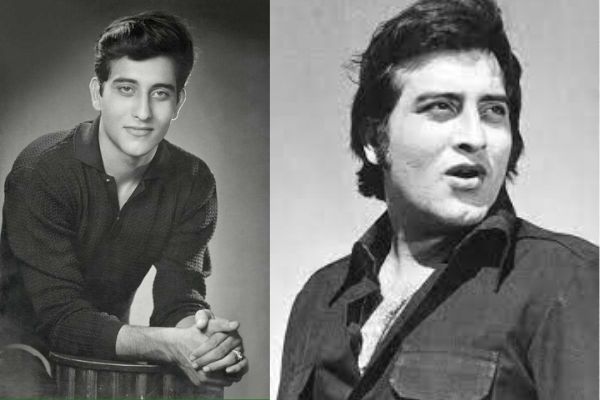
In the mythology of Hindi cinema, success is portrayed as the ultimate summit. For actors of the 1970s, that summit was fiercely contested territory. Multi-starrers ruled the box office. Fan clubs bordered on devotional movements. The media amplified rivalries. Stardom was not merely a profession, it was a permanent condition. To reach the upper tier alongside giants of the era required endurance, charisma and an instinctive understanding of audience pulse. Vinod Khanna had all three.
By the late 1970s, he was not just a leading man. He was an institution in motion. His screen presence combined elegance with simmering intensity. He could play the righteous rebel, the conflicted lover or the morally torn anti-hero with equal ease. Producers trusted his box office magnetism. Directors admired his discipline. Audiences admired his physicality and quiet authority. He stood shoulder to shoulder with the reigning superstars of the time and, in several seasons, rivalled them in sheer popularity. Then he left.
Not after a decline. Not after a scandal. Not after fading demand. He left when his career was on the rise. At a moment when many actors would have tightened their grip on fame, Vinod Khanna loosened his. He turned away from premieres and arc lights and entered the spiritual commune of Osho in the United States. For an industry that measured relevance in Friday collections, this was incomprehensible. For audiences who saw him as the embodiment of masculine glamour, it was bewildering.
The decision fractured the conventional arc of superstardom. It introduced a philosophical dimension rarely associated with mainstream cinema. What does it mean to renounce success when it is fully within reach? What compels a public figure to exchange applause for anonymity? These questions transformed Vinod Khanna from a matinee idol into a subject of deeper cultural curiosity.
His years in the commune were not a publicity stunt nor a brief sabbatical. They were immersive. He adopted a new identity, participated in community life and withdrew from the machinery of celebrity. While the Hindi film industry recalibrated without him, his absence became part of his legend. Producers waited. Fans speculated. The vacuum intensified the aura.
When Vinod Khanna re-entered the cinema in the late 1980s, he did so in an industry that had evolved. The action hero template was shifting. Younger faces had emerged. The economics of filmmaking were changing. Comebacks are often nostalgic exercises, but his was strategic. He embraced maturity on screen. He accepted roles that reflected age and gravitas. He did not attempt to reclaim the exact throne he had vacated. Instead, he redefined his position within the hierarchy.
The second act of his life extended beyond cinema. In the 1990s, he entered public service through the Bharatiya Janata Party and was elected multiple times as a Member of Parliament from Gurdaspur. Eventually, he served as Minister of State for External Affairs. The journey from villain-turned-hero to spiritual seeker to elected representative is not a conventional Bollywood script. It is a narrative of reinvention layered over reinvention.
His trajectory unfolded during what can be described as Hindi cinema’s golden era of transition. The late 1960s through the 1980s marked a shift from romantic idealism to angry realism, from studio dominance to location shooting, from single-hero narratives to ensemble spectacles. Vinod Khanna’s filmography mirrors this evolution. He debuted in a period when character actors could transform into leading men. He flourished during the multi-starrer boom. He exited at the cusp of the video era’s disruption. He returned as the industry prepared for liberalisation and global expansion.
This positioning is critical to understanding his cultural significance. He was not merely a participant in cinematic change. He embodied its tensions. His early villain roles reflected the moral ambiguities emerging in late 1960s storytelling. His heroic ascent paralleled the consolidation of the larger-than-life male protagonist. His spiritual withdrawal coincided with a broader search for alternative philosophies among urban Indians in the 1980s. His political chapter coincided with a period when film personalities increasingly entered governance.
Decades after his passing, the paradox still resonates. Younger audiences discover his performances through streaming platforms and televised retrospectives. Scholars of popular culture cite his departure from films as one of the most dramatic acts of self-withdrawal in Indian entertainment history. Political observers remember him as an articulate parliamentarian who carried cinematic charisma into legislative debate. His sons, actors in their own right, extend the family’s presence in the industry, yet the father’s arc remains singular.
Vinod Khanna’s life invites reflection on ambition and detachment, on identity and reinvention, on the costs of visibility and the courage of withdrawal. He achieved what many chase endlessly. He relinquished it voluntarily. He reclaimed relevance on his own terms. And in doing so, he expanded the definition of what a Bollywood superstar could be.
This is not merely the story of an actor. It is the chronicle of a man who treated fame as a chapter rather than a destiny.
Early Life and Family Background

Long before the arc lights and applause, before magazine covers and political podiums, the story of Vinod Khanna began in a city that no longer belonged to the same nation. He was born on October 6, 1946 in Peshawar, then part of undivided British India. Within a year, the map of the subcontinent would be redrawn through Partition, triggering one of the largest migrations in modern history. His infancy unfolded against that backdrop of upheaval.
Birth in Pre-Partition India and Migration

Vinod Khanna was born into a Punjabi-speaking Sindhi Hindu family, a community that would be profoundly affected by the creation of Pakistan in 1947. The Khannas, like countless others, were compelled to leave behind their ancestral home in Peshawar amid the uncertainty and communal tensions that accompanied Partition. Migration was not merely geographic. It was emotional, economic and psychological.
The family eventually resettled in India, rebuilding their life in Bombay, now Mumbai. For many displaced families, survival required resilience and reinvention. Stability was not inherited. It was reconstructed piece by piece. The experience of displacement did not dominate public narratives about Vinod Khanna’s later life, yet it formed the invisible scaffolding of his temperament. A childhood shaped by transition often cultivates adaptability. In his case, it perhaps also planted early questions about identity and belonging, themes that would echo decades later when he chose spiritual exile at the peak of fame.
Sindhi Heritage and Family Business Background
The Khanna family belonged to a well-established business background. His father, Kishanchand Khanna, was a textile and dye chemicals businessman. Unlike families in the performing arts, theirs was rooted in commerce and discipline. Education and enterprise were valued. Stability mattered. Artistic professions were not typically seen as reliable paths.
The Sindhi community, particularly after Partition, developed a reputation for entrepreneurial grit. Many families rebuilt fortunes through trade and small businesses across India. Within such households, career choices were often guided by practicality. The expectation was clear. Sons would inherit responsibility, not chase uncertain dreams.
Vinod Khanna grew up in a relatively comfortable environment compared to many post-Partition families. The move to Bombay placed him in one of India’s most dynamic urban landscapes. The city in the 1950s was expanding rapidly, absorbing migrants, fostering industries and nurturing cinema. Even so, the cultural conservatism of a business family remained intact at home.
Childhood Personality Traits and Early Education
By most accounts, Vinod Khanna was not a flamboyant child. He was reserved, observant and introspective. Teachers and acquaintances would later describe him as disciplined and well-mannered. There was a quiet intensity about him even in adolescence. He did not fit the stereotype of a boisterous future film star.
He attended boarding school for a period, which further shaped his independence. Separation from home at a young age can accelerate emotional maturity. It can also deepen introspection. Those who later worked with him in cinema often noted his self-contained demeanor, a quality that may well have roots in these formative years.
His early schooling took place in Mumbai, including time at St. Mary’s School in suburban Bombay. Academic performance was steady rather than spectacular. He was not known as a rebellious student. Yet an emerging streak of individuality was emerging. Participation in school activities gradually introduced him to performance, though not initially by choice.
School and College Years in Mumbai
Adolescence in Mumbai during the late 1950s and early 1960s meant proximity to India’s booming film industry. Studios were active. Film posters dominated public spaces. Movie-going was a primary form of mass entertainment. For a teenager growing up in the city, cinema was not distant fantasy. It was embedded in everyday life.
Vinod Khanna went on to study at Sydenham College in Mumbai, one of the city’s respected commerce institutions. The choice aligned with family expectations. A commerce degree promised stability and continuity with the family’s business orientation. Yet college years also tend to sharpen self-discovery.
It was during this period that theatre entered his life more decisively. According to widely recounted anecdotes, he once participated in a school play almost by accident. Stage fright initially overwhelmed him. He reportedly struggled with nervousness. But something shifted when he performed. Applause can be transformative, especially for someone quietly carrying unarticulated aspirations. Performance became less intimidating and more compelling.
College theatre further expanded this interest. Acting offered an outlet distinct from the measured predictability of commerce lectures. On stage, he could explore emotion, power and vulnerability. The contrast between the structure of his academic path and the fluidity of performance sharpened an internal tension. It was not yet rebellion, but it was curiosity turning into desire.
Early Exposure to Cinema and Theatre
Bombay in the 1960s was a crucible for aspiring actors. Film magazines circulated widely. Studio gates symbolized both opportunity and exclusion. Young men with striking looks often harbored cinematic dreams, though few admitted them openly within conservative households.
Vinod Khanna possessed a natural screen presence long before cameras framed him. Tall, broad-shouldered and strikingly handsome, he drew attention. Friends and peers reportedly encouraged him to consider films seriously. The industry at the time was open to discovering new faces, particularly those who could embody the evolving archetype of the intense leading man.
His early cinematic influences included mainstream Hindi films of the 1950s and 1960s. Observing established stars did not immediately translate into ambition, but it nurtured fascination. Watching performances on the big screen planted a question that would not easily fade. Could he belong there.
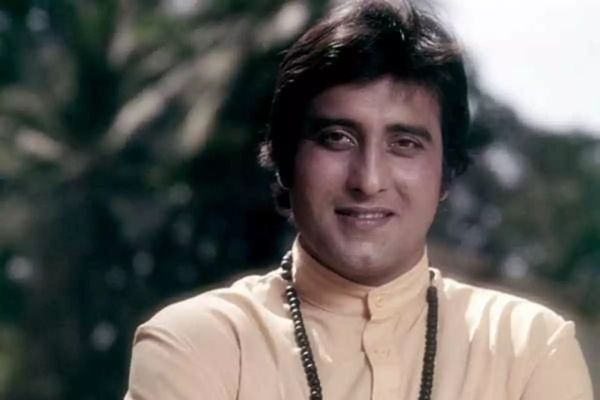
Theatre acted as the bridge between admiration and action. It offered a controlled environment to test instinct. Performance was no longer abstract. It was experiential. Applause became affirmation. With each stage appearance, the possibility of a professional shift grew less distant.
The Decision to Pursue Acting Despite Family Resistance
Choosing acting in the 1960s required more than confidence. It required defiance. For a young man from a business-oriented Sindhi family, cinema did not represent respectability in the traditional sense. The industry was perceived as volatile and morally ambiguous. Stability lay in commerce, law or administration.
When Vinod Khanna expressed serious interest in films, resistance was immediate. His father reportedly strongly opposed the idea. The concern was practical rather than ideological. Acting was unpredictable. The odds of success were slim. The family had rebuilt its life after Partition through diligence. Why risk that security on a gamble?
The standoff reached a critical point. According to accounts from interviews over the years, his father eventually gave him a limited window to prove himself in cinema. If he failed within that period, he would return to the family business. It was a conditional permission, framed almost as a test of resolve.
That ultimatum sharpened his determination. Unlike many aspirants who drifted into the industry casually, Vinod Khanna entered with urgency. There was a clock ticking. Success was not optional. It was necessary to validate his choice.
He began approaching film circles, meeting directors and producers. The breakthrough came when he was cast as a villain in the late 1960s, marking the start of his cinematic journey. Ironically, the family’s scepticism may have fortified him. Rejection had already been faced at home. The industry’s uncertainties did not intimidate him as much.
This early chapter reveals the foundation of a recurring pattern in his life. He was willing to challenge expectations. He was willing to risk established comfort for an uncertain calling. Years later, when he would walk away from superstardom to follow a spiritual path, the shock seemed unprecedented. Yet the impulse had precedent. As a young man in Mumbai, he had already chosen conviction over convention.
The boy born in pre-Partition Peshawar, raised in a resettled Sindhi household and educated for commerce, was quietly preparing for a life that would defy linear logic. Acting was not merely a career choice. It was the first assertion of an independent identity.
Read-Rajesh Khanna: The Journey Of Bollywood’s First Superstar
Entry into Bollywood: From Villain to Leading Man

When Vinod Khanna entered Hindi cinema in 1968, he did not arrive as a conventional romantic hero. His debut film, Man Ka Meet, cast him as a villain. It was a bold entry point. At a time when aspiring actors dreamt of leading roles, he accepted the morally shaded space of antagonism.
Debut in 1968 and Initial Roles as Antagonist
The late 1960s were transitional years for Bollywood. The industry was moving away from the purely romantic archetype toward more complex narratives. Villains were no longer caricatures. They were layered, sometimes charismatic, occasionally sympathetic. Vinod Khanna’s tall frame, sharp features and intense gaze made him ideal for roles that demanded controlled menace.
In film after film, he portrayed antagonists with restraint rather than theatrical excess. His villains did not rant. They simmered. This subtlety distinguished him from many contemporaries. Directors began to notice that he possessed more than physical appeal. He had presence.
Yet there was always an undercurrent suggesting he was not meant to remain confined to negative roles. The camera lingered on him differently. Even in confrontation scenes, he carried an inherent dignity that complicated the villain label.
Breakthrough with Gulzar’s “Mere Apne”

The shift began decisively with Mere Apne, directed by Gulzar. The film explored urban alienation and youth disillusionment, themes rarely handled with such intimacy at the time. Vinod Khanna played a gang leader, a character caught between rebellion and vulnerability.
The performance revealed emotional depth beneath his tough exterior. He was not merely an antagonist but a product of circumstance. The role resonated with younger audiences navigating similar frustrations in rapidly urbanizing India. Critics began to view him as a serious actor rather than a supporting villain.
“Mere Apne” became a pivot. It reframed his trajectory and expanded the kinds of roles offered to him.
Transition from Villain Roles to Heroic Leads
The early 1970s saw him transition steadily into leading roles. This was not an overnight transformation. It was strategic and cumulative. Films such as Hum Tum Aur Woh and Achanak allowed him to inhabit morally complex protagonists.
In “Achanak,” inspired by a real-life crime, he portrayed a military officer facing emotional betrayal and legal consequences. The performance required vulnerability, intensity and moral conflict. It signaled that he could carry a narrative on his shoulders.
Audiences accepted him as a hero without resistance. Perhaps because his earlier villain roles had already established his authority, the shift felt organic rather than forced.
His Distinctive Screen Presence and Baritone Voice
Part of Vinod Khanna’s rapid ascent can be attributed to qualities that transcended dialogue. His physique conveyed strength. His posture suggested discipline. Most notably, his deep baritone voice added gravitas. It was measured, deliberate and resonant.
Unlike some contemporaries who relied on flamboyance, he favored controlled intensity. He rarely overplayed emotion. The stillness in his performance often amplified dramatic moments. Directors learned that a pause from him could communicate more than a monologue from others.
This distinctive presence made him particularly effective in multi-starrer films, where commanding attention without dominating scenes was essential.
Collaborations with Leading Actresses of the 1970s
As his leading man status solidified, he was paired opposite some of the most celebrated actresses of the era. He shared screen space with Hema Malini, Rekha and Zeenat Aman among others.
With Hema Malini, he projected dignified romance. With Rekha, the chemistry often carried an undercurrent of intensity. With Zeenat Aman, particularly in later projects, he embodied modern urban masculinity. These pairings enhanced his versatility. He could be tender without losing strength, passionate without appearing volatile.
The Emergence of a Bankable Star
By the mid-1970s, producers no longer viewed him as a risk. His name on a poster signaled commercial promise. He was not merely part of ensemble casts. He was a draw.
This transformation from villain to hero to bankable star was rare. It required adaptability, patience and calculated role selection. Vinod Khanna had achieved all three before the decade reached its midpoint.
Rise to Superstardom in the 1970s

If the early 1970s established him, the latter half crowned him. The decade was fiercely competitive. Amitabh Bachchan redefined masculinity through the angry young man archetype. Rajesh Khanna had already cultivated hysteria as the romantic superstar. To thrive between these forces required distinct positioning.
Key Films That Shaped His Commercial Dominance
Films like Hera Pheri, Amar Akbar Anthony and Muqaddar Ka Sikandar became pillars of his dominance.
In “Amar Akbar Anthony,” he played Amar, the upright police officer among three separated brothers. While the film is often remembered for its ensemble brilliance, his portrayal anchored the narrative’s moral center. His restrained performance balanced the flamboyance around him.
In “Muqaddar Ka Sikandar,” he portrayed Vishal, embodying loyalty and heartbreak. Even when not positioned as the primary protagonist, his presence shaped audience empathy.
Comparison with Contemporaries

Unlike Amitabh Bachchan’s volcanic anger or Rajesh Khanna’s romantic vulnerability, Vinod Khanna projected composed strength. He was less theatrical than Bachchan and less sentimental than Rajesh Khanna. This middle ground broadened his appeal.
Industry observers often speculated that had he not stepped away in the early 1980s, he might have rivaled or even surpassed his contemporaries in sustained dominance.
Multi-Starrer Trend and Ensemble Casting
The 1970s embraced multi-starrer narratives. These films required actors secure enough to share screen space. Vinod Khanna excelled in this format. He neither overshadowed nor faded. He contributed equilibrium.
His ability to coexist alongside equally powerful personalities reinforced his reputation as a reliable star.
Establishing the Handsome Hero Archetype
With sharp features and athletic build, he redefined screen attractiveness. He was masculine without rugged roughness, sophisticated without fragility. This balance established what many describe as the handsome hero archetype of the late 1970s.
Romantic Yet Intense Performer
He brought quiet intensity to romantic scenes. Love did not appear performative. It appeared internalized. This restraint resonated strongly with urban audiences seeking realism within melodrama.
Peak Career and Iconic Films

By the turn of the decade, Vinod Khanna had reached a creative and commercial peak.
Analysis of “Amar Akbar Anthony,” “Muqaddar Ka Sikandar,” “Qurbani”
In Qurbani, directed by Feroz Khan, he played a stylish, conflicted protagonist navigating friendship and betrayal. The film’s slick presentation marked a shift toward Western-influenced aesthetics in Bollywood. His performance blended charm with moral gravity.
Each of these films showcased different facets of his craft. In ensemble dramas he was grounded. In action sequences he was controlled rather than explosive. In emotional scenes he preferred underplay to overt display.
Acting Style Evolution Across Genres
His evolution is visible across genres. Crime dramas revealed his intensity. Romantic films displayed tenderness. Courtroom and social dramas highlighted composure. He adapted without losing identity.
Audience Reception and Critical Acclaim
Audiences responded consistently. Trade publications recorded strong box office numbers. Critics acknowledged his growth from supporting antagonist to layered leading man. By the early 1980s, he stood firmly within the top tier of Hindi cinema.
The Osho Chapter: Renouncing Stardom


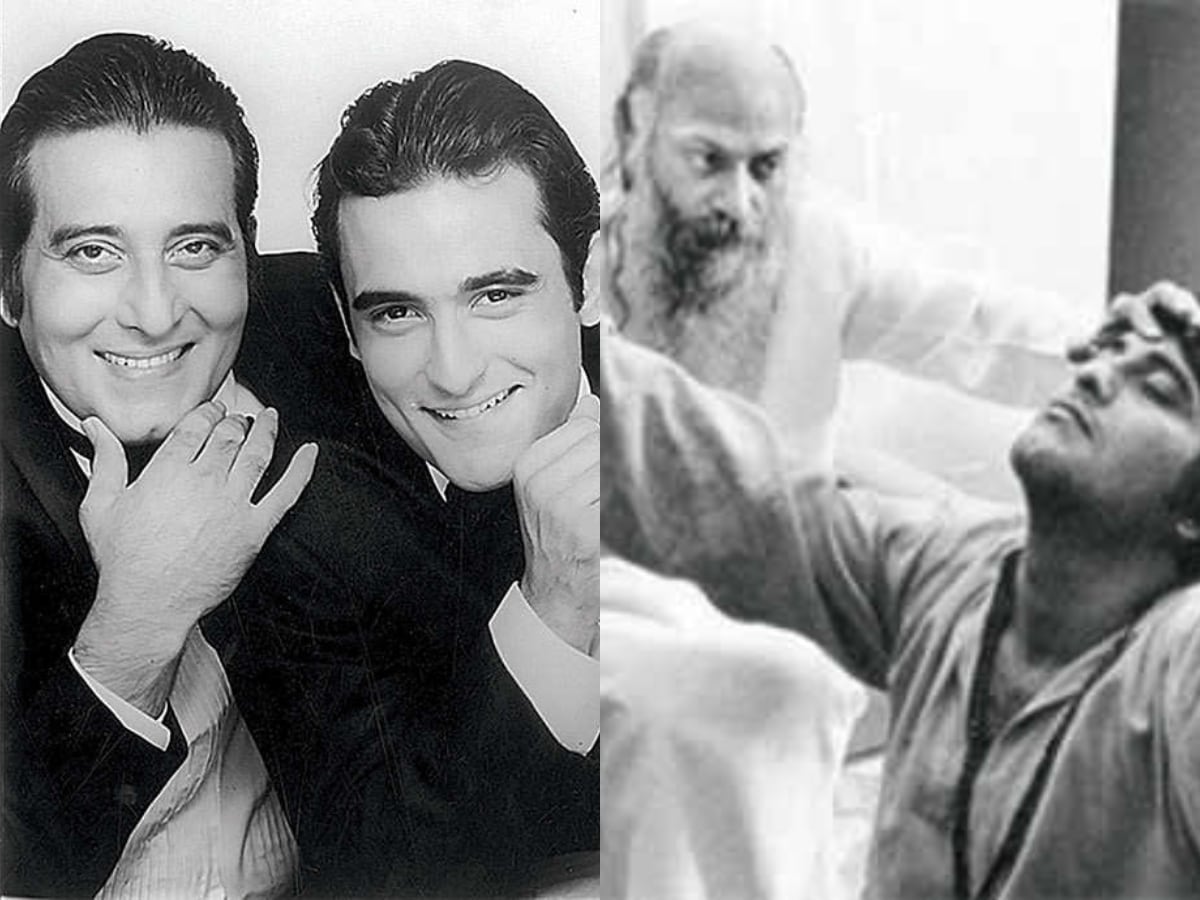
At the height of this success, a different narrative was unfolding internally.
Spiritual Restlessness at Career Peak
Despite commercial triumph, Vinod Khanna reportedly felt an undercurrent of dissatisfaction. Fame had delivered recognition and wealth, yet questions about meaning persisted. The contrast between public adulation and private introspection widened.
Introduction to Bhagwan Rajneesh
He became drawn to the teachings of Osho, then known as Bhagwan Rajneesh. The philosophy emphasized meditation, detachment and self-awareness. For someone navigating the noise of superstardom, the message was magnetic.
Leaving the Film Industry in 1982
In 1982, he stepped away from films. There was no gradual reduction. It was decisive. Projects were left incomplete. Producers recalibrated. Fans were stunned.
Life in the Oregon Commune
He relocated to the Rajneeshpuram commune in Oregon, immersing himself in community life. He adopted spiritual practices, lived without cinematic privilege and reportedly engaged in daily chores alongside other disciples.
Public Reaction and Industry Shock
The Indian media reacted with disbelief. Trade analysts speculated about career suicide. Some admired the courage. Others predicted permanent irrelevance. In an industry built on visibility, invisibility seemed fatal.
Personal Transformation
Yet for Vinod Khanna, the withdrawal was not regression. It was exploration. The years in the commune deepened his introspection. When controversies later engulfed the Oregon establishment, he eventually returned to India. But he did so altered.
The paradox was complete. A reigning superstar had renounced fame for spiritual inquiry. The next chapter would test whether reinvention was possible twice in one lifetime.
Controversies

During the filming of Mahesh Bhatt’s “Prem Dharam (1992),” a steamy bed scene between Vinod Khanna and actress Dimple Kapadia embarrassed the latter. Khanna allegedly continued kissing Dimple even after the director yelled ‘Cut!’ Things got worse when the crew had to force Khanna out of the bed. Later, the actor apologized to Dimple, claiming that he was drunk and had lost control of his senses.
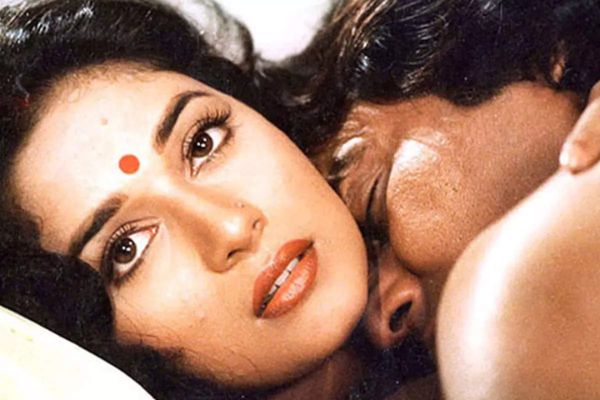
The intimate scene between Vinod Khanna and Madhuri Dixit in Dayavan (1988) caused quite a stir at the time of the film’s release. The fact that Khanna was around 20 years older than Madhuri reportedly irritated the fans.
Return to Bollywood: Reinvention and Resilience


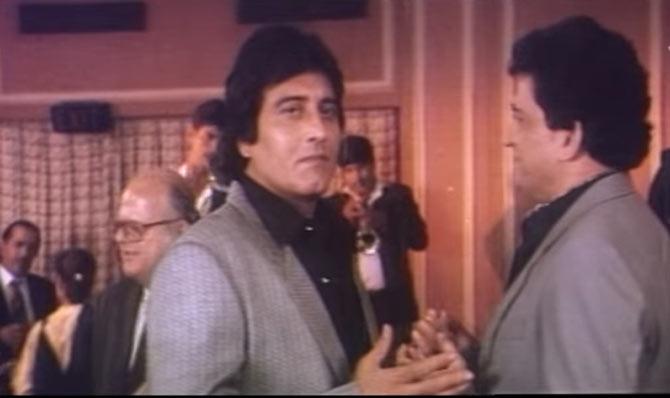
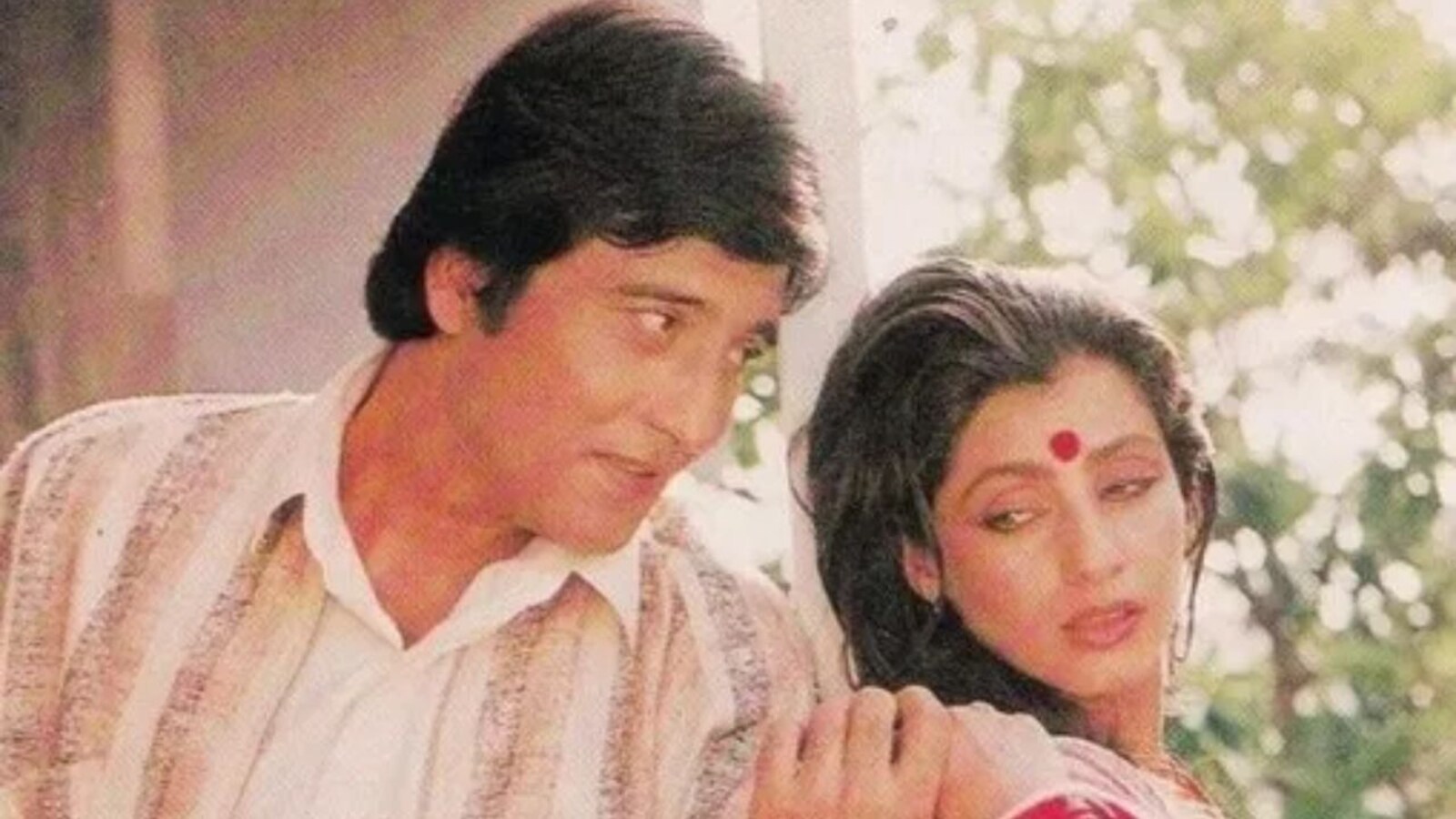
When Vinod Khanna returned to Mumbai in the mid-1980s, he was stepping into an industry that had moved on without him. The arc lights were still bright, but the hierarchy had shifted. Younger stars were emerging. Action cinema had hardened. The emotional grammar of mainstream films was evolving.
Comeback in 1987 with “Insaaf”
His formal comeback arrived with Insaaf. The film positioned him once again as a central figure, not as a nostalgic cameo. Audiences were curious. Trade analysts were cautious. Could a man who voluntarily abandoned superstardom reclaim relevance.
“Insaaf” performed respectably, signaling that his absence had not erased his recall value. More importantly, it reintroduced him to a generation that had grown up hearing about his earlier dominance but had not witnessed it in real time.
Challenges of Reclaiming Lost Stardom
The challenges were substantial. The 1980s audience was more attuned to aggressive action heroes. The video revolution had changed viewing habits. Stardom had become more fragmented. Vinod Khanna could not simply resume where he had paused.
Instead of competing directly with younger actors on identical terrain, he recalibrated. He accepted that the romantic lead phase had evolved. He leaned into gravitas. His performances began reflecting lived experience rather than youthful swagger.
Changing Bollywood Landscape of the Late 1980s
The late 1980s were transitional. The angry young man era was waning. Family dramas and action thrillers coexisted uneasily. Economic liberalization was still a few years away, but cinematic style was already shifting.
Vinod Khanna’s second innings navigated this terrain with pragmatism. He worked in films such as Satyamev Jayate and later appeared in projects that capitalized on his authority rather than youthful charm. The camera now framed him as a figure of experience.
Mature Roles and Father Figures
By the 1990s and 2000s, he transitioned into patriarchal and mentor roles. In films like Dabangg, he embodied institutional authority. These performances were not nostalgic shadows. They were adaptations to age and context.
He carried dignity into these roles. The shift from hero to elder statesman on screen mirrored his parallel journey into politics.
Mentorship Presence and Late-Career Resurgence
On sets, younger actors often described him as measured and composed. His presence functioned as quiet mentorship. He did not dominate scenes through volume. He anchored them through stillness.
Though his second innings never replicated the explosive commercial dominance of the 1970s, it restored respect and sustained visibility. Reinvention, in his case, was not about reclaiming past glory. It was about sustaining relevance with grace.
Political Career and Public Service


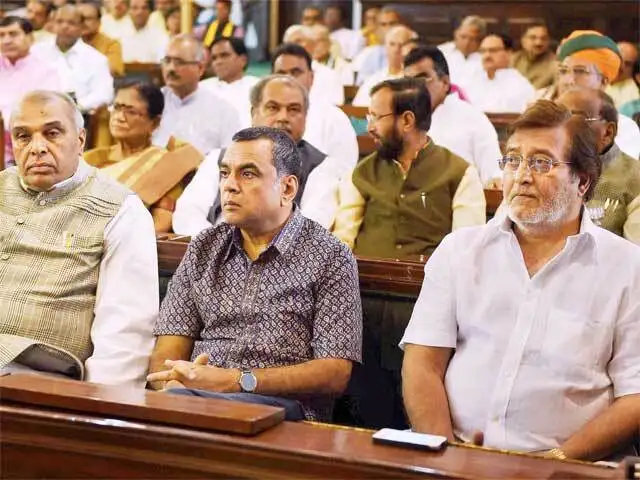
Cinema had made him famous. Politics would test his endurance differently.
Entry into Politics Through Bharatiya Janata Party
In the 1990s, Vinod Khanna joined the Bharatiya Janata Party. The move was part of a broader trend of film personalities entering public life. Yet his decision was not framed as symbolic. He pursued electoral politics actively.
Election Victories from Gurdaspur
He contested from the Gurdaspur constituency in Punjab and won multiple terms as a Member of Parliament. Voters appeared willing to see beyond his cinematic persona. Campaigns emphasised development, connectivity and regional representation.
Tenure as Member of Parliament
As MP, he maintained a relatively low-key style. He was not known for fiery rhetoric. His parliamentary record reflected participation and constituency engagement rather than headline-seeking controversy.
Appointment as Minister of State for External Affairs
In 2002, he was appointed Minister of State for External Affairs. The portfolio demanded diplomatic nuance. It marked a significant transition from screen dialogue to geopolitical discourse.
Role in National Politics and Public Perception
Public perception remained dual. For some, he was always the star who entered politics. For others, he evolved into a public servant who happened to have been a star. Balancing these identities required discipline.
He avoided overt exploitation of celebrity within parliamentary space. The seriousness he had cultivated during his spiritual years perhaps contributed to this restraint.
Personal Life and Relationships
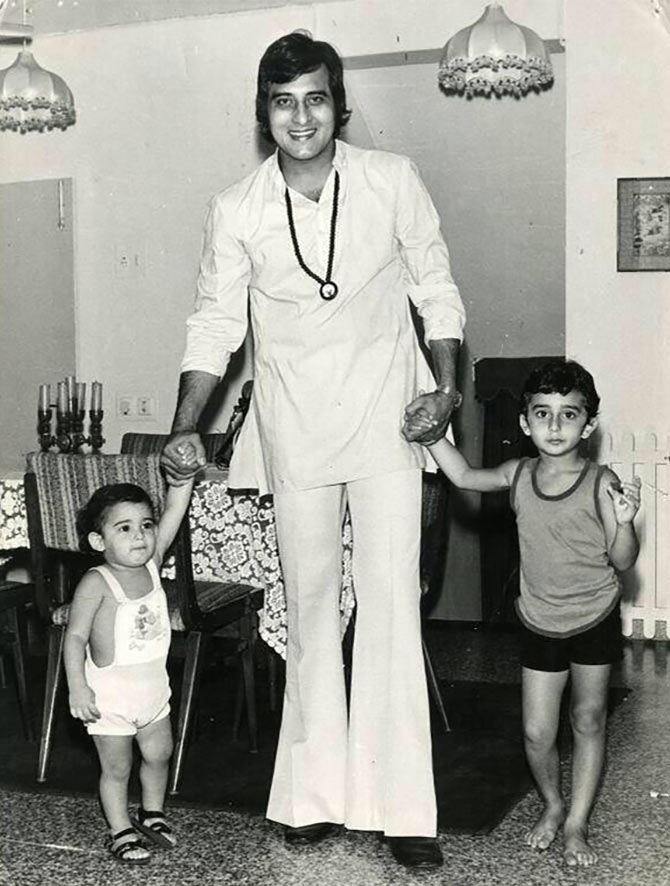
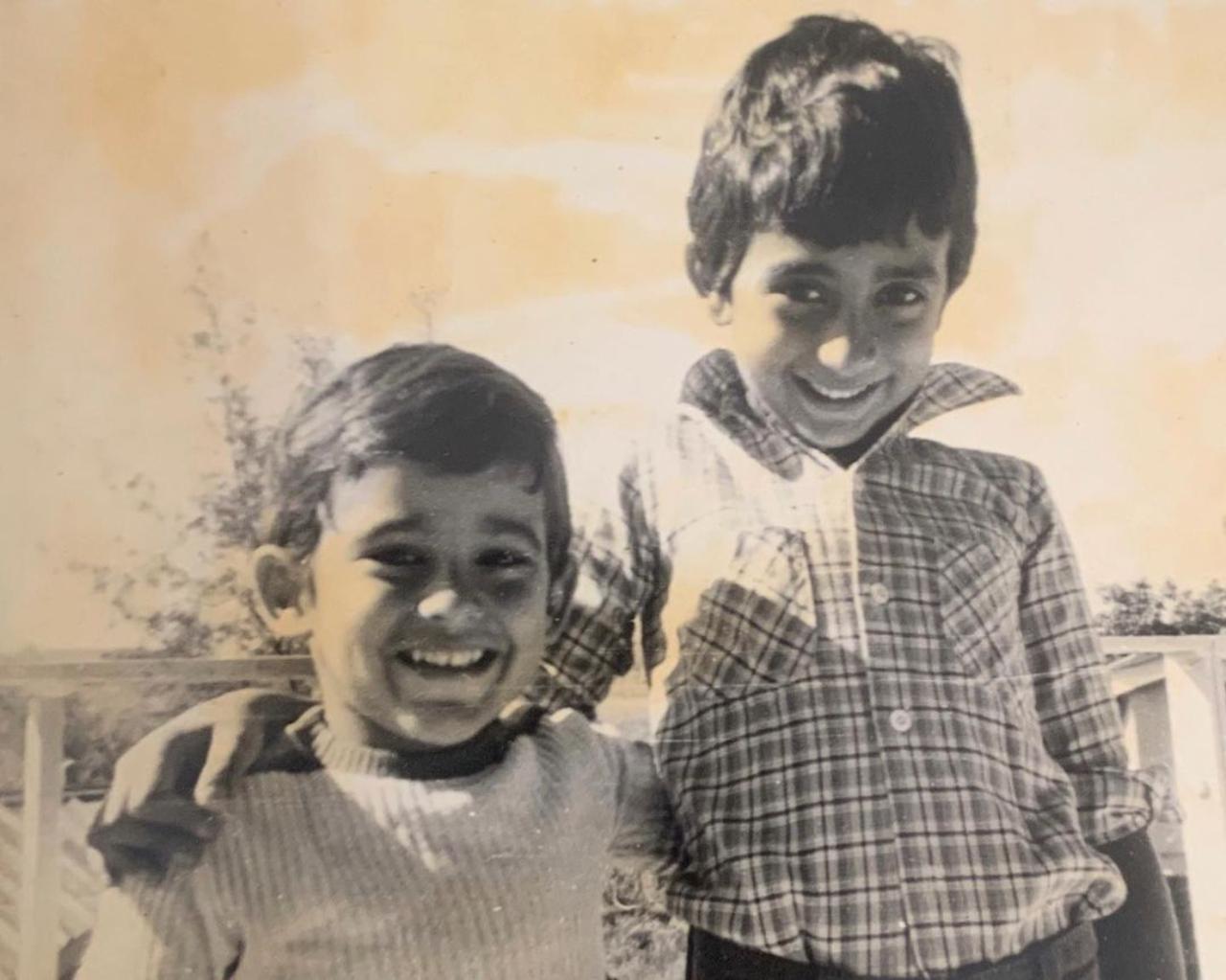
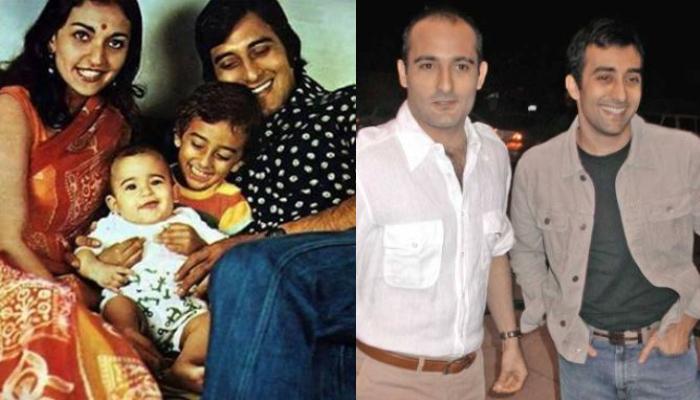
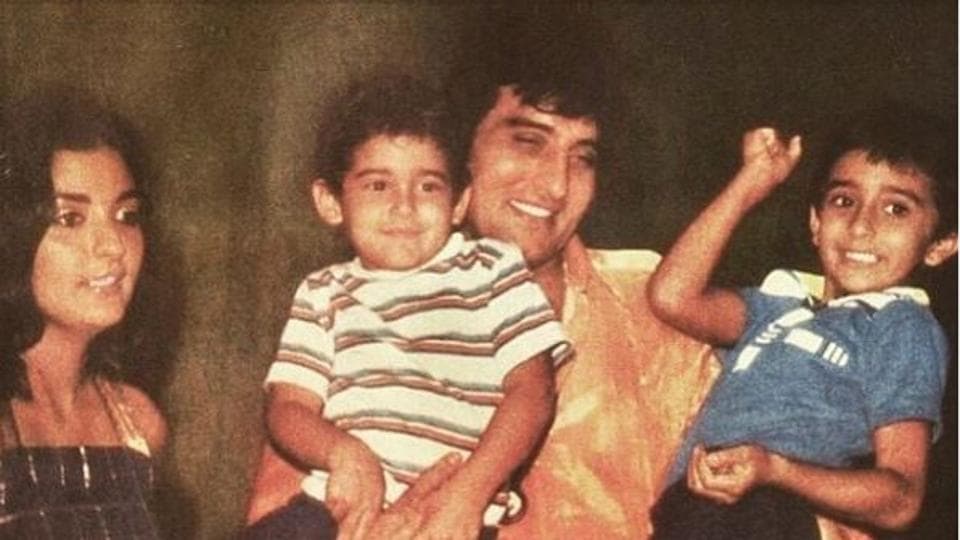
Behind the public figure existed a layered private life.
Marriage to Geetanjali Taleyarkhan and Separation
He married Geetanjali Taleyarkhan in the early phase of his career. The marriage coincided with his rise to fame. They had sons, including Akshaye Khanna and Rahul Khanna.
However, his decision to move to the United States during his association with Osho placed strain on the relationship. The physical and emotional distance eventually led to separation.
Marriage to Kavita Daftary
He later married Kavita Daftary, rebuilding domestic stability. This phase of life was quieter, more guarded from media glare.
Relationship with His Sons and Balancing Public Life
Both Akshaye and Rahul entered the entertainment industry. Vinod Khanna reportedly maintained a supportive yet non-intrusive approach. He understood the pressures of the profession intimately.
Balancing fatherhood with films and politics required compartmentalization. He did not frequently publicize personal milestones. Privacy was preserved deliberately.
The Private Personality
Colleagues often described him as introspective off screen. He valued routine, discipline and reading. The flamboyance associated with stardom rarely defined his personal conduct.
Health Struggles and Final Years
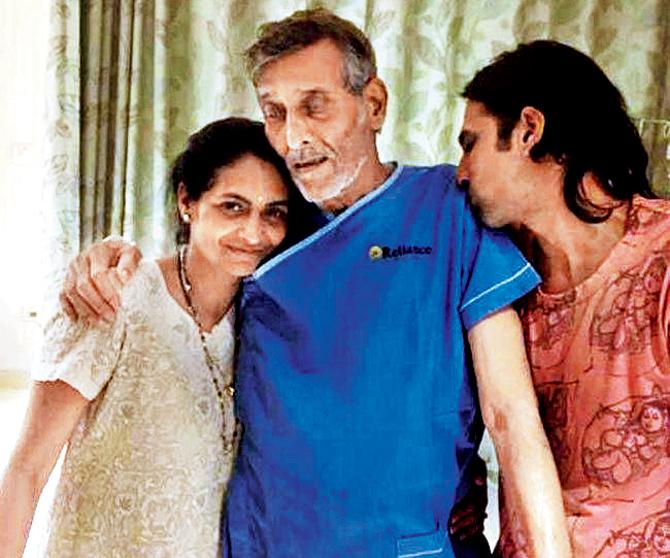
In his later years, health challenges emerged quietly.
Diagnosis of Advanced Bladder Cancer

He was diagnosed with advanced bladder cancer, a fact not immediately publicized. For months, speculation circulated as his public appearances reduced.
Media Reactions and Viral Image
In 2017, a hospital photograph surfaced online, revealing his frail condition. The image triggered widespread concern and commentary. The contrast between his once imposing physique and visible vulnerability unsettled admirers.
Dignified Silence and Death in 2017
He maintained dignified silence amid speculation. On April 27, 2017, he passed away in Mumbai at the age of 70.
National Mourning and Tributes
Tributes poured in from across political and cinematic spheres. Amitabh Bachchan and numerous colleagues acknowledged his grace and discipline. Political leaders honored his parliamentary contributions. The response reflected the breadth of his impact.
Acting Philosophy and Screen Persona
Vinod Khanna approached acting with deliberation. He believed in internalizing character motivation rather than relying on dramatic excess. Interviews across decades reveal a man wary of celebrity worship.
He often articulated detachment from fame, perhaps shaped by his spiritual interlude. Masculinity in his performances was not loud. It was contained. Vulnerability surfaced in controlled flashes rather than breakdowns.
This synthesis of strength and introspection distinguished him. He remains regarded as a thinking star, someone who treated performance as craft rather than mere visibility.
Awards, Honors and Recognition
Throughout his career, he received multiple nominations at the Filmfare Awards and won accolades that recognized both his commercial and artistic contributions. Lifetime Achievement honors later acknowledged his enduring presence.
In politics, parliamentary recognition affirmed his service. Posthumous tributes from industry guilds and government bodies reinforced his dual legacy.
Net Worth, Assets and Financial Legacy
At his 1970s peak, leading actors commanded substantial remuneration. While exact figures remain publicly undisclosed, trade estimates placed him among the higher earners of his era, comparable with top-tier contemporaries.
Political roles provided structured income rather than cinematic windfalls. He invested in real estate and maintained financial stability across career interruptions.
Unlike some stars who faced fiscal turbulence, he appeared to manage transitions without publicized financial crisis, reflecting measured planning.
Cultural Impact and Legacy
Vinod Khanna influenced the template of the dignified action hero. His blend of physical strength and emotional restraint shaped subsequent portrayals of masculinity.
His sons’ careers extended the family’s association with cinema, though each carved distinct paths. Television reruns and streaming platforms have reintroduced his 1970s films to younger viewers.
Retrospective criticism often revisits his 1982 departure as one of the boldest decisions in Indian film history. His spiritual quest remains intertwined with his stardom.
In the broader history of Hindi cinema, he occupies a singular position. Not merely as a star of a golden era, but as a man who challenged the inevitability of fame.
Timeline of Key Milestones
1946 Born in Peshawar
1968 Debuted with Man Ka Meet
1970s Rose to leading star status
1982 Left films at career peak
1987 Returned with Insaaf
1997 Entered active politics
2002 Became Minister of State for External Affairs
2017 Passed away in Mumbai
Frequently Asked Questions
Who was Vinod Khanna and why is he important in Bollywood history?
He was a leading Hindi film actor who rose from villain roles to superstardom in the 1970s, later reinventing himself as a politician and spiritual seeker. His voluntary exit at peak fame remains historically significant.
Why did Vinod Khanna leave films at the peak of his career?
He sought spiritual fulfilment under Osho’s guidance, prioritising personal exploration over commercial success.
Was he more successful as an actor or politician?
Commercially and culturally, his cinematic career had broader impact. Politically, he served with credibility but without the mass aura of his film years.
What illness led to his death?
He died from complications related to advanced bladder cancer in 2017.
How did his comeback change his career trajectory?
It repositioned him from romantic hero to mature authority figure, allowing sustained relevance across decades.
Vinod Khanna’s life remains a study in ambition, withdrawal, resilience and reinvention. Few stars have tested the elasticity of identity with such conviction.