
Crystal Harris was born on December 29, 1986, in Riverside, California. While she was American by birth, her family came from the Birmingham area in England before moving to the United States. Growing up with both British heritage and a Southern California upbringing, she developed an early sense of self. She found herself balancing the traditions of English culture with the lively, image-focused atmosphere of coastal California.
Crystal’s early years were shaped by both her parents’ English background and her surroundings in California. At home, British values and stories were part of daily life, giving her a sense of having two cultures. When her family moved to San Diego, the city’s lively beach scene and entertainment culture stood in sharp contrast to England’s Midlands, marking a major change in her upbringing.
Growing up near San Diego meant being exposed to beauty standards that were both aspirational and commercial. The region has long been associated with lifestyle branding, beach aesthetics, and a media-friendly culture. It was in this setting that Crystal began to develop a heightened awareness of presentation and poise. But while the “California girl” ideal circulated all around her, she did not simply accept it. As a teenager, Crystal occasionally pushed back against these norms—experimenting with unconventional hairstyles, skipping beach outings in favor of art classes, and sometimes questioning the constant pressure to look a certain way. Friends and acquaintances would later describe her as evolving into what popular culture often labels a “California girl”: sun-kissed, polished, and camera-ready. Yet this transformation was gradual. It did not emerge from immediate glamour but from adaptation, selective assimilation, and a growing sense of personal confidence during adolescence. Over time, she learned to balance external expectations with her own comfort, subtly reshaping the script to fit her rather than the other way around.
Education and Academic Interests
Crystal went to San Diego State University and studied psychology. This choice shows her interest in understanding people, something that is sometimes overlooked because of her later fame. Psychology involves learning about human behaviour, emotions, and identity. For someone growing up in a culture focused on appearance, studying psychology may have helped her understand how people see themselves and relate to others.
During college, Crystal did well both socially and academically. Like many, she used these years to grow and change. She became more confident, both in and out of class. Friends described her as charismatic and increasingly attractive. While some called her a “knockout California girl,” she was also a student managing her studies, friendships, and new opportunities.
San Diego State University sits at the intersection of education and the entertainment industry. Modelling scouts, talent agents, and lifestyle brands frequently visit local campuses searching for new talent. It was in this setting that Crystal attracted the attention of Playboy scouts after completing her studies. Her discovery, often romanticized in media profiles, exemplifies a common pattern in the modeling industry: the identification of talent in everyday environments and a rapid transition into the public spotlight.
For Crystal, this was a turning point from focusing on academics to building her public image. She traded psychology classes and campus life for photoshoots, styling, and managing her professional appearance. Joining Playboy meant entering a well-known media world with its own rules and opportunities.
This early change also shows a pattern in Crystal’s life: adapting to new situations. She moved from British family traditions to California life, and from studying psychology to modeling. Each step meant adjusting how she presented herself, while still holding on to who she was.
Cultural Context and Formative Influences
Crystal’s early life spanned the late 1990s and early 2000s, a time when reality TV, celebrity tabloids, and digital modelling were on the rise. Beauty standards were spreading online and through brands like Playboy. Young women at that time faced new ways to be seen and new opportunities.
Southern California, close to Los Angeles, offered many opportunities to enter the modelling and media industries. For Crystal, who had already built confidence and style in college, moving into glamour modeling felt like a natural next step.
Her background in psychology shows she made active choices, not just following events. Choosing to model after being discovered shows she was willing to try new things, use her appearance as an opportunity, and take part in the trends of her time.
The Making of a Public Persona
Before she would become widely recognised as Crystal Hefner, her early years were defined by incremental shifts rather than headline moments. She was not born iBefore she became known as Crystal Hefner, her early life was shaped by small changes, not big events. She wasn’t born into fame or a show-business family. Her story started in everyday places: a hospital in California, a suburban neighbourhood, and college classrooms. itage, coastal aesthetics, academic inquiry, and timely discovery. These elements converged at a critical juncture in her early twenties, positioning her at the threshold of a lifestyle that would ultimately lead her to one of America’s most iconic mansions.
The journey from Riverside-born Crystal’s path from a Riverside-born child with English roots to a Playboy model was more than just a move or a job change. It was also a psychological and cultural shift. Taking on this new role meant facing both glamour and public attention. Her mixed background and curiosity helped prepare her for this step.Her life reads as preparation. The British heritage instilled grounding. The California upbringing cultivated confidence. The university education sharpened awareness. And the discovery by Playboy scouts opened the door to a world that would redefine her public narrative.
Rise in the Playboy World 2008–2010
Crystal Harris’s entry into the inner circle of Playboy was swift, cinematic, and emblematic of the late-2000s glamour revival that surrounded the brand. In 2008, at just 21, she attended the legendary Halloween party at the Playboy Mansion in Holmby Hills. It was there that she met Hugh Hefner, the magazine’s founder and cultural lightning rod. Hefner was 82 at the time, a generational gap that would soon become central to media narratives surrounding their relationship.
The Halloween gathering was no ordinary party. For decades, the Mansion’s annual celebration had served as a gathering place for Hollywood personalities, models, musicians, and socialites. To be invited was to step into a world that blurred spectacle with exclusivity. For Crystal, the event marked more than a festive evening. It was the beginning of a transformation from aspiring model to a visible figure within one of America’s most recognized lifestyle empires.
Becoming a Mansion Regular
After their initial meeting, Crystal began spending more time at the Mansion. What began as occasional visits soon evolved into a regular presence. Within months, she was no longer simply a guest navigating a lavish setting. She was part of the estate’s social architecture.
The Playboy Mansion served as both a residence and the brand headquarters. Cameras frequently documented life inside its gates, particularly during the era shaped by reality television exposure. Although Crystal entered the orbit after the peak of The Girls Next Door phenomenon, the public appetite for insight into Hefner’s personal life remained strong. Every new companion invited scrutiny and curiosity.
Crystal’s youth and poised demeanour distinguished her. While earlier eras of Hefner’s relationships often involved multiple girlfriends simultaneously, by 2009 the dynamic had shifted. The brand itself was navigating changes in media consumption and public perception. Print magazines were facing digital disruption; for example, Playboy’s U.S. newsstand sales fell by nearly 40 percent between 2007 and 2009, a sign of how the print model was under pressure from the internet. At the same time, Playboy.com’s digital audience was growing, pointing to new opportunities but also intensifying the brand’s identity crisis. Reality television had reshaped how audiences consumed celebrity lifestyles. In this climate, Crystal’s emergence felt like both continuity and transition.
Miss December 2009 and Cyber Girl of the Year 2010
Professional validation followed quickly. In December 2009, Crystal was named Playboy’s Miss December. The title was more than a calendar designation. It represented formal entry into Playboy’s modelling legacy, a lineage that had launched and sustained careers for decades. For a young model, the exposure was significant. The magazine’s reach remained global, and the title carried both prestige and commercial opportunity.
Shortly thereafter, she was awarded Cyber Girl of the Year for 2010. The Cyber Girl platform reflected Playboy’s adaptation to the digital age. As the internet reshaped publishing economics, online exclusives and subscriber-driven content became central to survival. Crystal’s recognition in this category positioned her as a bridge between Playboy’s print heritage and its digital future.
The dual recognition solidified her standing within the brand. She was not merely a companion of Hefner. She was officially recognised as a model within the company’s evolving framework.
July 2011 Cover Feature
Her prominence within Playboy culminated in a cover feature for the July 2011 issue. Appearing on the cover signified apex visibility within the Playboy ecosystem. Covers often function as cultural snapshots, reflecting both the model’s image and the brand’s strategic positioning at that moment.
By the time of her cover, Crystal had become publicly closely associated with Hefner. Media coverage frequently framed her not only as a Playmate but as the central romantic figure in his life. This association amplified both her fame and the scrutiny she faced.
Life Inside the Mansion
Moving into the Playboy Mansion marked a decisive personal shift. The estate, sprawling and mythologised, operated on its own rhythms. From curated dinners and themed parties to business meetings and media visits, daily life unfolded under both glamour and observation. To live there was to inhabit a hybrid space that blended domestic routine with corporate spectacle.
Crystal immersed herself in Hefner’s lifestyle. The Mansion was known for its regimented structure. Despite the outward image of hedonism, schedules were often tightly organised. Movie nights, social events, and public appearances followed patterns established over decades. For a 21-year-old navigating early adulthood, adjusting to this environment required adaptability and composure.
At the time of her arrival, Hefner was still associated with multiple girlfriends, though the arrangement was evolving. Media outlets frequently highlighted the contrast between Crystal’s age and Hefner’s, as well as the dynamics within the household. Public discourse oscillated between fascination and critique. Crystal, still in her early twenties, found herself at the centre of conversations about power, age gaps, and celebrity relationships.
Public Perception and Cultural Moment
The late 2000s were marked by tabloid intensity. Celebrity relationships, particularly unconventional ones, generated relentless commentary. Crystal’s rise in the Playboy world occurred within this context. Photographs of her attending red-carpet events with Hefner circulated widely. Interviews often centred on her relationship rather than her aspirations.
Yet behind the headlines, she was constructing a professional identity tied to modelling and brand affiliation. Being named Miss December and Cyber Girl of the Year provided measurable accomplishments within Playboy’s institutional structure. The July 2011 cover further elevated her profile.
Her ascent also reflected Playboy’s shifting identity. The brand was negotiating its legacy in a media landscape increasingly defined by social platforms and streaming content. New faces like Crystal were tasked, implicitly or explicitly, with maintaining relevance while honouring tradition.
A Defining Transition
Between 2008 and 2010, Crystal Harris transitioned from college graduate to one of the most visible figures within the Playboy ecosystem. The speed of that evolution cannot be overstated. In the span of two years, she moved from attending a single party to living in one of America’s most famous residences and appearing on magazine covers distributed worldwide.
This period laid the foundation for the chapters that followed. It brought opportunity, visibility, and financial promise. It also ushered in scrutiny, expectation, and the complexities of aligning personal identity with a globally recognised brand.
The Playboy world offered glamour and access. It also demanded resilience. For Crystal, these formative years inside the Mansion would shape not only her public persona but her understanding of independence, image, and agency.
Relationship with Hugh Hefner
Crystal Harris’s relationship with Hugh Hefner quickly became one of the most scrutinised romantic narratives in late-era Hollywood tabloid culture. Their bond was framed as a story of glamour, generational contrast, power dynamics, and reinvention. What began at a Halloween party in 2008 matured into an engagement, a dramatic cancellation, reconciliation, and ultimately marriage. The arc unfolded under relentless media attention, turning deeply personal decisions into a public spectacle.
A. Engagement and First Wedding Cancellation 2010–2011
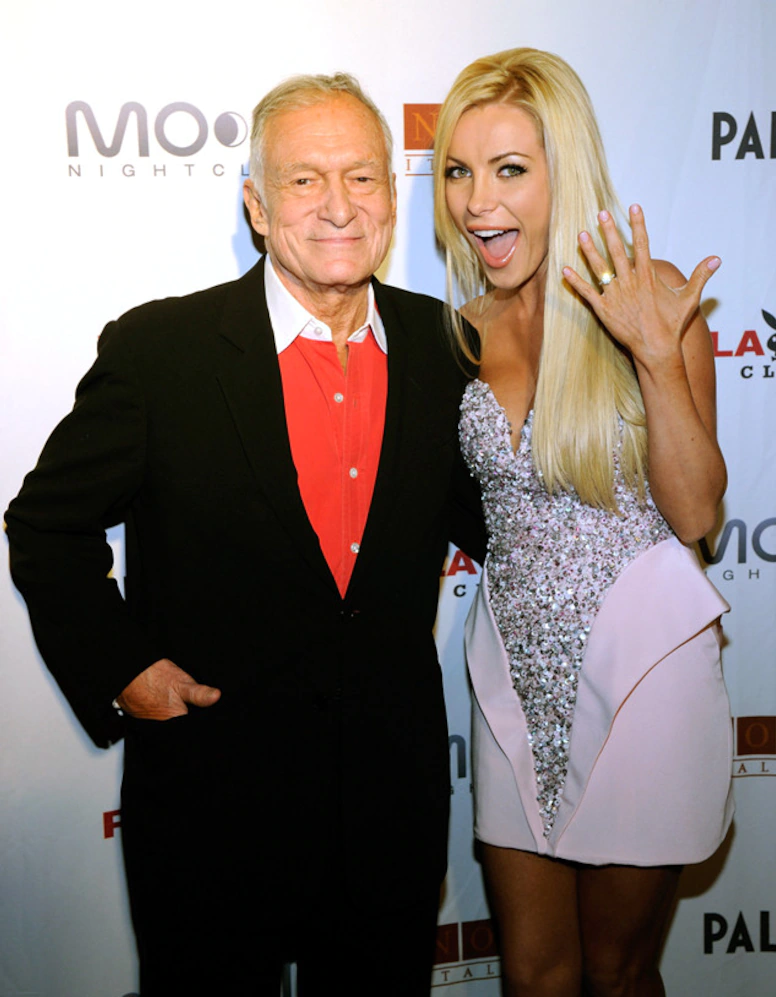
On Christmas Eve 2010, Hugh Hefner proposed to Crystal Harris with a 3.39-carat diamond ring. Hefner, then 84, announced the engagement publicly through social media and interviews, describing it as a deeply meaningful moment. Crystal was 24 at the time. The announcement dominated entertainment headlines. For many observers, the engagement symbolised a late-life romantic chapter for the Playboy founder. For others, it reignited debates about age gaps, celebrity relationships, and the evolving identity of the Playboy brand.
The wedding was scheduled for June 18, 2011, at the Playboy Mansion. Preparations were underway. Invitations were reportedly sent. Media outlets prepared for coverage of what was expected to be another high-profile chapter in Hefner’s storied personal life. Playboy even released a July 2011 issue featuring Crystal on the cover under the headline celebrating her as “Mrs Crystal Hefner,” anticipating the union.
Then came the abrupt turn.
Just five days before the ceremony, Crystal called off the wedding. The cancellation sent shockwaves through entertainment media. Public statements from both sides were measured but revealing. Crystal later cited discomfort with the realities of Hefner’s lifestyle, particularly the structure of open relationships that had historically defined his domestic arrangements. In interviews, she indicated that she struggled with the dynamic of not being the only woman in his life. The emotional weight of that reality reportedly became too significant to ignore.
Hefner, while expressing disappointment, maintained a tone of civility in public communications. The split became front-page material, emblematic of how private relational tensions could morph into global headlines when attached to a cultural icon.
For Crystal, the decision marked a pivotal assertion of agency. Calling off a wedding to one of America’s most famous publishers required resolve. It also invited intense criticism and speculation. Commentators questioned motives, loyalty, and timing. Yet the cancellation underscored a deeper tension. The glamorous exterior of Mansion life carried complex emotional negotiations.
The Period of Separation
In the months following the cancelled wedding, Crystal stepped away from the Mansion and recalibrated her public presence. Reports indicated she sought space and clarity. The separation offered her a period of independence outside the structured Playboy ecosystem.
This interlude was not merely a romantic pause. It represented a moment of self-definition. Public fascination persisted, but the narrative shifted from fairytale engagement to unresolved tension. The story remained open-ended.
B. Reconciliation and Marriage 2012
By mid-2012, reconciliation rumours began circulating. The reunion was reportedly encouraged in part by Mary O’Connor, Hefner’s longtime confidante and Mansion administrator, who was said to have facilitated renewed communication between the two. O’Connor had been a stabilising presence in Hefner’s life for decades, and her involvement lent the reconciliation a tone of thoughtful mediation rather than impulsive return.
Crystal and Hefner confirmed they were back together. This time, the relationship appeared more privately navigated before public announcements were made. The couple approached their renewed commitment with greater discretion.
On New Year’s Eve 2012, they married at the Playboy Mansion. Hefner was 86. Crystal was 26. The ceremony was described as intimate rather than extravagantly theatrical. Close family members attended, including Crystal’s relatives and Hefner’s four children from previous marriages. The guest list was reportedly curated to emphasise intimacy over spectacle, signalling a shift from the earlier aborted wedding’s high-profile buildup.
One of the most discussed aspects of the marriage was the prenuptial agreement. Media reports confirmed that Crystal signed what was described as an “ironclad” prenup. The agreement reportedly excluded inheritance rights to Hefner’s estate. This detail became central to public conversation. Some viewed it as pragmatic estate planning given Hefner’s extensive assets and corporate interests. Others interpreted it as reflective of the power balance within the relationship.
Regardless of interpretation, the legal framework clarified financial boundaries. Crystal entered the marriage without expectation of inheriting Hefner’s wealth upon his death, a fact later publicly acknowledged. The decision insulated Hefner’s estate while simultaneously reshaping perceptions of Crystal’s motivations.
Emotional and Cultural Dimensions
Their marriage unfolded during a transitional period for Playboy. The brand was recalibrating in response to shifting cultural attitudes toward sexuality and media consumption. Hefner himself had become less a provocateur and more a symbol of an era. Crystal’s presence beside him represented both continuity and generational contrast.
The public often reduced their relationship to numbers. An age difference of sixty years invites scrutiny. Yet relationships cannot be entirely captured by arithmetic. Interviews suggested that Crystal valued companionship, mentorship, and stability. Hefner, in turn, appeared to cherish her loyalty and youthfulness during his later years.
Their union was not immune to criticism. Feminist commentators debated the symbolism of such a partnership. Tabloids speculated on authenticity. Yet inside the Mansion gates, the marriage established a more monogamous structure than Hefner’s earlier arrangements. Crystal became his primary and legally recognised partner.
A Relationship Defined by Evolution
The arc from engagement to cancellation to reconciliation reflects a relationship shaped by negotiation and self-examination. Crystal’s initial withdrawal signalled discomfort with longstanding patterns. The later reconciliation suggested recalibrated expectations on both sides.
By marrying on New Year’s Eve 2012, the couple symbolically closed one chapter and began another. The ceremony marked not merely a romantic milestone but a cultural one. It underscored how public narratives can oversimplify complex emotional realities.
For Crystal, this chapter defined her public identity for years to come. She transitioned from Playmate to fiancée to estranged bride-to-be and finally to wife of one of America’s most controversial publishing figures. Each phase brought heightened visibility and amplified judgment.
The relationship with Hugh Hefner remains one of the most defining aspects of her biography. It was marked by glamour, tension, legal clarity, reconciliation, and ultimately commitment. Within it lay themes of agency, adaptation, and the intricate balance between private emotion and public persona.
Marriage and Life at the Playboy Mansion 2012–2017
When Crystal Harris became Crystal Hefner on New Year’s Eve 2012, she stepped into a role layered with symbolism. She was not only marrying a man six decades her senior. She was becoming the third wife of Hugh Hefner, the face of a publishing empire that had shaped American conversations about sexuality, celebrity and freedom for generations. From 2012 until Hefner’s death in 2017, Crystal lived inside the gates of the Playboy Mansion as its presiding Mrs. Hefner.
Those five years would define her public image. They would also, in her later reflections, become a period she described as emotionally complex and deeply challenging.
The Public Role: The Glamorous “Bunny” Wife
In public, Crystal embodied the polished continuity of the Playboy brand. She attended red carpet events, charity galas and media appearances beside Hefner, often dressed in the pastel silhouettes and glamorous styling long associated with the Mansion aesthetic. Photographs from that period show a composed young woman smiling beside a cultural icon in his trademark silk pajamas and captain’s hat.
Her role was ceremonial yet strategic. As Hefner aged, appearances became more curated. The brand he founded in 1953 was navigating declining print sales and shifting cultural attitudes toward nudity and gender politics. Crystal’s youth and photogenic presence helped sustain visual continuity. She represented vitality beside an aging founder.
Yet unlike previous eras marked by multiple live-in girlfriends, this phase of Hefner’s life appeared more domestically contained. Crystal was publicly recognized as his wife, not part of a rotating group dynamic. That distinction altered the Mansion’s atmosphere. The spectacle remained, but its structure evolved.
Daily Life Inside the Mansion
Life at the Playboy Mansion operated on a rhythm that blended ritual and routine. There were themed movie nights, carefully orchestrated dinners and scheduled social gatherings. Staff managed operations with precision. The estate functioned as both residence and corporate symbol.
Crystal’s daily existence within that world required adaptation. The Mansion was famous for its opulence but also known for its rules. Former residents have described strict curfews, expectations regarding appearance and social participation and limited privacy despite the property’s size.
As Hefner’s health declined in his final years, the tone reportedly shifted toward quieter evenings and restricted public outings. Crystal’s role increasingly resembled that of both caretaker and spouse. She remained publicly loyal, often sharing affectionate messages and images that projected stability.
Private Reflections and Later Revelations
Years after Hefner’s death, Crystal began speaking more candidly about her experience. In interviews and personal reflections, she characterised aspects of the relationship as emotionally difficult. She used terms such as “traumatising” and described feeling that she had “lost herself” within the dynamic.
These accounts pointed to a pronounced power imbalance. Hefner was not only decades older but also immensely wealthy and institutionally powerful. The Mansion’s ecosystem revolved around his preferences. Decision-making authority rested with him. For a woman who entered that world in her twenties, the asymmetry was significant.
Crystal has suggested that over time she felt her identity narrowing to fit the expectations of the brand and the relationship. Publicly, she remained the glamorous wife. Privately, she has described internal conflict between external performance and personal authenticity.
It is important to frame these reflections within broader cultural reassessments of the Playboy legacy. In recent years, former associates and commentators have revisited the Mansion era with greater scrutiny. Conversations about consent, agency and gendered power structures have reshaped public interpretation of that environment. Crystal’s later comments contribute to that evolving dialogue.
Hefner’s Final Years
By 2016 and 2017, Hefner’s appearances became increasingly rare. Reports indicated declining health, though official statements were limited. The Mansion itself had been sold in 2016 to businessman Daren Metropoulos, with Hefner retaining the right to live there for the remainder of his life.
Crystal continued residing with him under that arrangement. The property’s sale marked a symbolic shift. The Mansion, once the epicenter of Playboy mythology, was transitioning ownership even as Hefner remained inside its walls.
On September 27, 2017, Hugh Hefner died at the age of 91. His death closed a chapter in American publishing history. Tributes and critiques flowed in equal measure. For Crystal, widowhood arrived at age 30.
Estate and Aftermath
Hefner’s estate planning had long been discussed publicly. Reports confirmed that the bulk of his fortune was designated for charitable causes and his children from previous marriages. Crystal, bound by the prenuptial agreement she had signed before marriage, did not inherit ownership of the Playboy brand or the Mansion.
She reportedly retained certain financial provisions and temporary access to the property under the terms established before its sale. However, in 2018, following the completion of ownership transition, she vacated the Mansion. The home that had defined much of her twenties was no longer hers to inhabit.
The exit symbolized more than a change of address. It marked the end of a highly structured life within a controlled environment. For the first time in years, Crystal was fully outside the orbit of Playboy’s daily rhythms.
Reclaiming Identity
The period from 2012 to 2017 encapsulates dual narratives. On one hand, Crystal Hefner appeared to live a life of extraordinary luxury and visibility as the wife of a cultural magnate. On the other, her later reflections reveal a story of psychological complexity and identity struggle.
Marriage to Hugh Hefner granted access to legacy, wealth-adjacent lifestyle and global recognition. It also placed her within a system defined by hierarchy and expectation. When she later spoke of having “lost herself,” she articulated a tension common to relationships marked by stark power differentials.
By the time she left the Mansion in 2018, Crystal was no longer the 21-year-old who had first walked through its gates. She was a widow, a public figure and a woman reassessing her narrative. The years between 2012 and 2017 shaped her understanding of autonomy, visibility and personal boundaries.
This chapter of her life remains the most publicly recognized. It is also, by her own account, the most internally transformative.
Post-Hefner Career and Revelations
When Hugh Hefner died in September 2017, public curiosity turned almost immediately toward Crystal Hefner’s next chapter. For nearly a decade, her identity had been inseparable from the Playboy Mansion and its founder. Now widowed at 30, she stood at a crossroads. Would she remain tethered to the Playboy narrative, or would she attempt to rewrite her story entirely?
What followed was a period of reinvention, introspection and eventual revelation.
Early Post-Mansion Appearances and Media Work
Before and during her marriage, Crystal had dipped into television. She appeared in minor roles on series such as The Girls Next Door, which chronicled life at the Mansion during an earlier era, and had a small acting credit in Up All Night. These appearances were not career-defining but offered visibility within entertainment circles. She also hosted segments for E! Network programming, leveraging her Playboy affiliation into pop culture commentary opportunities.
However, none of these ventures evolved into a sustained acting career. Instead, they functioned as extensions of her Mansion persona. After Hefner’s death, Crystal’s public engagements became more selective. She appeared at occasional industry events and gave interviews, but her tone gradually shifted. The glossy image of the ever-smiling Mansion wife gave way to something more contemplative.
Dating, Privacy and the Search for Normalcy
In 2018, Crystal was briefly linked to television personality Ryan Malaty. The relationship generated moderate tabloid interest, largely because it represented her first public romance following Hefner’s death. Yet it was short-lived. Observers noted that she appeared cautious about reentering high-visibility relationships.
In subsequent interviews, Crystal suggested that her focus was less on romance and more on personal recovery. After spending her twenties inside a highly structured and publicly scrutinized environment, she described needing space to rediscover her own preferences, values and identity outside of anyone else’s orbit.
The language she began using in interviews reflected therapeutic awareness. Words such as “healing,” “growth” and “boundaries” entered her vocabulary with increasing frequency. This tonal shift foreshadowed a more profound public reckoning.
Only Say Good Things 2023 Memoir
In 2023, Crystal published her memoir, Only Say Good Things. The title itself carried layered meaning. It referenced what she described as a long-standing expectation to speak positively about the Playboy experience regardless of personal discomfort.
The memoir marked a decisive break from silence. In it, she detailed her introduction to Hugh Hefner at age 21 and characterised aspects of that period as grooming. She reflected on the psychological dynamics of entering a relationship with a much older, powerful figure who controlled not only her environment but much of her daily routine.
Among the revelations were descriptions of strict curfews, regulated allowances and unspoken but deeply felt expectations regarding physical appearance. Crystal wrote candidly about undergoing cosmetic procedures, including silicone breast implants, in order to align with the Playboy aesthetic. She later expressed regret about those decisions, framing them as responses to implicit pressure rather than autonomous choice. Crystal openly reflected on how these accumulated pressures eroded her self-esteem over time and contributed to a growing sense of anxiety and self-doubt. The constant need to match external standards and make appearance-based choices left her feeling increasingly disconnected from her authentic self, and she described this emotional toll as one of the most lasting impacts of her years in the Mansion.
The book also addressed emotional control. She described feeling isolated from outside influences and increasingly dependent on the Mansion ecosystem. While acknowledging moments of companionship and care, she portrayed the broader dynamic as constraining. The psychological toll, she argued, took years to fully understand.
Importantly, Crystal’s memoir emerged within a broader cultural reassessment of Playboy’s legacy. Documentaries and testimonies from former associates had already begun reshaping public discourse. Her account added the perspective of Hefner’s final wife, someone who experienced the Mansion during its closing chapter.
The memoir received significant media coverage. Some praised her candour and vulnerability. Others debated the framing of her relationship with Hefner. Yet few disputed that the book represented a personal act of reclamation. By narrating her own story, she shifted from being a subject of speculation to the author of her narrative.
Reframing Agency and Advocacy
Following the memoir’s release, Crystal increasingly positioned herself as an advocate for mental health awareness and anti-exploitation conversations. In January 2023, she appeared on NPR’s All Things Considered, openly discussing her struggles with anxiety and her journey towards healing after leaving the Playboy Mansion. That same year, she partnered with the National Alliance on Mental Illness (NAMI) for their #StigmaFree campaign, encouraging open discussion about the pressures of fame and the importance of therapy. On social media, she shared resources and her own experiences, aiming to destigmatise conversations around trauma and body image. She has spoken about the importance of therapy and the process of disentangling self-worth from external validation.
Her advocacy does not constitute formal legislative activism. Rather, it manifests through interviews, social media messaging and public discussions centred on emotional recovery. She emphasises the importance of recognising power imbalances in relationships and of cultivating independence before entering high-stakes partnerships.
In various conversations, Crystal has underscored that glamour can mask vulnerability. She has argued that environments celebrated publicly may feel restrictive privately. This duality forms the core of her post-Hefner message.
Physical and Emotional Reclamation
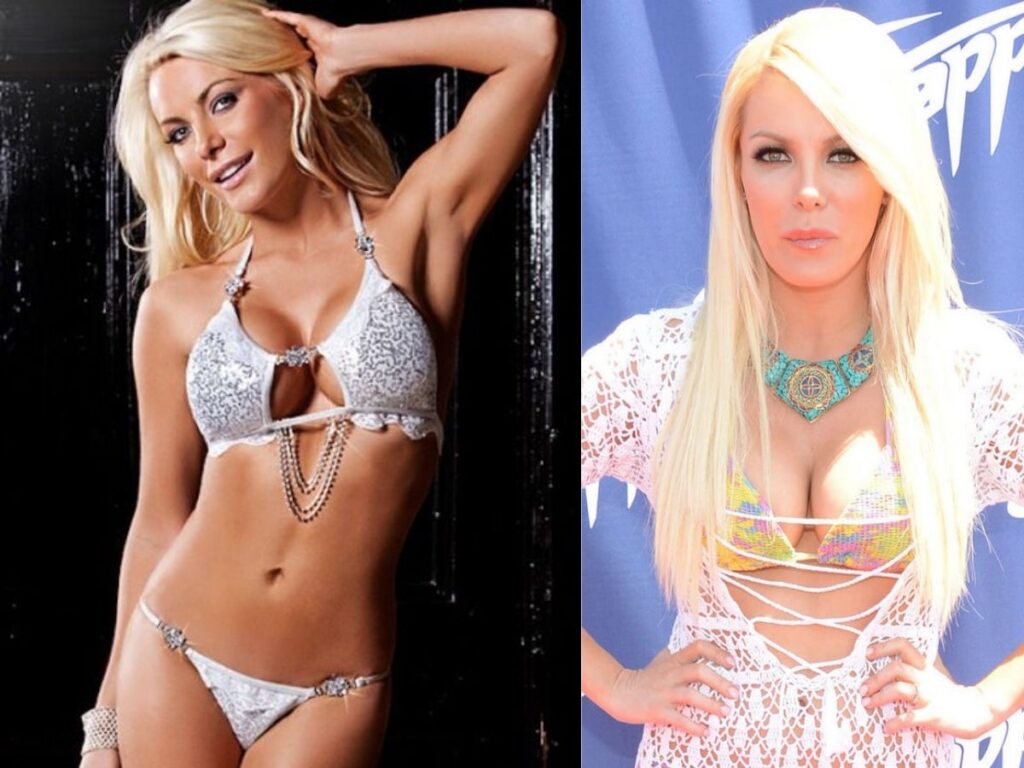
One of the most symbolically resonant decisions she discussed publicly was the removal of her breast implants. She described the procedure as part of reclaiming bodily autonomy. The implants, once embraced as enhancements aligned with Playboy’s aesthetic, came to represent conformity rather than self-expression. By choosing removal, Crystal not only asserted personal control but also implicitly challenged the broader market dynamics that encourage women to alter their bodies for commercial and cultural approval. In this way, her decision intersected with growing conversations about “unbranding” women’s bodies, highlighting resistance to the branding of femininity through surgical modification and signaling the importance of authenticity over externally imposed market standards.
This act of reversal carried emotional weight. It signaled an intention to dismantle layers of identity constructed for external approval. In interviews promoting her memoir, she framed it as a step toward authenticity rather than rebellion.
Her social media presence also evolved. Earlier posts often featured curated glamour. More recent content leans toward wellness, travel, reflection and candid commentary. The transformation appears deliberate.
Reinvention after association with a cultural giant is rarely straightforward. For many, Crystal remains permanently linked to Hugh Hefner’s legacy. She cannot fully detach from that narrative. Yet through her writing and interviews, she has attempted to contextualize it rather than deny it.
Critics occasionally question timing or motivation, especially given the commercial success of memoir culture. Supporters counter that delayed articulation is common in experiences involving power imbalance. Emotional clarity often arrives years later.
Crystal herself has acknowledged complexity. She does not describe her entire time at the Mansion as uniformly negative. Instead, she presents it as formative but psychologically costly. That nuance distinguishes her account from simplistic condemnation.
The Ongoing Chapter
As of the mid-2020s, Crystal Hefner’s identity centers less on Playboy and more on personal evolution. She continues to give interviews and participate in conversations about autonomy and healing. While she maintains a degree of public visibility, she appears intentional about boundaries.
Her post-Hefner career has not followed a conventional entertainment arc. There are no blockbuster films or long-running series anchoring her résumé. Instead, her most significant contribution to public discourse has been narrative. Through Only Say Good Things, she reframed herself from accessory to author.
In recent years, Crystal has focused on several new initiatives, including partnering with mental health organizations, participating in wellness events, and collaborating with advocacy groups to promote positive body image and emotional resilience. She has also shared plans to develop a podcast focused on stories of personal reinvention and has spoken about the possibility of launching a wellness brand or digital community centered on healing and self-expression. Crystal continues to make media appearances, give interviews, and take part in panel discussions highlighting the ongoing impact of her experiences. These projects signal her commitment to using her platform for advocacy and personal growth, keeping her influence relevant and evolving.
In doing so, she joined a broader movement of women reassessing past power structures within media empires. Her story intersects with questions about grooming, consent, image economics and psychological resilience.
Crystal Hefner’s post-Mansion chapter is still unfolding. Yet one theme remains consistent. She is attempting to define herself not by proximity to a powerful man, but by the clarity with which she now speaks about that proximity.
VI. Personal Life and Legacy
As of 2026, Crystal Hefner is 39 years old. Nearly a decade has passed since the death of Hugh Hefner, and with that distance has come recalibration. She resides in California, the state that shaped both her rise and her reckoning. She did not have children with Hefner, a fact that subtly influenced both her estate position and her post-Mansion autonomy. Crystal remains close to her parents, who still live in Southern California and have provided a steady source of support during her transitions. Although she does not have siblings, her family ties have continued to play an important role in her life, offering a sense of stability throughout her public and private challenges.
Her life today appears intentionally quieter than the years that defined her twenties. The red carpets, themed Mansion parties and tightly managed social schedule have given way to something more deliberate. In interviews and public appearances, she projects measured calm rather than performative glamour. The contrast is striking.
From Cultural Symbol to Self-Authored Narrative
For many observers, Crystal Harris remains inseparable from the final chapter of Hugh Hefner’s life. She was his third and last wife, the woman photographed beside him during his most physically fragile years. In that sense, she functions as a symbol of Playboy’s closing era. When historians revisit the brand’s twilight period, her image will inevitably accompany the narrative.
Yet her legacy is not static.
In the years immediately following Hefner’s death, public commentary often recycled familiar tropes. She was labeled by some critics as opportunistic, a young model who married an elderly magnate for status. That framing, common in tabloid ecosystems, reduced a complex relationship to caricature.
The publication of her memoir in 2023 altered that narrative trajectory. Through interviews with outlets including Fox News and NPR, she articulated a different perspective. Rather than accepting the “gold-digger” stereotype, she described herself as someone who entered a powerful environment at 21 and gradually lost her sense of self within it.
By speaking publicly about emotional imbalance, grooming dynamics and identity erosion, she reframed her place in Playboy history. Whether every reader agrees with her interpretation is secondary to the fact that she shifted the lens. She became an active narrator rather than a passive character in someone else’s mythology.
The Weight of Reassessment
Crystal Harris’s legacy exists within a broader cultural reevaluation of media empires built on sexual spectacle. As conversations about consent and agency have intensified in recent years, the Playboy Mansion has been reconsidered not only as a site of glamour but as a system of power.
Her testimony contributes to that reassessment. She does not present herself as a revolutionary figure. Instead, she positions herself as someone who internalized expectations and later unpacked them through therapy and reflection. That distinction matters. It situates her story within psychological evolution rather than sensational accusation.
For cultural historians, she represents a bridge. She connects Playboy’s mid-century mythology to its twenty-first-century critique. She embodies both aspiration and aftermath.
A Wellness-Oriented Present
In her current phase of life, Crystal emphasizes wellness. Her social media presence features themes of mental health awareness, physical recovery and personal boundaries. She has discussed removing breast implants placed during her early Playboy years as part of reclaiming bodily autonomy. The act carries symbolic resonance. It reflects a desire to strip away externally imposed aesthetics in favor of self-directed choice.
She appears selective about public exposure. While she participates in interviews and occasional events, she does not maintain the relentless visibility that once accompanied her name. Privacy now functions as a value rather than a constraint.
Living in California allows continuity without confinement. She remains geographically near the landscape that shaped her identity, yet no longer resides within its most mythologized estate. The shift from Mansion life to independent living marks one of the most significant transformations of her adult years.
No Children, A Different Inheritance
Crystal did not have children with Hugh Hefner. This absence has shaped both her public identity and her private obligations. Without shared offspring, her connection to the Hefner legacy is symbolic rather than genealogical.
Financially, she was not a principal heir to Hefner’s estate. His fortune largely passed to his children and designated charitable causes. That reality undercuts simplistic assumptions about her motivations and reframes her marriage within a different economic context than tabloids once suggested.
Her inheritance, if it can be described that way, is narrative rather than material. She inherited the association with a global brand and the scrutiny that comes with it. She also inherited the responsibility of deciding how to contextualize her experience.
The Complexity of Legacy
Legacy is rarely singular. For some, Crystal Harrisr will always represent the youthful final wife of an aging icon. For others, she symbolizes the emotional cost of entering powerful systems too young. For still others, she is a woman who made choices within the constraints she understood at the time and later revised her understanding.
At 39, she stands in a different season of life than the 21-year-old who walked into the Playboy Mansion. Time has allowed for narrative correction and emotional articulation. The arc of her biography bends toward reclamation rather than spectacle.
If the early chapters of her story were defined by proximity to power, the later ones are defined by distance from it. That distance has granted perspective. It has also reshaped how she wishes to be remembered.
Crystal Harris’s personal life today appears grounded in wellness, privacy and intentional living. Her legacy, meanwhile, remains intertwined with one of America’s most controversial media empires. Yet through writing and reflection, she has ensured that her role in that history is not frozen in tabloid shorthand.
It is complicated, contested and undeniably her own.
What specific steps did Crystal take to rebuild her identity after leaving the Mansion?
Crystal Harris took deliberate, multi-year steps to reclaim her identity after leaving the Playboy Mansion in 2018, focusing on therapy, physical changes, and self-redefinition.
Therapy and Emotional Healing
Underwent five years of intensive therapy post-Hefner’s death to unpack trauma, grooming, and identity loss. She describes relearning basic preferences (“What do I like?”) after years of suppression under Hefner’s rules, emphasizing self-discovery and breaking the “trauma bond.”
Physical and Appearance Reset
- Removed breast implants (suffered “breast implant illness”—fatigue, brain fog); ditched bleach-blonde hair for natural color.
- Stopped posting bikini/swimsuit photos on social media, rejecting objectification: “My identity is not by how people like bikini pictures.”
Career and Advocacy Shift
- Ended promotional posts for superficial products (teeth whitening, teas); now advocates for women’s self-worth via her memoir Only Say Good Things (2023).
- Pushes Playboy Foundation to support women-focused causes; insists Hefner’s photos credit women by name, countering erasure.
Lifestyle and Mindset Changes
- Prioritizes female friendships over competition; sets firm boundaries in dating (“If I don’t feel respected, I don’t want it”).
- Cultivates internal validation, viewing her Mansion years as a “social experiment” she survived, now empowering young women against similar traps.