
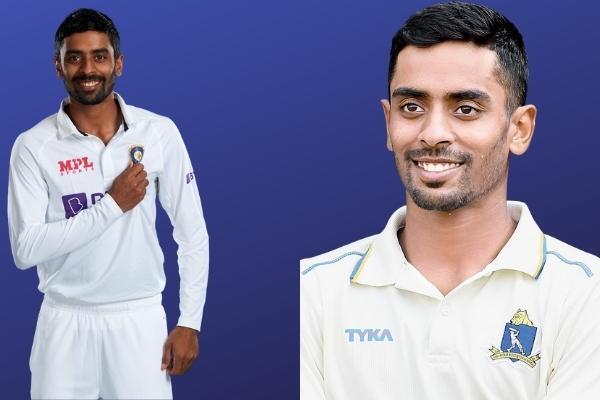
If Indian domestic cricket had a hall of consistency, Abhimanyu Easwaran would have occupied prime position in it for the better part of a decade.
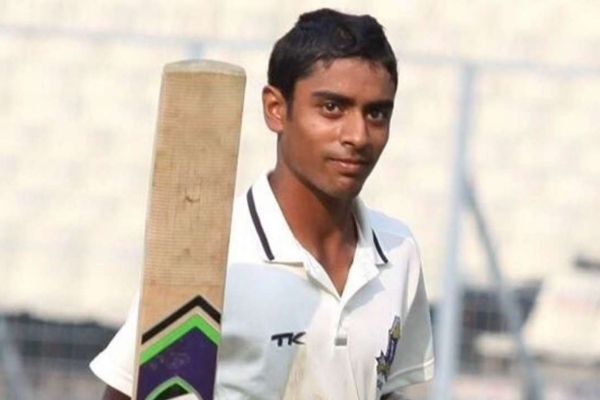
The Abhimanyu Easwaran biography is the story of a cricketer who has done almost everything right in the domestic system and found the doors to Test cricket frustratingly slow to open. He has been prolific for Bengal in the Ranji Trophy across multiple seasons, led India A on challenging overseas tours, captained Bengal to a Ranji Trophy final, and sat in the Indian Test squad dugout in England, Australia, and at home, without earning a single cap.
At 30 years old as of 2026, Easwaran remains one of the most discussed names in Indian domestic cricket circles, discussed not because of controversy, but because of the persistent gap between what he has produced and what he has been given. His first-class average of over 49, accumulated across more than 110 matches, is the kind of number that earns openers international opportunities in most other national cricket systems.
He is a right-handed opening batsman with a textbook technique for the longer format, a temperament suited to building long innings, and a record that speaks for itself. Whether or not he ever earns his Test debut, the Abhimanyu Easwaran domestic cricket story is one of the most distinguished in Indian red-ball cricket of the modern era.
PERSONAL PROFILE AT A GLANCE
| Full Name | Abhimanyu Ranganathan Parameswaran Easwaran |
| Date of Birth | 6 September 1995 |
| Birthplace | Dehradun, Uttarakhand, India |
| Age (March 2026) | 30 years |
| Height | 5 ft 9 in (175 cm) |
| Nationality | Indian |
| Heritage | Tamil father (Ranganathan Parameswaran Easwaran, CA); Punjabi mother |
| Batting Style | Right-handed |
| Bowling Style | Right-arm leg-break googly (occasional) |
| Role | Right-handed opening batsman / Red-ball specialist |
| Domestic Team | Bengal |
| Other Teams | East Zone, India A, India B, Rest of India (Irani Cup) |
| First-Class Debut | 14 December 2013 — UP vs Bengal at Eden Gardens, Kolkata |
| List-A Debut | 17 December 2015 — Bengal vs Madhya Pradesh at Rajkot |
| T20 Debut | 31 January 2017 — Bengal vs Tripura at Eden Gardens |
| Academy Training (early) | Nirmal Sengupta (Kolkata coach, from age 10); Abhimanyu Cricket Academy, Dehradun |
| College | Umes Chandra College, Kolkata |
| India Test squad call-ups | England 2021 (first call-up), Australia 2024, England 2025 — no Test debut yet |
| Captaincy | Bengal (Ranji Trophy); India A; India B (Duleep Trophy 2024) |
| Highest FC Score | 233 — for India A vs Sri Lanka A, May 2019 |
| Net Worth (est.) | Approx. Rs 4-6 crore (domestic contract and BCCI Grade C) |
Early Life and Background
Abhimanyu Ranganathan Parameswaran Easwaran was born on 6 September 1995 in Dehradun, Uttarakhand, into a family that bridged two of India’s major cultural traditions. His father, Ranganathan Parameswaran Easwaran, is a Tamil Chartered Accountant who had an extraordinary relationship with his son’s cricketing ambitions well before his son had demonstrated he was exceptional. In 1988, before Abhimanyu was even born, his father established the Abhimanyu Cricket Academy in Dehradun, naming it after a future son he hoped would become a cricketer. His mother is from Punjab. The academy became the crucible for his early development.
At age 10, Abhimanyu moved to Kolkata to pursue his cricket career more seriously. He went to live with his coach Nirmal Sengupta, staying away from his family and in a home close to the Bengal capital’s cricket grounds. For a child of ten to leave home and live with a coach in a different city is an extraordinary commitment, and it speaks to how seriously both Abhimanyu and his family took the cricket dream.
He attended Umes Chandra College in Kolkata, studying alongside his cricketing development. Growing up in Kolkata’s club cricket environment exposed him to the intense, unforgiving world of Bengal cricket, where batters are expected to play long, technically sound innings and earn their place through performance rather than promise alone.
His dual cultural identity as a Tamilian-Punjabi boy from Uttarakhand playing for Bengal gave him an outsider’s perspective on his adopted state’s cricket culture. He has spoken in interviews about how living away from his family from such a young age shaped his mental discipline, teaching him to be self-reliant and focused in a way that comfortable home environments rarely demand.
Domestic Cricket Career

First-Class Debut and the Bengal Foundation (2013-2017)
Abhimanyu Easwaran made his first-class debut on 14 December 2013 against Uttar Pradesh at the Eden Gardens in Kolkata. He was 18 years old and playing on the ground that Bengal regards as its spiritual home. Early seasons brought gradual development rather than instant impact, as he settled into the demands of Ranji Trophy cricket against experienced bowling attacks.
His List-A debut followed in December 2015 against Madhya Pradesh at Rajkot in the Vijay Hazare Trophy, where he scored 45. By the 2016-17 season, his List-A form had taken significant strides: he scored 472 runs across nine matches at an average of 59 with two centuries, announcing himself as a serious white-ball contributor as well as a red-ball specialist.
His T20 debut came in January 2017 for Bengal against Tripura at the Eden Gardens, completing his introduction across all three formats of domestic cricket.
The Breakthrough Season- Ranji Trophy 2018-19
The 2018-19 Ranji Trophy season was the one that made the cricketing world sit up and notice. Abhimanyu Easwaran finished as Bengal’s leading run-scorer for the season with 861 runs in just six matches, at a remarkable average of 95.66. Within this extraordinary campaign came his first first-class double century: 201 not out against Punjab. He had arrived not merely as a consistent performer but as a dominant one.
The following year extended his double-century tally when he made 233 for India A against Sri Lanka A in May 2019, the highest individual score of his career and the kind of innings on the big India A stage that signalled genuine Test readiness to any objective observer.
Vijay Hazare Trophy – White-Ball Excellence
While his primary reputation is as a red-ball player, Easwaran has been one of the most prolific batters in the Vijay Hazare Trophy across multiple seasons. He topped the tournament’s run charts in one particularly dominant campaign, accumulating 779 runs in nine matches at an average of 389.50 and a strike rate of 124.04, with five centuries and a half-century. That is not a misprint: an average of 389 means he was finishing innings not out almost every time he batted that tournament.
His Vijay Hazare Trophy record includes eight-plus centuries and more than 2,400 runs, establishing him as one of the most reliable performers in the 50-over domestic competition over the past decade.
2024-25 Season and Irani Cup 191
After missing some domestic games due to India A commitments and a hairline finger fracture, Easwaran came into the Irani Cup 2025 in Nagpur under considerable pressure. He had been dropped from the national Test squad just days earlier, and many in the cricket community were questioning whether his time had passed. His response was to score a composed 191 off 292 balls for Rest of India against Vidarbha — an innings of the highest quality that reignited the conversation about his Test credentials once again.
India A and National Team Prospects
First India Test Call-Up – England 2021
Abhimanyu Easwaran received his first call-up to the Indian Test squad in 2021 for the five-Test series against England. It was the culmination of years of domestic consistency and India A performances. He was named as a reserve opener, the third choice behind established openers, and despite being part of the squad did not play a Test during that tour.
The pattern would prove frustratingly persistent. In cricket, being in the squad without making the playing XI is often described as limbo, and Easwaran lived in that limbo across three separate national squad inclusions spanning four years.
Australia Tour 2024 and the Border-Gavaskar Trophy
In 2024, Easwaran toured Australia with India A ahead of the Border-Gavaskar Trophy, gaining experience in Australian conditions as a preparation exercise for a possible Test debut in the series itself. He was then named in the 18-member Indian squad for the Border-Gavaskar Trophy. When Rohit Sharma opted out of the first Test in Adelaide, it appeared his moment might finally have arrived. Instead, the team management preferred KL Rahul to open, and Easwaran again went cap-less.
England 2025 and the West Indies Axe
Easwaran was part of the Indian Test squad for the Anderson-Tendulkar Trophy in England in 2025. India won the series, but Easwaran did not play a single Test. He was subsequently dropped from the West Indies series squad in September 2025, with chief selector Ajit Agarkar explaining that in a home series with only 15 places available, a dedicated third opener was not required when KL Rahul and Yashasvi Jaiswal were performing at the top.
“When you travel you take a third opener, here you get an extra spin option in Axar and can only pick 15. KL and Jaiswal haven’t done too bad; if we need him we can fly him out.” — Ajit Agarkar, BCCI chief selector, September 25 2025
The decision drew significant criticism from the cricketing community. Former India international Varun Aaron had said publicly on ESPNcricinfo just before the announcement that India needed to give Easwaran a chance at some stage. Former selector Saba Karim was more pointed, arguing that repeatedly selecting a player in squads without giving them a game and then dropping them was unfair to both the player and the system.
Despite the West Indies omission, Easwaran remained in India’s squads for the South Africa A tour of India in late 2025 at the India A level, confirming that while the door to the senior team had temporarily closed, his standing in the second-tier national setup remained strong.
Playing Style and Strengths
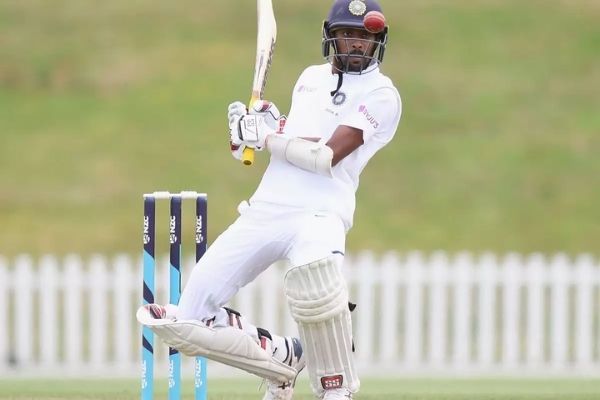
Abhimanyu Easwaran is a classically trained right-handed opening batsman who relies on technical precision rather than power hitting. His game is built around a high backlift, a still head, and excellent footwork that allows him to play both forward and back with equal confidence. These foundations, drilled into him during his formative years under Nirmal Sengupta in Kolkata, give him the ability to handle swing, seam, and spin across all conditions.
His defensive technique is among the best in Indian domestic cricket. He leaves the ball outside off stump with good judgment, rarely gets trapped lbw, and plays straight when attacking. What makes him particularly effective as a red-ball opener is his patience. He is not a batter who can be rushed out by pressure or quick wickets at the other end. He has the temperament to play through difficult patches and convert starts into large scores, as his high number of centuries relative to half-centuries demonstrates.
He is also an adept judge of the single and works the ball into gaps with intelligent running, which helps maintain scoring rate while preserving wickets in Test-match conditions. In the Vijay Hazare Trophy, he has demonstrated that his game translates to the 50-over format, where he can accelerate effectively when the innings demands it.
His bowling is occasional right-arm leg-break, rarely used at the senior level. His fielding is reliable and he is a strong presence in the slip cordon. As a senior player in the Bengal setup and as India A captain, his ability to read the game has been consistently highlighted by those who have played under or alongside him.
Leadership and Role in Bengal Cricket
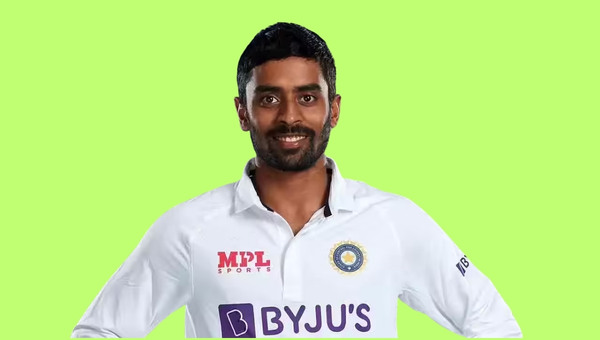
Abhimanyu Easwaran has captained Bengal in the Ranji Trophy and has been one of the most consequential leaders in Bengal’s recent domestic history. Under his captaincy, Bengal reached the final of the 2019-20 Ranji Trophy, one of the team’s strongest Ranji campaigns in many years. His leadership style is described by teammates as calm, strategically sharp, and supportive, creating a positive team environment that has helped nurture younger Bengal players.
At the national level, he captained India B in the Duleep Trophy 2024 and has led India A on tours to South Africa, the West Indies, and in home series against visiting A teams. The Duleep Trophy captaincy in 2024 was particularly visible, as he scored heavily and led from the front at the highest available domestic stage below Test cricket.
His role as a senior player in Bengal cricket goes beyond runs scored. He is a figure who has attracted national attention and ambition to the Bengal squad, demonstrating that consistent domestic performance in a non-glamour state can still lead to the highest levels of consideration in Indian cricket. For younger Bengal cricketers, his persistence and professionalism serve as a model of how to approach a long career in the domestic game.
He also features in the Dhaka Premier League in Bangladesh, playing for Prime Bank Cricket Club, one of the leading clubs in that competition. This overseas club experience has broadened his exposure to different conditions and further cemented his reputation as a red-ball specialist with genuine international-level credentials.
Records and Achievements
1. 27-plus centuries in the Ranji Trophy — among the highest tallies by any active Indian domestic batter in the format’s history
2. First-class career average of 49-plus across 110-plus matches — sustained over more than a decade of top-level domestic competition
3. 861 runs in six Ranji Trophy matches in the 2018-19 season at an average of 95.66 — the highest in the tournament that season
4. First-class highest score of 233 — scored for India A against Sri Lanka A in May 2019 at Chinnaswamy Stadium
5. 201 not out against Punjab in the 2018-19 Ranji Trophy — his maiden first-class double century
6. 191 off 292 balls for Rest of India in the Irani Cup 2025 against Vidarbha in Nagpur
7. Vijay Hazare Trophy: 779 runs in nine matches in a single campaign, including five centuries; one of the most dominant single-season performances in the competition’s history
8. Led Bengal to the Ranji Trophy Final 2019-20
9. Captained India B in the 2024 Duleep Trophy
10. India A captain for tours to South Africa, West Indies, and England
11. 153 for India Red in the Duleep Trophy final — a match-winning innings in the pinnacle domestic knockout
12. Three confirmed India Test squad inclusions (England 2021, Australia 2024, England 2025) without a Test debut — a rare distinction in Indian cricket history
13. Featured in Bangladesh’s Dhaka Premier League for Prime Bank Cricket Club; one of few Indian domestic cricketers to play competitive cricket in Bangladesh
Career Statistics Overview
| Format | Matches | Innings | Runs | Average | High Score | 100s / 50s |
| First Class (career) | 110+ | 185+ | 8,200+ | 49.00+ | 233 | 30+ / 32+ |
| Ranji Trophy | 80+ | 135+ | 6,000+ | 48.50+ | 200* | 27+ / 22+ |
| Irani Cup / Duleep | 15+ | 22+ | 950+ | ~48 | 191 | 3 / 5 |
| List-A (all) | 92+ | 90+ | 4,100+ | ~47 | 195* | 12 / 22 |
| Vijay Hazare Trophy | 50+ | 50+ | 2,400+ | ~49 | 195* | 8 / 13 |
| T20 (domestic) | 60+ | 55+ | 1,200+ | ~24 | 80+ | 1 / 8 |
The statistics confirm what decades of watching Abhimanyu Easwaran bat have established: he is one of the most reliable run-scorers in Indian domestic cricket across all formats, with a clear specialisation in first-class and red-ball cricket. His first-class average of over 49, maintained across more than a decade and 110-plus matches, puts him in the company of the finest domestic openers India has produced. His Ranji Trophy tally of 27-plus centuries is the figure that most directly illustrates his value. His List-A numbers, including over 4,100 runs at nearly 47, further demonstrate that his batting ability is not confined to the longest format.
Personal Life
Abhimanyu Easwaran’s family background is genuinely unusual in Indian cricket. He has a Tamil father and Punjabi mother, was born in Uttarakhand, moved to Kolkata at age 10, and went on to represent Bengal throughout his career. His identity cuts across four distinct Indian cultural regions, which perhaps explains some of the groundedness and adaptability that characterizes his approach both at the crease and in interviews.
His father Ranganathan Parameswaran Easwaran is perhaps the most unusual figure in this story. A Chartered Accountant who had no professional cricketing background himself, he not only named a cricket academy after his son before his son was born, but also traveled to matches throughout Abhimanyu’s career, always prioritising his son’s dreams. The academy in Dehradun continues to operate, providing young cricketers in Uttarakhand with structured training and opportunities.
Away from the field, Easwaran is known for a quiet, private personality. He does not maintain a large social media presence relative to many of his contemporaries, and rarely gives interviews beyond the formal post-match setting. Teammates describe him as a serious, focused professional who brings the same composure to training that he brings to batting under pressure in a Ranji Trophy quarter-final.
The years of waiting for a Test debut have been handled with visible dignity. He has spoken in interviews about the hurt of being overlooked, particularly after the West Indies squad omission in 2025, but without bitterness. His position is that he can only control what he does on the field, and that his job is to keep making runs for Bengal and India A until the selector’s position changes.
Future Prospects
The question facing Abhimanyu Easwaran’s international career in 2026 is a stark one. With Yashasvi Jaiswal and KL Rahul firmly established as India’s Test openers, and B Sai Sudharsan available at number three, the path to a Test debut appears narrower than at any previous point. Chief selector Ajit Agarkar, after the West Indies squad announcement in September 2025, spoke about there being no room for a specialist back-up opener in a home series, suggesting the door may only reopen in the event of injury or overseas travel where a larger squad is selected.
Varun Aaron’s comment on ESPNcricinfo captures the frustration of the cricketing community accurately: India do have to give Abhimanyu a chance at some stage. The question is whether at 30, turning 31 in September 2026, that stage will arrive in time. Domestic openers in the red-ball game tend to have longer peak periods than T20 specialists, and there is no physical or technical reason why Easwaran cannot continue to perform at the highest domestic level for another three to four years.
His continued selection for India A squads in 2025 and 2026, including against South Africa A on home soil, indicates that he remains in the selectors’ thinking, even if the senior team door has temporarily closed. A strong Ranji Trophy season in 2025-26, combined with any opening created by injury to either settled opener, could still make his international debut possible.
Regardless of what happens at the international level, his legacy in Indian domestic cricket is already secure. Over 8,000 first-class runs, a career average above 49, more than 30 centuries, Bengal captaincy, India A captaincy, and the Duleep Trophy — these are the credentials of a cricketer who has given everything to his craft. If the Test cap never comes, it will be one of Indian cricket’s more melancholy injustices. If it does, it will be a story worth celebrating.
Conclusion
The Abhimanyu Easwaran biography is, in many ways, one of the defining domestic cricket stories of India in the 2010s and 2020s. It is a story about what consistent excellence looks like when sustained over a decade in the most competitive domestic cricket ecosystem in the world. It is also, with honesty, a story about the gap that can exist between merit and opportunity in a system where only one team can represent 1.4 billion people.
He has scored 27-plus Ranji Trophy centuries. He has led Bengal to a Ranji final and India A on overseas tours. He has scored 191 in the Irani Cup at 30 years old, still performing at the highest domestic level, still hungry. He has sat in three separate India Test squads without getting a cap, which is not a failure of character or technique but a collision with circumstance.
Whether or not the Test debut arrives, the standing of Abhimanyu Easwaran as Bengal’s finest opening batter of his generation and one of the most consistent domestic performers in Indian cricket history is not in dispute. The Abhimanyu Easwaran biography is still being written, and the most important chapter may yet be to come.
Frequently Asked Questions
Who is Abhimanyu Easwaran?
Abhimanyu Easwaran is an Indian domestic cricketer born on 6 September 1995 in Dehradun, Uttarakhand. He plays for Bengal as a right-handed opening batsman in the Ranji Trophy and other domestic tournaments. He is one of India’s most prolific first-class openers with over 27 centuries in the Ranji Trophy and a first-class career average above 49. He has captained both Bengal and India A, and has been part of India’s Test squad on multiple occasions without earning a Test debut.
What is Abhimanyu Easwaran’s age?
Abhimanyu Easwaran was born on 6 September 1995, making him 30 years old as of March 2026. He turned 30 in September 2025, and many cricket analysts have noted that his window for a Test debut, while still open, is becoming shorter as India’s opening positions are currently occupied by Yashasvi Jaiswal and KL Rahul.
Which domestic team does Abhimanyu Easwaran play for?
Abhimanyu Easwaran plays for Bengal in domestic cricket, representing the state in the Ranji Trophy, Vijay Hazare Trophy, and Syed Mushtaq Ali Trophy. He has been Bengal’s captain in the Ranji Trophy and led the team to the 2019-20 Ranji Trophy final. At national representative level, he plays for India A and has represented East Zone, India B, and Rest of India in the Duleep Trophy and Irani Cup respectively.
What are Abhimanyu Easwaran’s stats in the Ranji Trophy?
Abhimanyu Easwaran is one of the most prolific run-scorers in Ranji Trophy history among active players. He has scored over 6,000 Ranji Trophy runs across more than 80 matches with 27-plus centuries and 22-plus half-centuries, at a career average above 48. His single-season best was 861 runs in six matches at an average of 95.66 during the 2018-19 season, which included his maiden first-class double century of 201 not out against Punjab.
Has Abhimanyu Easwaran played for India?
Abhimanyu Easwaran has not played a senior international match for India as of March 2026. He has been selected in India’s Test squad on three separate occasions, for England in 2021, Australia in 2024 for the Border-Gavaskar Trophy, and England in 2025 for the Anderson-Tendulkar Trophy, but has not featured in the playing eleven on any of these tours. He was dropped from the squad for the India-West Indies Test series in September 2025. He has, however, played extensively for India A, captaining the side on multiple overseas tours.