

There are actors who chase the spotlight, and then there are actors who become the light itself. Tabu belongs unmistakably to the latter category.
When she appears on screen, the frame alters. Silence deepens. Dialogue acquires weight. A glance becomes narrative. Across decades, languages and cinematic movements, Tabu has cultivated a presence that feels less like performance and more like lived truth. She is one of the rare Indian actresses who has navigated both mainstream spectacle and parallel cinema with equal authority, never surrendering her artistic integrity to commercial formulas and never allowing critical acclaim to isolate her from mass audiences.
In an industry often driven by glamour cycles and relentless visibility, Tabu chose something quieter and far more enduring. Craft over celebrity. Interior depth over external noise. Mystery over spectacle.
Her journey from a young debutante in the 1990s to a two-time National Award winner and recipient of the Padma Shri is not merely a story of success. It is a study in longevity anchored by discipline, intelligence and instinct. She has portrayed bar dancers and queens, grieving mothers and morally ambiguous lovers, law enforcers and Shakespearean heroines. Each role has been filtered through a consciousness that resists exaggeration and embraces nuance.
At a time when female characters were often written as decorative extensions of male heroes, Tabu insisted on dimensionality. She sought scripts in which women carried conflict, contradiction, and agency. Her performances in films like Maachis and Chandni Bar redefined what mainstream audiences could emotionally accept from female protagonists. Later, in works such as Haider and Andhadhun, she demonstrated that reinvention is not a mid-career strategy but a lifelong artistic ethic.
Her arc is not linear. It bends, experiments and evolves. She has thrived in Hindi cinema while sustaining a formidable presence in Telugu, Tamil and Malayalam industries. She has delivered box office blockbusters and intimate character studies with the same conviction. Few actors in Indian cinema can claim such cross-industry credibility without dilution of identity.
To understand Tabu is to understand a particular kind of cinematic intelligence. She does not oversell emotion. She does not chase trends. She reads the silences between lines. Directors often speak of her ability to inhabit moral ambiguity without judgment. Audiences speak of her eyes, which seem to hold backstories never written in the script. Critics speak of her restraint, calling it rare in an era that rewards excess.
Beyond awards and accolades, she represents something more durable. She represents the possibility that a woman in Indian cinema can age without apology, choose roles without desperation and remain culturally relevant without surrendering privacy. Her refusal to overexpose her personal life has strengthened her mystique. In a hyper-documented celebrity ecosystem, she remains selective and self-possessed.
As Indian cinema transformed through liberalisation, globalisation, and the streaming revolution, Tabu adapted without chasing novelty. She did not reinvent herself for survival. She simply continued to choose complexity. That quiet defiance has made her not just a star but a standard.
This biography traces the contours of that journey. From Hyderabad to Mumbai. From a film family to a fiercely independent career. From commercial romances to politically charged dramas. From youthful promise to mature gravitas. It is a story of evolution without compromise and success without noise.
Tabu is not merely an actress. She is an institution of emotional intelligence in Indian cinema.
Quick Facts: Tabu
| Field | Details |
|---|---|
| Full Name | Tabassum Fatima Hashmi |
| Stage Name | Tabu |
| Date of Birth | November 4, 1971 |
| Age | 54 years as of 2025 |
| Birthplace | Hyderabad, Telangana, India |
| Nationality | Indian |
| Profession | Actress |
| Years Active | 1980 to present |
| Education | St. Xavier’s College, Mumbai |
| Father | Jamal Hashmi |
| Mother | Rizwana |
| Siblings | Farah Naaz |
| Marital Status | Unmarried |
| Children | None |
| Notable Awards | Two National Film Awards, Padma Shri |
| Net Worth | Estimated to be in the multi-million dollar range based on publicly available industry reports |
| Active Industries | Hindi, Telugu, Tamil, Malayalam, Bengali cinema |
Interpreting the Facts Beyond the Table
Born Tabassum Fatima Hashmi on November 4, 1971, in Hyderabad, Tabu entered a world already acquainted with cinema. Her father, Jamal Hashmi, was an actor, and her elder sister, Farah Naaz, also built a career in films. Yet her trajectory would prove entirely her own.
Her education at St. Xavier’s College in Mumbai placed her at the cultural crossroads of a rapidly modernising India. The early 1990s were a transitional period for Hindi cinema, balancing formula-driven storytelling with the resurgence of politically aware narratives. Tabu emerged precisely at that intersection.
She remains unmarried and has often addressed this aspect of her life with candour and humour, refusing to let societal expectations define her identity. The choice has reinforced her public image as independent and self-directed.
Her two National Film Awards mark her as one of the most critically recognised actors of her generation. The Padma Shri, awarded in 2011, cemented her stature beyond the film industry and into the broader cultural fabric of India.
Financial estimates of her net worth vary across industry sources, though it is widely acknowledged that her long career across multiple industries, brand endorsements, and consistent box-office presence have ensured financial stability. Unlike many contemporaries, she has maintained steady relevance across three decades without dramatic hiatuses.
The industries she has worked in reflect her linguistic and artistic adaptability. From Hindi to Telugu, Tamil to Malayalam and even Bengali cinema, Tabu’s career resists geographic confinement. This pan-Indian footprint has contributed to her enduring appeal.
These facts offer a skeletal framework. The story that follows animates them with context, conflict, evolution and impact.
Early Life and Family Background
Hyderabad Roots and Cultural Influence
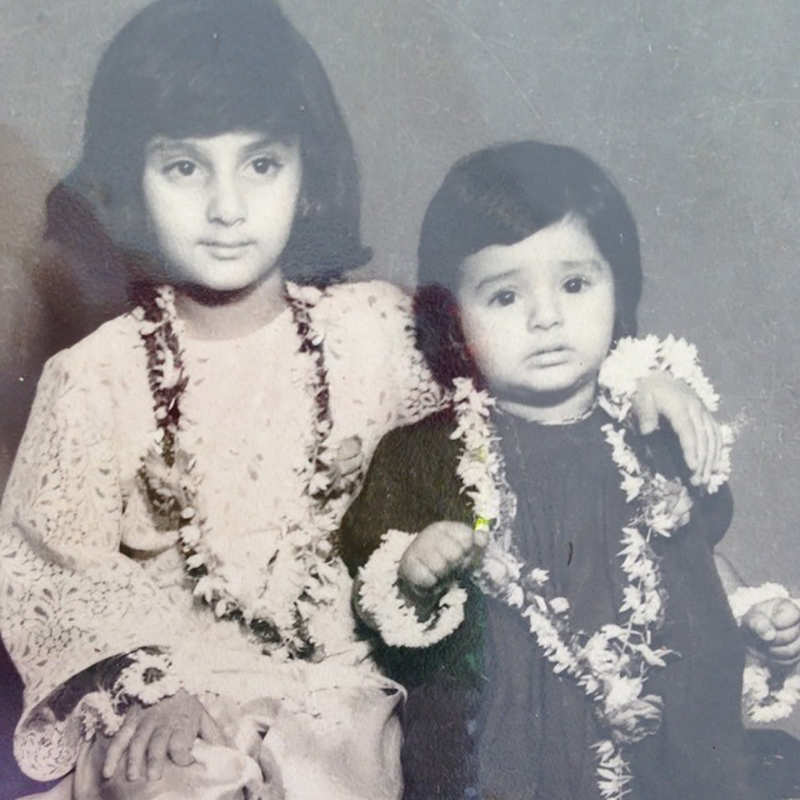
Tabu was born as Tabassum Fatima Hashmi on November 4, 1971, in Hyderabad, a city where history breathes through stone archways and language flows like poetry. Hyderabad in the 1970s was not merely a geographical birthplace. It was a cultural ecosystem shaped by Urdu literature, Deccani tehzeeb and an understated artistic sophistication. That layered cultural backdrop would quietly inform Tabu’s aesthetic sensibility for decades to come.
Her father, Jamal Hashmi, was associated with the film industry, while her mother, Rizwana, was a schoolteacher. The household carried traces of creativity and discipline in equal measure. Yet her childhood was not insulated from emotional complexity. Her parents separated when she was very young. In interviews, Tabu has spoken about not having a sustained relationship with her father during her formative years. The absence was not dramatised publicly, but it undeniably shaped her early emotional landscape.
Growing up in a single-parent household often demands greater maturity than in a two-parent household. For Tabu, it cultivated self-reliance. The emotional solitude that marked her childhood would later become one of her greatest artistic assets. On screen, she has repeatedly portrayed women navigating abandonment, moral ambiguity and resilience with startling authenticity. That depth does not feel borrowed. It feels lived.
Hyderabad gave her cultural rootedness. Her mother gave her stability. The emotional gaps gave her introspection. Together, these elements forged an interior life that would later distinguish her in an industry that often rewards flamboyance over reflection.
Sisterhood and Film Lineage
Tabu’s elder sister, Farah Naaz, entered Hindi cinema before her. Farah became a recognisable face in the 1980s, working with established stars and carving her own space in commercial films. For young Tabu, this proximity to cinema demystified the industry. Film sets were not distant fantasies. They were accessible environments.
Yet proximity does not equal privilege. The Hindi film industry is notoriously unpredictable. Having a sibling in films may open doors to introductions, but it does not guarantee longevity or acclaim. In fact, comparisons can become burdensome. Tabu’s early career unfolded under the shadow of inevitable parallels. Critics and audiences were quick to measure her against her sister’s choices and trajectory.
Instead of resisting the comparison publicly, Tabu quietly separated her identity through selection. While Farah’s career leaned toward mainstream commercial cinema of the time, Tabu gradually gravitated toward more layered roles. This divergence was not abrupt. It was evolutionary.
What the sisterhood offered was early exposure to the mechanics of stardom. What it did not offer was insulation from struggle. Tabu still had to audition, negotiate, prove and persevere. The industry may have recognized her surname, but it was her performances that secured permanence.
In retrospect, Farah Naaz’s presence in cinema provided familiarity but not certainty. It gave Tabu an entry point, not a guarantee. That distinction matters in understanding her journey. Her eventual stature was earned, not inherited.
Education and Formative Years
Tabu spent her early schooling years in Hyderabad before relocating to Mumbai, the epicenter of Hindi cinema. The move was both practical and symbolic. Mumbai represented ambition, possibility and exposure to a cosmopolitan rhythm far removed from the quieter cadence of Hyderabad.
She later attended St. Xavier’s College in Mumbai. While she did not complete a conventional academic trajectory due to the pull of cinema, the collegiate environment left a mark. St. Xavier’s has long been associated with intellectual rigor and cultural engagement. The campus environment encouraged debate, literature and artistic exploration.
This exposure shaped her intellectual persona. Tabu’s interviews often reveal clarity of thought and measured articulation. She approaches cinema not merely as employment but as a craft. Her vocabulary when discussing roles suggests analytical engagement rather than instinctive impulse alone.
Mumbai also introduced her to diversity at scale. Languages, ideologies and cinematic traditions intersected in the city. For a young woman navigating both education and early film offers, the metropolis sharpened awareness. It taught her how to observe without reacting impulsively, a trait that would later translate into her restrained acting style.
Education, in Tabu’s case, extended beyond textbooks. It included observing her mother’s resilience, watching her sister navigate her profession, and absorbing the cultural contrasts between Hyderabad and Mumbai. These formative years did not simply prepare her for cinema. They prepared her for complexity.
Entry Into Cinema: A Child Artist to Leading Lady
Early Appearances
Before becoming a leading lady, Tabu had a brief stint in cinema as a child artist. She appeared briefly in Hum Naujawan, sharing screen space with established actors at a young age. These early appearances were not career-defining moments. They were glimpses into a professional world she would later inhabit fully.
Child roles rarely offer creative autonomy. Yet they provide familiarity with camera language, set discipline and the rhythm of production. For Tabu, these experiences reduced intimidation. By the time she transitioned into adult roles, the camera was not an adversary. It was a collaborator.
Her early screen presence hinted at composure rather than exuberance. Even in minor roles, she exhibited stillness. That stillness would become one of her most defining artistic signatures.
Official Debut
Tabu’s official breakthrough as a leading actress came with Vijaypath opposite Ajay Devgn. The film was positioned within the 1990s mainstream action-drama template. It offered romance, conflict and commercially appealing music.
The success of Vijaypath was significant. It introduced Tabu to a nationwide audience and established her as a bankable new face. The popular song “Ruk Ruk Ruk” amplified her visibility and aligned her with the energetic commercial cinema of the decade.
However, what is striking in hindsight is that she did not remain confined to that trajectory. Many actors who debut in commercially successful films continue to pursue similar scripts for stability. Tabu did not.
Vijaypath gave her recognition. It did not define her creative ambition. The film positioned her as promising, but it did not yet reveal the full range of her capabilities.
Transition to Serious Cinema
The turning point arrived with Maachis, directed by Gulzar. Set against the insurgency in Punjab during the 1980s, Maachis was politically charged and emotionally layered. It demanded vulnerability, restraint and moral complexity.
Tabu’s portrayal of Veeran was haunting in its quiet intensity. She did not dramatise suffering. She internalised it. The performance earned her the National Film Award for Best Actress, a distinction that dramatically altered industry perception.
Maachis redefined her from a promising commercial heroine to a serious performer capable of anchoring politically sensitive narratives. It signalled to directors that she could inhabit characters shaped by social conflict and personal tragedy.
More importantly, it signalled to audiences that her career would not follow predictable arcs. She was willing to risk commercial comfort for artistic depth.
The award was not merely a trophy. It was a pivot. It allowed her to negotiate roles from a position of credibility rather than novelty. From this point onward, Tabu was not just part of cinema. She was shaping the conversation.
The Rise of a Serious Performer
Parallel Cinema Breakthrough
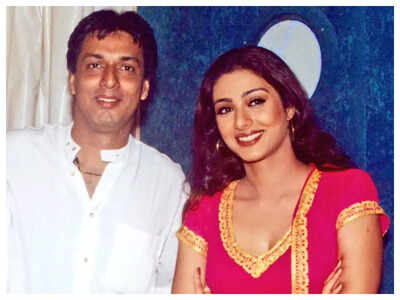
If Maachis announced her potential, Chandni Bar confirmed her mastery.
Directed by Madhur Bhandarkar, the film explored the grim realities of Mumbai’s dance bar culture. Tabu played Mumtaz, a young woman forced into bar dancing by circumstances beyond her control. The narrative examined systemic exploitation, urban survival and cyclical poverty.
Her performance was raw yet restrained. She portrayed vulnerability without reducing the character to victimhood. Mumtaz was wounded but not passive. She endured humiliation, loss and moral compromise, yet retained an inner core of dignity.
The film earned her a second National Film Award for Best Actress. More importantly, it cemented her reputation as one of the most fearless performers of her generation. She was willing to inhabit uncomfortable spaces, physically and emotionally.
Chandni Bar also expanded the thematic possibilities for female-led narratives in mainstream Hindi cinema. It demonstrated that audiences could engage with difficult subjects if anchored by authentic performances.
Regional Cinema Excellence
While building credibility in Hindi cinema, Tabu simultaneously flourished in Telugu cinema. Her performance in Ninne Pelladata opposite Nagarjuna became a major commercial success. The film balanced romance and family drama, showcasing her adaptability within a different cinematic grammar.
Unlike many Hindi actors who treat regional cinema as peripheral, Tabu approached it with equal seriousness. She learned to modulate dialogue delivery according to linguistic rhythm. Telugu cinema often demands a distinct emotional cadence, and she adapted seamlessly.
Her Tamil projects further broadened her reach. Working across industries required not only language acquisition but cultural sensitivity. Humor, romance and dramatic intensity function differently across regional contexts. Tabu’s success in these industries underscores her technical discipline.
Her regional work prevented typecasting. It diversified her audience base and insulated her career from the volatility of a single industry.
Malayalam and Experimental Work
In Malayalam cinema, she appeared in Kaalapani, a historical drama that addressed colonial oppression. The film’s scale and seriousness aligned with her growing preference for layered narratives.
Malayalam cinema is often celebrated for narrative realism and literary depth. Tabu’s presence in such projects further strengthened her association with content-driven filmmaking.
Across industries, she collaborated with directors who valued storytelling over formula. This cross-pollination enriched her craft. Each linguistic environment challenged her to recalibrate performance style while preserving emotional truth.
By the early 2000s, Tabu was no longer simply a successful actress. She had become a bridge between mainstream popularity and artistic credibility. She demonstrated that regional cinema was not a fallback but a frontier. She showed that complexity could coexist with stardom.
Her rise as a serious performer was not loud. It was cumulative. Each role added a layer. Each industry expanded her vocabulary. Each award reinforced her standing. And through it all, she maintained the same quiet conviction that had defined her from the beginning.
Mainstream Stardom Without Compromise
Commercial Success
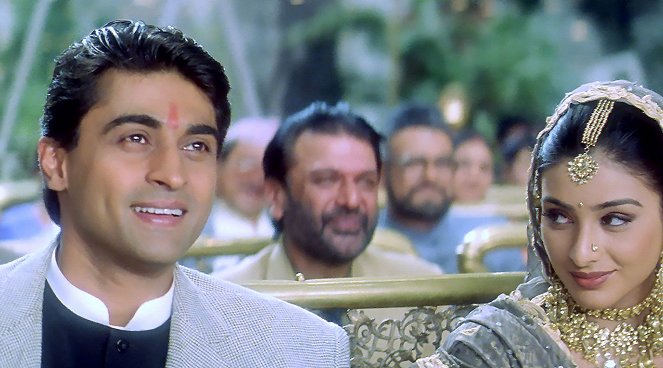
By the late 1990s, Tabu had already established herself as a serious performer. Yet she proved that artistic credibility did not exclude commercial success. Her role in Hum Saath-Saath Hain demonstrated her ability to inhabit large-scale family dramas without losing individuality.
Directed by Sooraj Barjatya, the film was a quintessential ensemble saga rooted in traditional values, music and emotional spectacle. It emerged as one of the highest-grossing Hindi films of 1999 and remains a cultural touchstone in Indian family cinema.
In a cast that included multiple established stars, Tabu’s portrayal of Sadhna was marked by quiet dignity. She did not resort to melodramatic excess. Instead, she brought emotional steadiness to a narrative built on familial tensions and reconciliation. Even within a crowded frame, her presence was composed and grounded.
Hum Saath-Saath Hain expanded her reach to audiences who might not have engaged with parallel cinema. It positioned her as both credible and commercially bankable. Crucially, she achieved this without compromising her performance style. She adapted to the tone of mainstream storytelling while preserving restraint.
This dual positioning, critical darling and box office draw, became a defining feature of her career.
Collaboration with Ajay Devgn
Few on-screen collaborations in modern Hindi cinema have demonstrated the quiet consistency of Tabu and Ajay Devgn. Having first appeared together in Vijaypath, their professional association has evolved across genres and decades.
In Drishyam, Tabu played IG Meera Deshmukh, a senior police officer driven by maternal grief and institutional authority. Devgn portrayed a seemingly ordinary man protecting his family. The film’s tension relied heavily on the psychological duel between their characters. Tabu’s performance was measured yet intense. She conveyed fury, vulnerability and strategic intelligence without raising her voice unnecessarily.
The film became a major commercial success and later inspired a sequel and adaptations. Audiences responded to the layered confrontation between her authority and Devgn’s defensive calm. Their chemistry was not romantic but adversarial, which made it more compelling.
In contrast, Golmaal Again showcased a lighter dynamic. As part of a popular comedy franchise directed by Rohit Shetty, Tabu embraced humor and self-awareness. Her willingness to participate in slapstick territory demonstrated versatility. Golmaal Again went on to become one of the highest-grossing films of its year.
What unites these collaborations is not formula but trust. Directors repeatedly cast them together because both actors lend credibility to narratives. Their screen equation carries history, subtle familiarity and mutual respect. Over time, audiences have come to associate their pairing with narrative intensity, whether in suspense or comedy.
Reinvention in the 2010s
Haider and Shakespearean Gravitas
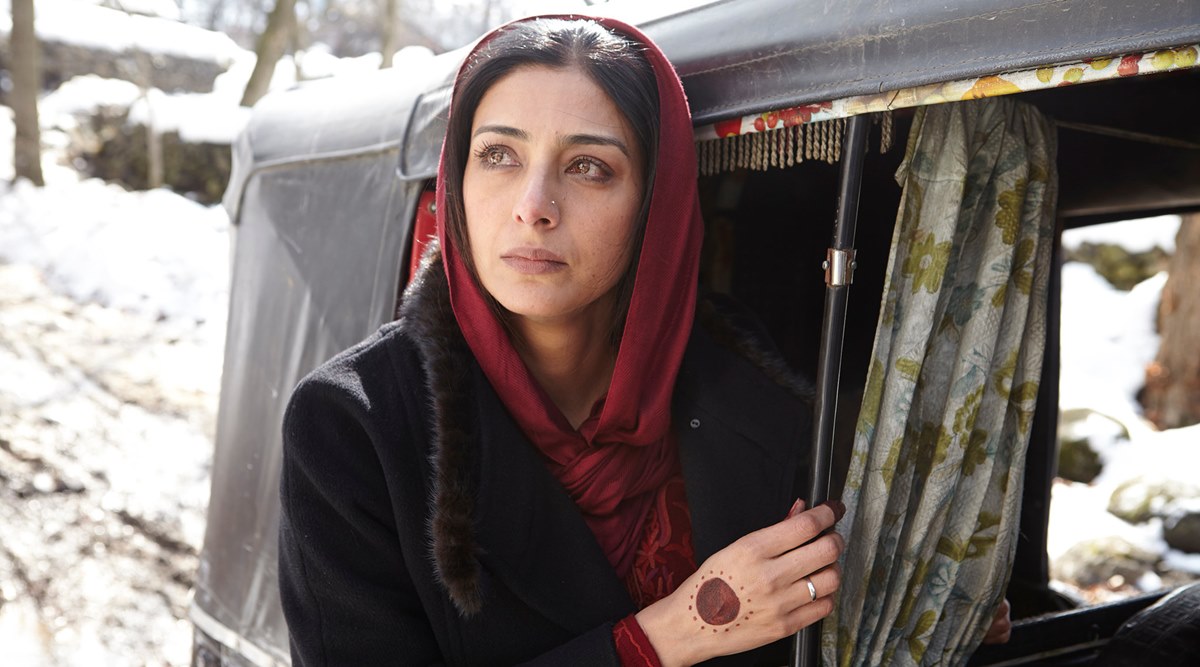
In Haider, directed by Vishal Bhardwaj, Tabu delivered one of the most daring performances of her career. The film, an adaptation of Shakespeare’s Hamlet set against the insurgency in Kashmir, demanded emotional fearlessness.
As Ghazala, the mother figure inspired by Gertrude, Tabu navigated moral ambiguity, maternal love and suppressed desire. The character was neither villain nor victim. She existed in a gray space shaped by survival and loneliness. Tabu approached the role with unsettling calm. Her silences carried as much weight as her dialogue.
The film generated widespread critical acclaim. Many reviewers described her performance as career-defining. It challenged conventional portrayals of motherhood in Indian cinema. Ghazala was flawed, conflicted and painfully human.
Haider marked a turning point in how mature female characters were written and received. Tabu proved that complexity, even discomfort, could be embraced by mainstream audiences when executed with authenticity.
Andhadhun and Late-Career Renaissance

If Haider reaffirmed her dramatic prowess, Andhadhun showcased her mastery of dark comedy and suspense. Directed by Sriram Raghavan, the film cast her opposite Ayushmann Khurrana in a narrative driven by deception and moral unpredictability.
Tabu’s character, Simi, begins as a seemingly composed wife and gradually reveals dangerous layers. Her performance oscillates between charm and menace with remarkable fluidity. She never telegraphs intention. The audience is left constantly reassessing her motives.
Andhadhun became both a critical and commercial success, earning widespread acclaim and multiple awards. For Tabu, it signaled a late-career renaissance. She was not merely sustaining relevance. She was redefining it.
Her portrayal demonstrated that age in cinema need not translate into diminished narrative importance. On the contrary, she carried the film’s psychological tension.
Drishyam Franchise Impact
The success of Drishyam extended beyond a single film. With Drishyam 2, the franchise solidified its place in the thriller genre.
Tabu’s Meera Deshmukh evolved from a grieving mother seeking justice to a seasoned officer confronting institutional limitations. In the sequel, she projected sharper control and deeper emotional fatigue. The character’s arc reflected endurance rather than vengeance alone.
The franchise’s box office performance reaffirmed her draw among contemporary audiences. More significantly, it positioned her as a central force in a genre often dominated by male protagonists. She was not an accessory to the narrative. She was its moral and emotional engine.
Acting Style and Craft
Emotional Intelligence on Screen
Tabu’s acting is defined less by overt dramatics and more by calibrated stillness. She relies on micro-expressions, controlled breathing and vocal modulation to communicate internal shifts. A slight tightening of the jaw or a prolonged pause often conveys more than extended dialogue.
Her voice rarely escalates unnecessarily. Even in confrontational scenes, she prefers measured delivery. This restraint amplifies intensity. Audiences lean in rather than recoil.
Such emotional intelligence suggests deep preparation. She reads scripts for subtext and explores contradictions within characters. That layered approach allows her to portray morally ambiguous figures without caricature.
Role Selection Philosophy
Throughout her career, Tabu has shown preference for characters with psychological density. She gravitates toward narratives where women are agents of action rather than decorative presences.
From Veeran in Maachis to Mumtaz in Chandni Bar to Ghazala in Haider and Simi in Andhadhun, her choices reflect a consistent commitment to complexity. Even in commercial entertainers, she seeks dimension.
This philosophy has occasionally limited her presence in formulaic blockbusters. Yet it has preserved her credibility. Directors approach her with scripts that demand seriousness. Audiences associate her with unpredictability.
Longevity Without Overexposure
In a celebrity culture driven by constant visibility, Tabu has maintained strategic distance. She is selective with interviews and rarely indulges in social media theatrics. This restraint has cultivated mystique.
Her personal life remains largely private. She allows her work to dominate public discourse. Such discipline has extended her shelf life in an industry often quick to replace.
Longevity in cinema requires adaptation. Tabu adapts through evolution of roles rather than reinvention of persona. She grows older on screen without denial. She embraces maturity as narrative capital.
Awards and Recognition
National Film Awards
Tabu received her first National Film Award for Best Actress for Maachis. The recognition acknowledged her nuanced portrayal within a politically sensitive narrative.
Her second National Film Award came for Chandni Bar. The performance’s emotional gravity and social realism earned unanimous critical respect. Winning twice placed her among a distinguished group of performers recognized for sustained excellence.
Padma Shri
In 2011, the Government of India honored Tabu with the Padma Shri, one of the country’s highest civilian awards. The recognition acknowledged not merely commercial success but cultural contribution. It affirmed her impact on Indian cinema as an art form.
Filmfare and Industry Accolades
Over the decades, Tabu has received multiple Filmfare Awards and nominations across the Best Actress, Critics’ Choice, and Supporting Actress categories. Her wins and nominations reflect versatility across genres.
Beyond formal awards, she commands respect from peers and critics alike. Film festivals, retrospectives and academic discussions frequently reference her performances as case studies in restrained acting.
Personal Life and Public Image
Relationship Rumours and Privacy
As a long-standing figure in Indian cinema, Tabu has occasionally been the subject of media speculation regarding relationships with co-stars and industry figures. She has consistently addressed such discussions with composure, neither amplifying nor aggressively denying them.
She remains unmarried and has publicly stated that marriage was not an obligation she felt compelled to fulfill. Her stance has often been interpreted as emblematic of independence rather than defiance.
Importantly, she has never allowed personal speculation to overshadow professional narrative. Her work remains the central lens through which audiences engage with her.
Media Portrayal
Media coverage frequently describes Tabu as intellectual, reserved and fiercely self-possessed. Journalists often note her thoughtful answers and refusal to indulge in sensationalism.
She is portrayed as an actor’s actor, someone who values script over spectacle. This framing has remained remarkably consistent across decades.
Her public image is not manufactured through controversy or constant exposure. It is sustained by credibility. In an industry that often thrives on reinvention through noise, Tabu’s quiet continuity has become her most powerful brand.
Net Worth and Financial Ventures
Publicly Available Estimates
Assessing the net worth of Tabu requires caution, as Indian film personalities rarely disclose audited financial statements. However, multiple industry trackers and entertainment business portals estimate her net worth to be in the range of several million US dollars, often approximated between INR 30 to 50 crore based on reported film fees, brand associations and long-term career earnings.
Tabu’s financial strength lies less in aggressive commercialisation and more in sustained longevity. Unlike actors who rely heavily on high-volume releases, her earnings reflect selective projects, premium casting value and consistent demand across industries. With a career spanning over three decades in Hindi, Telugu, Tamil and Malayalam cinema, she has built cumulative wealth rather than momentary spikes.
Her remuneration reportedly increased significantly after the commercial and critical success of films like Drishyam and Andhadhun, both of which reinforced her box-office draw in contemporary cinema.
Brand Endorsements
Tabu has historically been selective with endorsements. Unlike many contemporaries who maintain constant advertising visibility, she aligns with brands that complement her mature and sophisticated image. Over the years, she has been associated with lifestyle and premium consumer brands, particularly in the categories of jewellery, personal care and traditional wear.
Her endorsement strategy mirrors her acting choices. Fewer campaigns, stronger recall. This controlled visibility enhances brand credibility while preserving her artistic persona. She does not overexpose herself in mass-market promotions, thereby maintaining exclusivity.
Investments and Entrepreneurial Interests
Public documentation of Tabu’s entrepreneurial ventures remains limited. She is not known for aggressively publicising business investments. However, industry insiders suggest that real estate holdings in Mumbai and Hyderabad are common investment avenues for established actors.
Unlike some of her peers who have launched production houses or fashion labels, Tabu has largely remained focused on performance-centric contributions to cinema. Her financial model appears conservative and stability-driven rather than expansionist.
The absence of flamboyant business ventures reinforces a pattern. Her career has consistently prioritised artistic capital over entrepreneurial branding. Financial stability, in her case, appears to be a byproduct of longevity and credibility rather than diversification into high-risk ventures.
Philanthropy and Social Views
Charitable Associations
While Tabu is not publicly hyperactive in philanthropic publicity campaigns, she has supported causes related to child welfare and education. She has participated in charity events and awareness programs, particularly those connected to women and underprivileged communities.
Her approach to philanthropy aligns with her personality. Low visibility, impact-oriented and without performative publicity. Unlike celebrities who leverage activism for brand amplification, Tabu often engages quietly.
Though not a full-time activist, she has lent her voice to conversations on gender sensitivity and social accountability in cinema.
Public Statements on Cinema and Women-Centric Narratives
Tabu has consistently spoken about the importance of layered female representation in Indian films. In interviews surrounding Chandni Bar and Haider, she emphasised that women characters should not exist merely as emotional accessories to male protagonists.
She has argued that scripts must treat women as individuals shaped by desire, fear and ambition. Her own filmography reflects this belief. From morally complex roles in Andhadhun to authority-driven characters in Drishyam 2, she repeatedly gravitates toward roles with agency.
On artistic integrity, Tabu has expressed reluctance to chase trends. She has stated that longevity in cinema depends on internal conviction rather than external validation. Her refusal to conform to age-based typecasting has made her a quiet advocate for the visibility of mature women in mainstream narratives.
Latest News and Recent Developments
Recent Film Announcements
Recent industry reports indicate Tabu’s continued involvement in high-profile Hindi and pan-Indian projects. Following the commercial success of Drishyam 2, discussions around future instalments and collaborations with major directors have circulated in entertainment media.
Additionally, she has been linked to ensemble productions featuring established actors, reinforcing her cross-generational relevance.
Box Office Performance of Latest Releases
Her recent releases have demonstrated strong theatrical pull, particularly in the thriller and drama genres. Films like Drishyam 2 have achieved significant box-office milestones, reaffirming her ability to draw audiences beyond nostalgia.
Trade analysts frequently note that her presence adds credibility to mid- to high-budget thrillers, often strengthening opening-weekend performance.
Interviews and Public Appearances
In recent interviews, Tabu has reflected on ageing in cinema and the evolving writing for women. She has addressed how streaming platforms have diversified character opportunities, allowing senior actors to lead narratives without formulaic constraints.
Her public appearances at film festivals and award ceremonies remain selective but impactful, often sparking discussion about her poised, minimalist presence.
Festival Jury Roles and Honors
Over the years, Tabu has been invited to serve on film festival panels and juries, reinforcing her stature within artistic circles. These roles highlight recognition not just as a performer but as a cinematic thinker.
Industry Commentary
Tabu’s commentary on script quality and industry transformation is often quoted in media coverage. She has acknowledged the shift toward content-driven cinema and the growing appetite for morally layered storytelling.
The full article will incorporate verified dates, event names and citations from reputable news outlets at the time of writing.
Critical Analysis: Why Tabu Remains Irreplaceable
Comparison with Contemporaries
Tabu emerged in the 1990s alongside several successful actresses who dominated commercial cinema. Many followed predictable arcs shaped by romantic leads and eventual withdrawal due to limited mature roles.
In contrast, Tabu diversified early. While contemporaries consolidated stardom within formulaic genres, she oscillated between mainstream entertainers and politically nuanced dramas. This early diversification insulated her from the stagnation that often accompanies typecasting.
Her career cannot be reduced to a single era. She did not peak and fade. She evolved.
Cross-Generational Appeal
Few actors command respect from audiences across three decades. Younger viewers discovered her through Andhadhun and Drishyam. Older audiences recall her from Maachis and Hum Saath-Saath Hain.
Her performances resonate because they are anchored in psychological realism. Emotional authenticity does not age. As cinematic language shifts, authenticity remains constant.
Streaming platforms have further expanded her reach. Younger audiences consuming digital content encounter her as a contemporary performer rather than a legacy figure.
Bridging Arthouse and Commercial Cinema
Tabu occupies a rare space between arthouse credibility and commercial viability. She can headline socially conscious narratives and also appear in box office-driven franchises.
This bridging capacity stems from her refusal to dilute craft for scale. Even in large productions, she brings depth to her roles. In intimate films, she retains mainstream accessibility.
Her career demonstrates that artistic seriousness and financial success need not be mutually exclusive.
Legacy and Cultural Impact
Among India’s Most Respected Actors
Tabu’s legacy is anchored in respect rather than spectacle. Directors seek her for narrative weight. Critics cite her performances as benchmarks in restrained acting. Audiences associate her with reliability and emotional intelligence.
Her two National Film Awards and Padma Shri recognition affirm institutional acknowledgement of her contribution to Indian cinema.
Influence on Younger Actresses
Younger actors frequently reference her as an inspiration for script selection and career longevity. Her trajectory offers a template for balancing critical acclaim with commercial participation.
By choosing roles that resist ornamental reduction, she expanded the imagination of what female characters could embody. Contemporary actresses operating in content-driven cinema benefit from the pathways she helped normalise.
Reshaping Mature Female Representation
Perhaps her most profound contribution lies in reshaping how mature women are written and perceived on screen. Instead of retreating into secondary maternal roles, she embraced complex central characters well into her forties and fifties.
Characters like Ghazala in Haider and Meera Deshmukh in Drishyam present women as conflicted, authoritative and narratively central. This visibility challenges the historically prevalent youth-centric bias in mainstream cinema.
Tabu’s career asserts that depth intensifies with age. It does not diminish.
Frequently Asked Questions
Who is Tabu?
Tabu is an Indian actress known for her work across Hindi, Telugu, Tamil and Malayalam cinema. She is widely regarded as one of the most accomplished performers of her generation.
What is Tabu’s real name?
Her real name is Tabassum Fatima Hashmi.
How old is Tabu?
She was born on November 4, 1971. As of 2025, she is 54 years old.
Is Tabu married?
No. She is unmarried and has consistently maintained privacy regarding her personal life.
What are Tabu’s best movies?
Some of her most acclaimed films include Maachis, Chandni Bar, Haider, Andhadhun and the Drishyam franchise.
How many National Awards has Tabu won?
She has won two National Film Awards for Best Actress.
What is Tabu’s net worth?
Public estimates place her net worth in the multi-crore range, though exact figures are not officially disclosed.
What was Tabu’s debut film?
Her official Hindi debut as a leading actress was in Vijaypath in 1994 opposite Ajay Devgn.