
Aarti Agarwal was a talent that arrived in the Telugu film industry with everything working in her favour and then found that the industry could be as unforgiving as it was welcoming. Born on 5 March 1984 in New Jersey, United States, to Gujarati parents, she had no connection to the Telugu language, no family background in cinema, and no roadmap for how a girl raised in America would navigate one of India’s most competitive regional film industries.

What she had was an extraordinary natural beauty, a warmth that translated effortlessly to the screen, and a determination that carried her from a dance performance in Philadelphia at the age of fourteen to leading roles opposite Chiranjeevi, Mahesh Babu, Nagarjuna, Prabhas, Jr NTR, Ravi Teja, and Nandamuri Balakrishna in a career that lasted a little over a decade.
She passed away on 6 June 2015 in Atlantic City, New Jersey, at the age of thirty-one, following complications after a liposuction surgery.
Her final film, Ranam 2, was released in cinemas the day before. The Aarti Agarwal biography is the story of a brief, bright career that produced genuine moments of cinematic joy, and of a young life shaped by both the extraordinary opportunities and the severe pressures that the South Indian film industry can place on its actresses.
She is remembered with affection by fans who grew up watching her in Nuvvu Leka Nenu Lenu, Indra, and Vasantham, and by an industry that acknowledged too late how much the weight of its expectations had cost her.
Quick Facts About Aarti Agarwal
| Full Name | Aarti Agarwal (also Aarthi Agarwal, Arti Agarwal) |
| Date of Birth | 5 March 1984 |
| Place of Birth | New Jersey, United States |
| Heritage | Gujarati Indian |
| Date of Passing | 6 June 2015, Atlantic City, New Jersey, USA |
| Age at Passing | 31 years |
| Cause of Death | Cardiac arrest following liposuction surgery complications |
| Father | Shashank Agarwal |
| Sister | Aditi Agarwal (also a Telugu film actress) |
| Brother | Akash Agarwal |
| Education | Completed schooling in New Jersey; acting training at Asha Chandra Acting Institute, Mumbai |
| Profession | Actress |
| Years Active | 2001 to 2015 |
| Bollywood Debut | Paagalpan (2001) as Roma Pinto |
| Telugu Debut | Nuvvu Naaku Nachav (2001) as Nandini, alongside Venkatesh |
| Breakthrough Film | Nuvvu Leka Nenu Lenu (2002) as Krishnaveni, alongside Tarun |
| Most Notable Film | Indra (2002) as Sneha Latha Reddy, alongside Chiranjeevi |
| Total Films | Approximately 25 to 28 films across Telugu, Tamil, and Hindi |
| Co-Stars | Chiranjeevi, Mahesh Babu, Nagarjuna, Prabhas, Jr NTR, Ravi Teja, Venkatesh, Balakrishna, Tarun |
| Tamil Films | Winner (2003), Bambara Kannaley (2005) |
| Marriage | Married Ujjwal Kumar, a software engineer, in November 2007 |
| Divorce | Couple divorced in 2009 |
| Final Film | Ranam 2 (2015), released the day before her passing |
| Mother Tongue | Gujarati; also spoke English and some Telugu |
| Languages Worked In | Telugu, Tamil, Hindi |
| Remembered For | Indra, Nuvvu Leka Nenu Lenu, Vasantham, Nenunnanu |
Early Life and Family Background
A Gujarati Family in New Jersey
Aarti Agarwal was born on 5 March 1984 in New Jersey, United States, into a Gujarati Hindu family that had settled in America as part of the large Indian immigrant community concentrated particularly in the northeastern states.
Her father, Shashank Agarwal, was the central figure of a close-knit household that also included her younger sister Aditi and her brother Akash. Growing up in New Jersey meant that Aarti was raised with a dual cultural identity that was common among children of Indian immigrant families in the 1980s and 1990s, deeply connected to Gujarati tradition and values at home while simultaneously navigating American schooling, social life, and popular culture outside it.
Her mother tongue was Gujarati, and English was the language of her daily world. Telugu, the language in which she would build most of her professional career, was entirely unknown to her at this stage.
Suniel Shetty and the Philadelphia Moment
The event that changed the trajectory of Aarti Agarwal’s life happened when she was approximately fourteen years old. Bollywood actor Suniel Shetty attended a cultural event in Philadelphia, Pennsylvania, where Aarti performed on stage.
By multiple consistent accounts, Shetty was sufficiently impressed by her presence and her talent that he sought out her father after the performance and personally encouraged him to support Aarti in pursuing a career in acting.
That intervention by an established industry figure was significant in practical terms. It gave the Agarwal family the confidence to take the idea seriously at an age when most parents would have considered it premature, and it set in motion a move to India that would shape the rest of Aarti’s short life.
Training and the Move to Mumbai
Following Suniel Shetty’s encouragement, Aarti moved to Mumbai to pursue acting professionally, enrolling at the Asha Chandra Acting Institute in Bombay where she received formal acting training. This was an unusual path for a teenager from New Jersey, and it required the kind of family support and personal courage that is easy to underestimate in retrospect.
Mumbai was unfamiliar, the industry was intimidating, and success was by no means guaranteed. She completed her school education back in New Jersey around the time of her first film’s release, managing both commitments simultaneously in a way that foreshadowed the professional intensity she would bring to her career throughout its duration.
Bollywood Debut and Entry into South Indian Cinema
Paagalpan: A Start That Did Not Catch Fire
Aarti Agarwal made her film debut in Bollywood at the age of sixteen with Paagalpan in 2001, playing the character Roma Pinto. The film did not perform well commercially and failed to generate the kind of attention that a new actress needs from her first project in order to sustain momentum in the Hindi film industry.
This is not an unusual outcome for debut films, particularly for young actresses without established industry connections in Bollywood, and Aarti handled an early commercial disappointment by pivoting her focus rather than persisting in a market that had not immediately embraced her. The decision to move from Bollywood to Telugu cinema proved one of the most consequential professional choices of her life.
Nuvvu Naaku Nachav: Telugu Arrival
In the same year as Paagalpan, Aarti made her Telugu film debut with Nuvvu Naaku Nachav, a romantic drama directed by Vijaya Bhaskar in which she starred opposite Venkatesh, one of Telugu cinema’s most beloved and commercially successful actors. She played the character Nandini. The contrast between the commercial fate of Paagalpan and the reception of Nuvvu Naaku Nachav was stark. Telugu audiences connected with her immediately, and working with Venkatesh gave her an instant industry credibility that the Bollywood debut had not provided.
The film performed well enough to establish her as a serious new presence in Tollywood, and she followed it the same year with Nuvvu Leka Nenu Lenu alongside actor Tarun, which gave her a genuine commercial success to build on.
Peak Career: The Golden Years of Telugu Cinema
Indra and the Chiranjeevi Connection
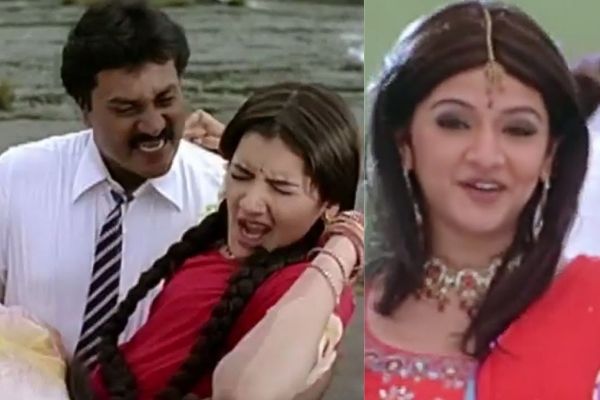
The film that most firmly established Aarti Agarwal as a significant presence in Telugu cinema was Indra in 2002, directed by S.S. Rajamouli and starring Chiranjeevi in the title role as a mass entertainer hero who takes on corrupt politicians and criminal networks. Aarti played Sneha Latha Reddy, one of the female leads in a film that became one of the biggest Telugu blockbusters of its era.
Indra was the highest-grossing Telugu film of 2002, and its dubbed Hindi version, released as Indra The Tiger, significantly expanded Aarti’s reach to non-Telugu speaking audiences across India. Being part of an S.S. Rajamouli directorial at a time when Rajamouli was building his reputation as one of Telugu cinema’s most commercially reliable directors, opposite a star of Chiranjeevi’s stature, placed her squarely at the centre of the industry’s commercial mainstream.
Nuvvu Leka Nenu Lenu and Mass Appeal
Nuvvu Leka Nenu Lenu, released on 14 January 2002, became one of the definitive Telugu romantic films of its era and gave Aarti her most cherished screen performance. She played Krishnaveni opposite Tarun’s Radha Krishna in a story of childhood friends whose love is complicated by family obligation and pride. The film was a blockbuster on release and has maintained a significant nostalgic standing among Telugu film audiences for over two decades.
Krishnaveni was the kind of role that makes an actress permanently beloved, playful, emotionally genuine, and entirely specific rather than a generic romantic heroine. The chemistry between Aarti and Tarun was widely praised, and the film’s songs became cultural touchstones for a generation of Telugu film viewers. It is the role she is most remembered for, and the one that perhaps best represents what she was capable of at the height of her powers.
Working with Telugu Cinema’s Biggest Stars
The years 2002 through 2005 represented the peak of Aarti Agarwal’s career in terms of the scale and profile of the projects she was associated with. She appeared in Bobby in 2002 alongside Mahesh Babu, in Nee Sneham with Uday Kiran, and in Allari Ramudu with Jr NTR.
In 2003 she appeared in Vasantham, a Telugu remake of Jyothika’s Tamil blockbuster Priyamana Thozhi, and in Veede, the Telugu remake of Jyothika’s Dhool, demonstrating both her commercial versatility and the industry’s confidence in her ability to carry films based on proven source material.
In 2004, Nenunnanu with Nagarjuna and Adavi Ramudu with Prabhas continued the pattern of casting her opposite Telugu cinema’s leading male stars. This was an extraordinary run of association with the genre’s biggest names, and it confirmed that she had established herself as one of the most in-demand heroines in Telugu cinema of that period.
Tamil Cinema and Cross-Industry Work
Winner and the Casting Change
Aarti’s attempt to extend her career into Tamil cinema came in 2003 with Winner, in which she was initially cast as the female lead. However, her unavailability during the second shooting schedule led to her replacement by Kiran Rathod, whose post-Gemini popularity made her an attractive alternative from the production’s perspective.
This experience of being replaced in a Tamil film was a disappointment, but it did not prevent her from continuing to pursue work across the languages. She subsequently appeared in Bambara Kannaley in 2005, which gave her a completed Tamil credit alongside the Telugu remake work she had already done with Vasantham and Veede.
The Jyothika Remakes and Their Significance
Two of Aarti Agarwal’s most significant films were Telugu remakes of Jyothika’s Tamil blockbusters, Vasantham in 2003 which was the remake of Priyamana Thozhi, and Veede in 2003 which was the remake of Dhool.
Jyothika was at the absolute peak of her Tamil film popularity in this period, and the films the industry chose to remake from her catalogue were commercially certain propositions. Being cast as the lead in both of these remakes was a significant statement of industry confidence in Aarti’s box office viability, and both films performed well enough to justify that confidence. The cross-language dimension of this work also reinforced her standing as one of the more versatile and commercially reliable actresses working in Telugu cinema during that period.
Career Decline and the Years of Struggle
The Difficult Turn After 2005
After the peak years of 2002 through 2005, Aarti Agarwal’s career began a decline that mirrored the experiences of many Telugu actresses who had been prominent in the commercial mainstream and then found themselves receiving fewer and smaller offers as the industry moved on to newer faces. In 2005, she had appeared in five films including the Tamil production Bambara Kannaley. Then, in 2006, she appeared in only one film, Andala Ramudu, a remake of the Tamil film Sundara Purushan. By 2007, no film offers came at all.
The transition from being the heroine of Indra and Nuvvu Leka Nenu Lenu to a period of professional silence in the space of three years was a profound personal and professional shock, and the industry’s speed in moving past her reflects a broader pattern in which South Indian cinema has historically been particularly unforgiving of actresses whose initial burst of popularity begins to fade.
Health Challenges and Depression
Alongside the professional decline, Aarti was battling serious personal health challenges in the middle years of her adult life. She developed obesity, a condition that was widely reported in entertainment media with a degree of insensitivity that said more about the industry’s attitudes toward women’s bodies than about any failing on her part.
The weight gain became both a health concern and a source of pressure in an industry where physical appearance is subject to constant and often cruel public scrutiny. She has been described by those who knew her during this period as someone who was battling depression, a condition that is entirely understandable given the combination of professional rejection and personal vulnerability she was navigating simultaneously.
The entertainment media’s coverage of this phase of her life frequently lacked the compassion that the situation warranted, and that failure of care was part of a broader industry culture that has since been widely criticised.
Return to Films and the Later Career
Aarti made a gradual return to film work from 2008 onwards, appearing in Gorintaku and Deepavali in 2008 and in Posani Gentleman, Taj Mahal, and Brahmalokam to Yamalokam Via Bhoolokam in 2010. These were smaller productions than the blockbusters she had appeared in during her peak years, but they represented a return to professional activity and a determination to continue working in the industry despite the difficulties of the preceding years. She also appeared in Oka Tupaki Moodu Pittalu in 2010 and in Operation IPS in 2013, and her final confirmed film Ranam 2 released on 5 June 2015, the day before her death. The return to work was a sign of resilience, and it was matched by efforts to address her health challenges through medical intervention that ultimately had tragic consequences.
Personal Life
The Reported Relationship and Its Consequences
In March 2005, a story appeared in The Hindu reporting that Aarti Agarwal had attempted suicide. The circumstances that led to this were reported across multiple sources as connected to the collapse of a romantic relationship with a co-star, with some reports specifically naming actor Tarun, her Nuvvu Leka Nenu Lenu co-star, as the person involved.
The police statement recorded at the time indicated that she had been disturbed by gossip linking her with a film actor. She was treated at Apollo Hospital in Jubilee Hills, Hyderabad, and discharged on the same day. Whatever the full truth of the private circumstances, the episode illuminated the toll that the combination of professional pressure, personal heartbreak, and the industry’s capacity for rumour and speculation was taking on a young woman who was still only twenty years old.
The 2006 Home Accident
In February 2006, Aarti suffered a serious accident when she fell while climbing the stairs of her Hyderabad apartment after returning from dinner. She managed to reach her apartment, where her father gave her painkillers, but the following morning her condition had deteriorated significantly and she was taken to hospital, eventually undergoing surgery for internal head injuries at a hospital in Banjara Hills.
She was at one point placed on ventilator support at Apollo Hospital in Jubilee Hills. The accident was an additional physical trauma layered on top of the mental health challenges she was already facing, and the combination of a declining career, personal relationship difficulties, a suicide attempt, and a serious home accident across a single twelve-month period represents an extraordinary accumulation of difficulty for any person to navigate.
Marriage and Divorce
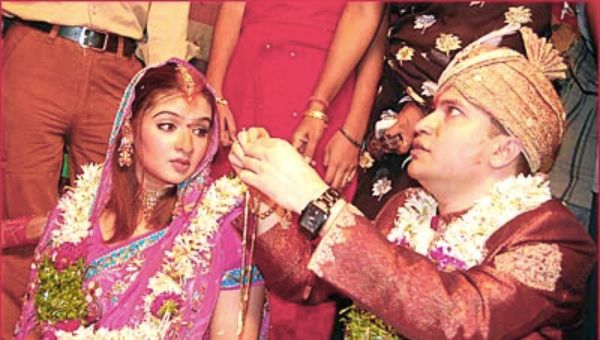
In November 2007, Aarti Agarwal married Ujjwal Kumar, described in various reports as a software engineer and NRI. The marriage was conducted in Secunderabad. Several accounts describe it as having been very short-lived, with the couple separating within weeks of the wedding before the formal divorce was finalised in 2009.
The marriage represented an attempt to build a personal life outside the pressures of the film industry, and its rapid dissolution added another layer of personal difficulty to an already challenging period. Aarti subsequently returned from the United States to India following the separation and continued to pursue her film career.
Relationship with Her Family
Throughout the most difficult periods of her adult life, Aarti maintained a close relationship with her family. Her father Shashank Agarwal was a constant presence in Hyderabad during her active career years, and multiple accounts from the time of her medical crises note him as the person who was with her and who took immediate action when she needed care.
Her younger sister, Aditi Agarwal, also joined the Telugu film industry, appearing in Allu Arjun’s Gangotri, making the Agarwal family the only family with two sisters with active careers in Tollywood. When Aarti returned to the United States in her final years, she was living with her parents in Egg Harbour Township, New Jersey, a detail that speaks to the importance of family in the last chapter of her life.
Struggle with Body Image and Industry Pressure
The entertainment industry’s treatment of Aarti Agarwal’s appearance during the years of her weight gain represents one of the more uncomfortable aspects of this biography to document honestly. Reports from the period describe her as having developed obesity and frame it primarily in terms of its effect on her career prospects rather than in terms of her health or wellbeing.
This framing reflects the industry’s attitudes toward women’s bodies in that era, attitudes that subjected actresses to a standard of physical scrutiny that their male counterparts almost never faced. Aarti’s decision to pursue liposuction surgery in April 2015 was reportedly motivated by a desire to return to the industry on terms it would accept, and she lost at least twenty-five kilograms through the procedure. The surgery’s complications cost her her life.
Death and Circumstances of Her Passing
The Liposuction Surgery and Its Aftermath
In late April 2015, Aarti Agarwal underwent liposuction surgery in the United States, where she had been living with her parents in Egg Harbor Township, New Jersey. The surgery resulted in significant weight loss, with reports indicating she lost at least twenty-five kilograms through the procedure. However, she continued to experience serious respiratory difficulties in the weeks that followed.
Despite the breathing problems persisting, she did not recover the respiratory stability that would have indicated a safe outcome from the surgery. Her manager described the situation in the days before her death as one of ongoing and serious health concern.
Passing on 6 June 2015
On 6 June 2015, Aarti Agarwal was pronounced dead on arrival at AtlantiCare Regional Medical Center in Atlantic City, New Jersey. She was thirty-one years old. The official cause of death was stated by her manager as cardiac arrest. The timing of her passing carried a particular poignancy that was noted widely across the Indian entertainment media. Ranam 2, her most recent film, had released in Telugu cinemas on 5 June 2015, the day before she died. She never knew how the film was received.
Industry and Public Response
The news of Aarti Agarwal’s death spread rapidly across social media and was reported across Telugu, Tamil, and Hindi entertainment media within hours. The response from the industry was one of genuine shock and sorrow, with many of her co-stars and contemporaries expressing grief publicly.
There was also, in the commentary that followed, a degree of honest reflection about the conditions the industry had created for actresses in Aarti’s position, the physical standards it had demanded, the speed with which it had discarded her when those standards were not maintained, and the human cost of a system that had celebrated her youth and beauty and then turned away from her when circumstances changed. Whether that reflection led to any lasting change in industry practice is a more complicated question, but the weight of it was genuinely felt in the immediate aftermath of her death.
Complete Filmography
Early Films: 2001 to 2003
Aarti Agarwal’s film debut was Paagalpan in 2001, a Hindi production in which she played Roma Pinto. The same year she appeared in Nuvvu Naaku Nachav in Telugu as Nandini alongside Venkatesh, followed by Nuvvu Leka Nenu Lenu in 2002 as Krishnaveni alongside Tarun, a blockbuster that became one of the defining Telugu romantic films of its decade.
Also in 2002 she appeared in Allari Ramudu alongside Jr NTR, Indra as Sneha Latha Reddy opposite Chiranjeevi, Nee Sneham with Uday Kiran, and Bobby alongside Mahesh Babu.
In 2003 she appeared in Palanati Brahmanaidu, Vasantham as Nandini in the Telugu remake of Priyamana Thozhi, and Veede in the Telugu remake of Dhool, along with an initial casting in the Tamil film Winner from which she was subsequently replaced.
Peak and Transition: 2004 to 2007
In 2004 she appeared in Nenunnanu as Sruthi opposite Nagarjuna and in Adavi Ramudu as Madhulatha opposite Prabhas, along with cameo appearances in multiple other productions.
In 2005 she appeared in Sankranti, Soggadu, Chatrapathi in a special appearance opposite Prabhas, and the Tamil film Bambara Kannaley, making it her most prolific year in terms of film count.
In 2006, she appeared in Andala Ramudu as Radha, and in 2007, she received no film offers, a painful professional silence after years of consistent work with the industry’s leading stars.
Later Career: 2008 to 2015
After her return to films, Aarti appeared in Gorintaku in 2008, Deepavali in 2008, Posani Gentleman in 2009, Brahmalokam to Yamalokam Via Bhoolokam in 2010 as Rambha, Taj Mahal in 2010 as Maisamma, and Oka Tupaki Moodu Pittalu in 2010.
Further credits include Operation IPS in 2013, Operation Green Hunt in 2015 as Neelima, and her final film Ranam 2 which released on 5 June 2015, the day before her death. The posthumous release Aame Evaru in 2016 completed her documented screen credits.
Her total filmography spanned approximately twenty-five to twenty-eight productions across Telugu, Tamil, and Hindi cinema over fourteen years of professional work.
Legacy and Remembrance
What She Represented in Telugu Cinema
Aarti Agarwal represented something specific in the Telugu film industry of the early 2000s. She was one of the very few non-Telugu speaking actresses, raised not even in India but in New Jersey, who managed to build a career substantial enough to work with virtually every major Telugu male star of her generation.
That achievement required a combination of genuine screen magnetism, professional discipline, and the personal courage to relocate entirely from one country and culture to another at a young age with no guarantee of success. The success she achieved in that context deserves to be taken seriously on its own terms, independent of the decline that followed.
The Conversation Her Story Started
Aarti’s death prompted a wider conversation in Indian entertainment media and among film audiences about the conditions under which young actresses operate in Telugu and Hindi cinema. The specific circumstances of her final years, the weight gain and the public commentary it attracted, the professional rejection that followed, and the surgical intervention that preceded her death, raised uncomfortable questions about an industry that had celebrated her when she was young and conventionally beautiful and then subjected her to criticism and indifference when her body changed.
That conversation was incomplete at the time of her death and remains incomplete today, but her story contributed to it in a way that has had at least some influence on how these subjects are discussed.
Her Enduring Screen Presence
For the fans who remember her most warmly, the legacy of Aarti Agarwal is not primarily about the tragedy of her final years or the circumstances of her death. It is about the joy of watching Krishnaveni and Radha Krishna in Nuvvu Leka Nenu Lenu, about the energy she brought to her scenes in Indra, about the warmth and naturalness that made her so watchable in film after film during the years when the industry was giving her the material she deserved.
She was thirty-one years old when she died and had been in the industry for fourteen years. The films she made in her peak years are still watched, still quoted, and still remembered by a generation of Telugu film viewers for whom Aarti Agarwal was as much a part of their cinema-going youth as any of the male stars she appeared alongside.
Conclusion
The Aarti Agarwal biography is ultimately the story of a young woman who achieved something remarkable, building a major film career in a language she did not grow up speaking, in a country she had not grown up in, and doing so on the strength of pure talent and determination. She appeared in films that have outlasted her by a decade and will continue to be watched for decades more. She worked with the greatest names in Telugu cinema during her peak years and gave performances that audiences still remember with genuine fondness. She was also a young woman who was failed by an industry that celebrated her when it was convenient and looked away when she needed support.
Aarti Agarwal deserves to be remembered whole, not only as the bright talent who lit up Nuvvu Leka Nenu Lenu and Indra but as a complex human being who navigated extraordinary professional success and profound personal difficulty with what courage she had available to her. She died at thirty-one with a career still incomplete. The films she made remain. They are, in the most practical sense, her legacy, and they are worth watching with the full knowledge of the person who made them.