
Tricia McLaughlin is an American government official, political strategist, and communications leader who rose to national prominence as the Assistant Secretary for Public Affairs at the United States Department of Homeland Security (DHS) during the second administration of President Donald J. Trump. Known for her unapologetic defence of hard-line immigration enforcement policies and her combative media presence, McLaughlin has become a central figure in the national debate over immigration, public communications, agency credibility, and the role of federal law enforcement in America.
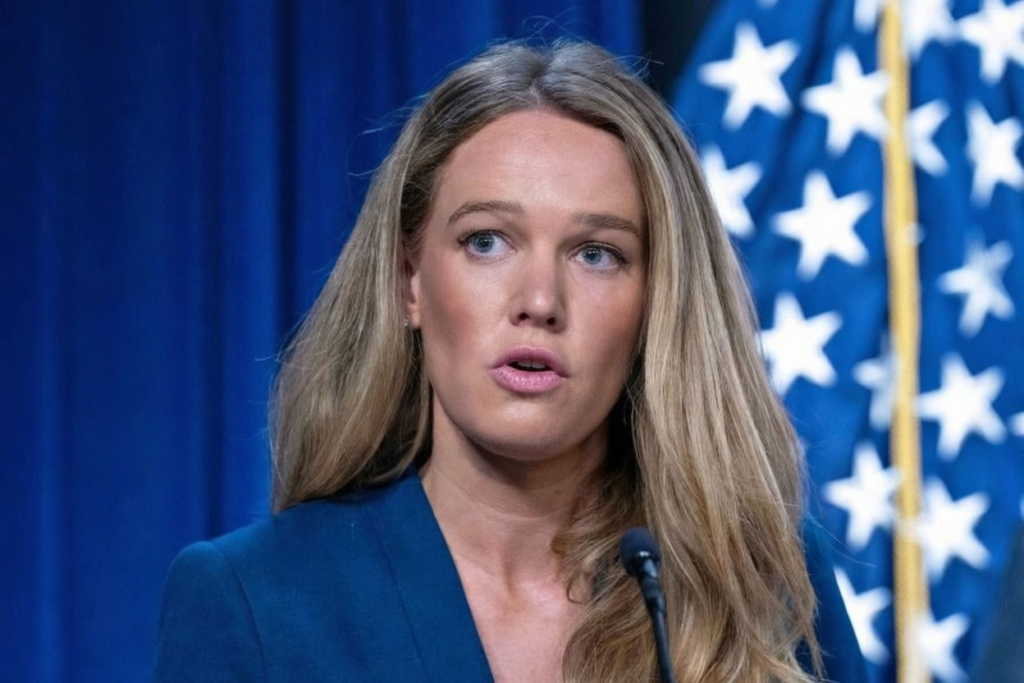
Her career blends political strategy, campaign leadership, and federal agency communications, marked by both strategic influence and widespread controversy. Recent developments in early 2026 saw her announce her resignation from DHS amid intense public scrutiny of immigration enforcement actions and political pressure on the administration’s communications strategy.
Early Life and Education
Tricia McLaughlin grew up in Montgomery, Ohio, a suburb of Cincinnati. Details about her family and early childhood are sparse in public records, but her formative years were rooted in midwestern American culture and political engagement. She graduated from Sycamore High School, where she first developed an interest in public affairs and civic discourse.
McLaughlin went on to attend the University of Maryland, College Park, where she studied political science and government, laying the academic foundation for a career in public communication and political strategy.
Early Career in Political Strategy and Government
Campaign and State Politics
After completing her education, McLaughlin cut her teeth in political operations and communications. She served as Political Communications Director for Ohio Governor Mike DeWine, shaping messaging and media strategy during his successful 2022 re-election campaign. This role was significant in elevating her profile as a skilled communicator in high-stakes political environments.
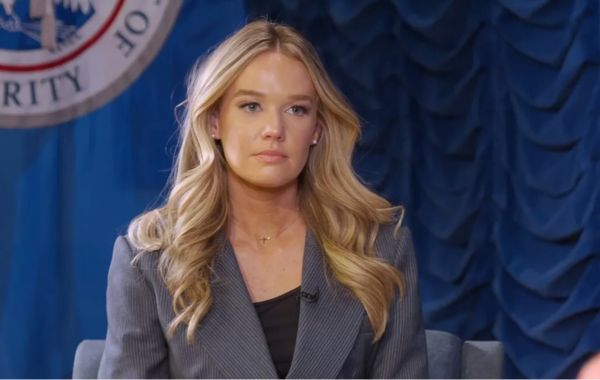
Following her work in state politics, McLaughlin became a Senior Advisor and Communications Lead for Vivek Ramaswamy’s 2024 Presidential Campaign, a position that further showcased her ability to craft and defend tough messaging on national stages.
Tricia McLaughlin joined the campaign in 2023 as one of the first team members and helped build its message from the beginning. Her strategy focused on gaining free media coverage, using data to target the right voters, and preparing strong debate performances. The goal was to present Ramaswamy as a new conservative outsider in a crowded Republican race.
Core messaging approach
McLaughlin shaped Ramaswamy’s message around his background as a biotech entrepreneur and political outsider. She linked his image to key Republican issues, such as national security, economic reform, and healthcare reform. She wrote speeches, prepared campaign materials, and handled media responses. Her approach appealed to traditional Republican voters while also attracting younger conservatives with clear, bold ideas. This strategy helped him gain enough support in polls to earn a centre podium spot at the first primary debate.
Media and advertising shifts
One major decision was to stop spending money on television ads before the Iowa and New Hampshire primaries. Instead, the campaign focused on more targeted outreach. This included direct mail, text messages, phone calls, door-to-door canvassing, and digital ads targeted to specific voters. She explained that this data-driven shift would better utilise campaign funds. The team relied on media coverage from events and debates to reach a wider audience without heavy TV spending. The goal was to compete efficiently in a very expensive advertising environment and stand apart from rivals who relied on traditional television ads.
Debate and momentum building
McLaughlin encouraged Ramaswamy to take an aggressive approach during debates, especially the third one, to attract attention and build momentum ahead of the January primaries. What began as a small operation working out of a basement office grew quickly. As her role expanded into senior leadership, the campaign moved from its early launch stage to gaining national attention.
First Trump Administration
Tricia McLaughlin’s first stint in the federal government came during the earlier administration of President Donald Trump. She served in the U.S. State Department as Chief of Staff for Nuclear Arms Control, where she participated in key negotiations and communications on U.S. strategic policy. She also held roles at the U.S. Treasury Department as Acting Deputy Assistant Secretary, focused on economic sanctions, positions that demanded deep policy knowledge and strategic acumen.
These early roles helped cement McLaughlin’s reputation as a versatile communicator capable of navigating complex governmental issues.
Rise to National Prominence – DHS Spokesperson
In 2025, with President Trump re-elected to a second term, McLaughlin was appointed Assistant Secretary for Public Affairs at the U.S. Department of Homeland Security. In this role, she became the chief communications strategist and spokesperson for one of the most critical and politically charged agencies in the federal government.
Role and Responsibilities
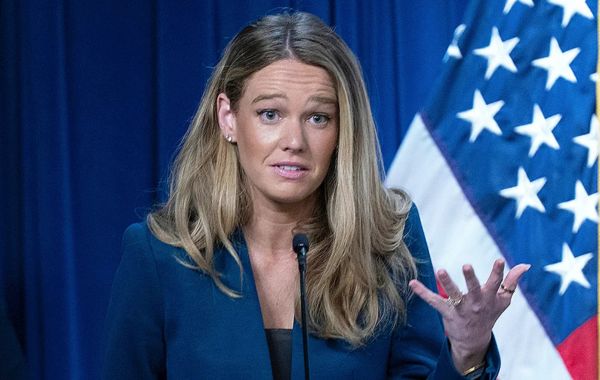
As DHS’s principal communications official, Tricia McLaughlin oversaw the agency’s entire public outreach strategy, including media relations, crisis communications, digital engagement, and messaging coordination across Immigration and Customs Enforcement (ICE), Customs and Border Protection (CBP), and other agency components. She advised DHS Secretary Kristi Noem and served as the public face of controversial policies, particularly immigration enforcement.
McLaughlin was known for her frequent television appearances on major news networks, her prolific social media engagement (especially on X, formerly Twitter), and her forceful defence of the administration’s immigration agenda. “Media is so much of the battle… so much of the debate is a PR war,” she told reporters, emphasising the central role of communications in policy battles.
Controversies and Public Backlash
Immigration Enforcement and Fatal Incidents
Under McLaughlin’s communications leadership, DHS pushed a nationwide crackdown on undocumented immigration, including large federal deployments in cities like Minneapolis. The operations escalated sharply after federal immigration officers fatally shot two U.S. citizens, Renée Good and Alex Pretti, in Minneapolis in early 2026, triggering significant public outrage and national debate.
McLaughlin’s initial public statements labelled both individuals as violent threats and, in one case, described Good’s actions as “domestic terrorism.” Such characterisations were later challenged by evidence and judicial scrutiny, contributing to criticism that DHS messaging under McLaughlin had prioritised political defensiveness over accuracy.
These incidents significantly damaged public trust in immigration enforcement and intensified calls from lawmakers and civil rights groups for accountability and reform.
Conflict of Interest Allegations
In addition to policy controversies, Tricia McLaughlin faced scrutiny over potential conflicts of interest. Leaked documents suggested that DHS paid more than $220 million to an advertising campaign in which a firm run by her husband, Benjamin Yoho, was involved, a development cited in political discussions about ethics and transparency.
Resignation and Recent Developments
In February 2026, after just over a year as DHS’s top communications official, Tricia McLaughlin announced her resignation. The resignations come amid intense political backlash over immigration enforcement strategy, public trust challenges following the Minneapolis shootings, and increasing calls within government and media for a strategic shift in DHS communications.
Details of Departure
Although McLaughlin had planned to leave her role in December 2025, she postponed her departure to help the administration manage the fallout from the high-profile fatal shootings. Ultimately, she confirmed she would resign from her role in the coming week.
In her own statement, McLaughlin expressed pride in her work and reaffirmed her commitment to the administration’s goals, even as she exited the role.
Leadership Transition
Following her departure, DHS has begun reshaping its communications leadership. McLaughlin’s deputy, Lauren Bis, is set to be promoted to Assistant Secretary of Public Affairs, and Katie Zacharia, a commentator and former adviser to Richard Grenell, is joining as a senior communications officer to help guide the department’s next phase of public engagement.
Public Perception and Legacy
Tricia McLaughlin’s tenure at DHS was one of the most polarised in recent memory for a communications official. To supporters of aggressive immigration enforcement, she was a powerful amplifier of national security messaging and an effective media strategist. To critics, however, her combative style and controversial statements eroded trust in government institutions and contributed to the politicisation of federal agencies.
Her legacy will likely be debated in public policy circles, political communications forums, and legal analyses for years to come.
Personal Life
Tricia McLaughlin is married to Benjamin Yoho, a communications executive whose firm was involved in the DHS advertising contract. Her personal social media presence often reflects her political perspectives and staunch defence of her professional work.
Conclusion
From middle-class Ohio beginnings to the highest levels of federal communication strategy, Tricia McLaughlin’s career reflects the shifting landscape of American political discourse in the 21st century. She remains a compelling, influential, and divisive figure whose impact on public policy and government messaging continues to shape national debates—particularly on immigration, media engagement, and the future of federal public affairs strategy.
Recent News Highlights (Feb 2026)
Latest developments regarding Tricia McLaughlin’s departure from DHS:
- Top DHS spokesperson to exit role amid outrage over immigration raids — public backlash over fatal shootings and policy enforcement cited as key context for her exit.
- DHS spokeswoman steps down amid shrinking public support for Trump’s deportation campaign.
- Leadership transition at DHS public affairs: Lauren Bis and Katie Zacharia to assume strategic roles post-McLaughlin.