
Navjot Randhawa is an Indian actress, theatre artist, and playwright whose career sits at the serious, festival-oriented end of Indian independent cinema. She is best known internationally for her lead role as Sitara in the 2020 Indian horror film Kriya, directed by Sidharth Srinivasan and premiered at the Fantasia International Film Festival in Montreal.
Her work has taken her from the Mumbai stage to the Berlin International Film Festival, placing her among Indian performers whose work travels the world festival circuit with consistent distinction.

Her film debut in Kabir Chowdhry’s Mehsampur won the Grand Jury Prize at MAMI 2018, the Mumbai International Film Festival. Her second feature, The Shepherdess and the Seven Songs, premiered in the prestigious Encounters section at Berlinale 2020 and later received a US theatrical release at MoMA in New York in 2022. Before her film career began, she was an established presence in Mumbai theatre and a playwright whose work had premiered in France and toured Hungary.
| Full Name | Navjot Randhawa |
| Nationality | Indian |
| Base | Mumbai, Maharashtra, India |
| Profession | Actress, Theatre Artist, Playwright |
| Years Active | 2016 to present (film); active in theatre prior to 2016) |
| Film Debut | Mehsampur (2016, directed by Kabir Chowdhry) |
| Debut Award | Grand Jury Prize, MAMI 2018 (Mumbai International Film Festival), for Mehsampur |
| Second Film | The Shepherdess and the Seven Songs / Laila Aur Satt Geet (2020), as Laila |
| Berlinale Selection | Encounters Section, Berlin International Film Festival 2020 |
| Third Film | Kriya (2020), as Sitara, directed by Sidharth Srinivasan |
| Kriya Festival Premiere | Fantasia International Film Festival, Montreal, 2020 |
| US MoMA Release | The Shepherdess and the Seven Songs, MoMA New York, January 2022 |
| Theatre Debut | Death of a Salesman, directed by Alyque Padamsee, Mumbai |
| Plays Written | 3 plays total: 2 in Punjabi, 1 co-written in English and French |
| Co-Playwright | Everything She Wants: Amrita and Boris, co-written with Jim Sarbh |
| Theatre Residency | Footsbarn Theatre, France (for Everything She Wants: Amrita and Boris) |
| International Tour | PEN Festival, Hungary, 2017 (Everything She Wants: Amrita and Boris) |
| Also Known For | The Last Act (credited on IMDb) |
| Distributor (Shepherdess) | Deaf Crocodile Films and Gratitude Films (US); Grasshopper Film (digital) |
| Marital Status | Not publicly disclosed |
| Known For | Kriya (2020), The Shepherdess and the Seven Songs (2020), Mehsampur (2016) |
Early Life and Background
Origins and Background
Navjot Randhawa’s personal background, including her date of birth, birthplace, and family details, has not been made public across any verified source. She is known professionally for her film and theatre work rather than for personal disclosure, and she has maintained consistent privacy about her private life throughout her career. Her name suggests Punjabi heritage, which is consistent with her writing two of her three plays in Punjabi.
What is confirmed from verified sources is that she has been based in Mumbai and was active in the city’s theatre scene before her film career began. Her debut stage role in Arthur Miller’s Death of a Salesman, directed by the legendary Alyque Padamsee, suggests she was part of Mumbai’s serious English-language theatre community early in her professional life. That community, centred around practitioners like Padamsee, has always demanded rigorous preparation and genuine theatrical commitment from its participants.
Education and Training
Navjot’s formal educational background has not been publicly documented. Her engagement with theatre at the level of Alyque Padamsee’s productions, her ability to write plays in both Punjabi and English and French, and her participation in an international residency at Footsbarn Theatre in France all suggest a serious and well-rounded intellectual formation. Whether that formation came through a formal drama school, a university programme, or self-directed study is not on the public record.
Theatre Career in Mumbai
Debut with Alyque Padamsee’s Death of a Salesman
Navjot Randhawa made her acting debut on the Mumbai stage in a production of Arthur Miller’s Death of a Salesman directed by Alyque Padamsee, one of the most significant figures in the history of Indian English-language theatre. Padamsee, who passed away in 2018, was the director who staged landmark Indian productions of Evita, Jesus Christ Superstar, and countless other major works across a career spanning decades. Being cast in any of his productions represented a meaningful entry point into the serious theatre world.
Death of a Salesman is one of the most demanding plays in the American dramatic canon, and appearing in a Padamsee-directed version of it was not a casual debut. The role gave Navjot a rigorous theatrical foundation that would later serve her across three international film festival selections.
Playwriting: Three Plays Across Two Languages
Alongside her acting work in theatre, Navjot Randhawa wrote three plays, two in Punjabi and one in English and French. The Punjabi plays reflect her cultural roots and her engagement with a language that has a rich but underrepresented theatrical tradition within Indian performing arts. The bilingual English-French play demonstrates a linguistic versatility and international ambition that extends beyond the boundaries of the Mumbai theatre scene.
Everything She Wants: Amrita and Boris
The most significant of her playwriting credits is Everything She Wants: Amrita and Boris, co-written with actor Jim Sarbh. Jim Sarbh is a well-regarded Mumbai theatre and film personality known for his work in Neerja, Padmaavat, and Made in Heaven, and his collaboration with Navjot on the play reflects a mutual professional respect and shared creative ambition. The play took shape during a residency at Footsbarn Theatre, an internationally respected experimental theatre company based in France that has hosted artists from around the world.
The play premiered at Footsbarn in France and subsequently travelled to Hungary as part of the PEN Festival in 2017. PEN International is one of the world’s oldest and most prestigious organisations for writers, and having a play travel to its festival is a significant marker of creative credibility. The international journey of Everything She Wants confirmed Navjot Randhawa as a playwright operating at a genuinely global level before she had made a single film.
Film Career and Debut in Mehsampur
Mehsampur (2016): An Award-Winning Experimental Debut
Navjot Randhawa made her film debut as the lead actress in Mehsampur, a 2016 experimental mockumentary directed by Kabir Chowdhry. The film is centred on the story of Amar Singh Chamkila, the celebrated and controversial Punjabi folk-singing duo, and an eccentric filmmaker named Devrath who arrives in Punjab to make a documentary about them. The film operates in an unusual hybrid space between fiction and documentary, reflecting the experimental aesthetic that Kabir Chowdhry brought to the project.
Mehsampur won the Grand Jury Prize at MAMI 2018, the Mumbai International Film Festival, one of India’s most respected film platforms. The award was a significant recognition for both the film and for Navjot, whose lead performance was central to a project that sat well outside the mainstream of Indian commercial cinema. The film also screened at the 9th Bagri Foundation London Indian Film Festival, which ran across fifteen cinemas in London, Birmingham, and Manchester and is the largest South Asian film festival in Europe.
The Shepherdess and the Seven Songs: Berlinale 2020
The Film and Its Feminist Folklore Framework
Navjot Randhawa’s second feature film was The Shepherdess and the Seven Songs, also known by its Hindi title Laila Aur Satt Geet. Directed by Pushpendra Singh, the film is set in the disputed Jammu and Kashmir region and follows a young bride, Laila, who marries into a tribe of nomadic Bakarwal herders. The narrative is structured around seven folk songs that illuminate the protagonist’s inner world, combining folklore, feminism, and something close to film noir in a uniquely distinctive register.
The film is an adaptation of a short story by Vijayadan Detha, the acclaimed Rajasthani author known for bringing modern and provocative sensibilities to traditional folk tales. It is Pushpendra Singh’s fourth feature and the second film adapting Detha’s work. Critics described it as a penetrating study of toxic patriarchy and female identity, set against the breathtaking visual landscape of Jammu and Kashmir.
Berlinale 2020 and International Festival Journey
The Shepherdess and the Seven Songs had its world premiere at the Berlin International Film Festival in 2020, where it competed in the Encounters section, a competitive strand dedicated to formally innovative and boundary-pushing cinema. Selection for Berlinale Encounters is a significant honour in international independent film, and the film’s inclusion placed Navjot’s work at the very top tier of global festival cinema. The film subsequently won awards at the Hong Kong and Jeonju film festivals.
The film received a US theatrical release in January 2022 at the Museum of Modern Art in New York, courtesy of distributors Deaf Crocodile Films and Gratitude Films, with digital partner Grasshopper Film. Running for a week at MoMA before moving to a spring 2022 VOD release, the distribution marked a meaningful breakthrough for an Indian independent film in the American art-house market. For Navjot, appearing in a film shown at MoMA placed her work in genuinely rarefied company.
Critical Reception
Critical reception for The Shepherdess and the Seven Songs was very positive. Reviewers praised Pushpendra Singh’s meticulously crafted direction and the film’s gripping character study of a woman plotting her escape from tradition and patriarchy. Navjot’s performance as Laila drew specific praise for its restraint and emotional authenticity within a narrative that demanded both physical presence and deep inner stillness.
Kriya (2020): Horror at Fantasia
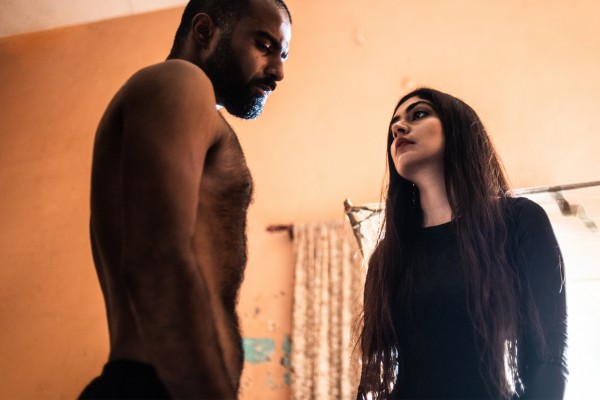
Navjot Randhawa’s third feature film is Kriya, a 2020 Indian horror film written and directed by Sidharth Srinivasan. She plays Sitara, a young woman who meets a DJ named Neel on a nightclub dance floor and invites him home, where he finds himself drawn into a deeply unsettling encounter with her dying father and a family performing rituals around his impending death. The narrative has been compared to Jordan Peele’s Get Out in its structure of a well-mannered outsider at the mercy of a disturbing family dynamic.
The film opens with a disclaimer assuring viewers that its events are fictional. Its tone combines genuine horror elements with intriguing jabs at patriarchal values, and Aarzoo Ali’s production design was widely noted for its detailed, evocative visual construction. Navjot’s character, Sitara, is the gateway through which the horror enters the story, and the role required a specific kind of controlled menace that she brought to the part with evident commitment.
Premiere at Fantasia International Film Festival
Kriya had its world premiere at the Fantasia International Film Festival in Montreal in 2020. Fantasia is one of the world’s leading genre film festivals, specialising in horror, science fiction, and fantasy, and having an Indian horror film selected for its programme is meaningful industry recognition. Screen Daily, which covered the premiere, described the film as a very polished production that belies its low-budget and brief shooting schedule.
Critical Assessment
Critical reviews for Kriya were mixed. Screen Daily noted the film’s polished production values and its intriguing engagement with patriarchal themes but pointed to weaknesses in dialogue and flat lead male performance as factors that prevented the film from fully catching fire. The review suggested there was enough in the film to interest genre fans and festival audiences, a verdict that proved accurate given the film’s continued circulation on the festival and genre circuit following its Fantasia premiere.
Acting Style and Screen Persona
A Festival Film Sensibility
Navjot Randhawa’s career is defined by a consistent orientation toward serious, artistically ambitious cinema rather than the commercial mainstream. All three of her feature films premiered at major international film festivals, which is an extraordinary record for any actress at any stage of their career, let alone within the first four years of entering the film industry. That record reflects both the quality of the projects she has chosen and a directorial trust that speaks to her abilities as a performer.
Physical Presence and Emotional Restraint
Across her three films, Navjot has demonstrated a screen presence built on physical authority and emotional restraint rather than expressive display. Her Laila in The Shepherdess and the Seven Songs required a performance that communicated inner life across a narrative framework structured around folk songs, a highly specific technical demand. Her Sitara in Kriya required the controlled menace of a character who functions as both seducer and threat.
Theatre Roots and the Craft Foundation
Her theatre background, which includes the rigorous training of Alyque Padamsee’s productions and the collaborative intelligence required to co-write a play with Jim Sarbh, gives her on-screen work a disciplined foundation that self-taught performers rarely possess. The ability to sit still on camera, to communicate without explaining, and to inhabit a character’s interior world silently is a skill that theatre demands before film can reward it. Navjot appears to have brought exactly those skills from the stage to the screen.
Personal Life
Privacy and Public Profile
Navjot Randhawa maintains a very private personal life. Her date of birth, birthplace, family background, and relationship status are not confirmed through any verified public source. This is a deliberate choice consistent with a career that has always been defined by the work rather than by personal publicity. She has given no public interviews revealing significant personal details, and her social media presence, while active, focuses on professional content.
Linguistic Identity and Cultural Roots
Her playwriting career, which includes two plays written in Punjabi, reflects a cultural identity grounded in Punjabi heritage that she has expressed creatively rather than publicly. The choice to write in Punjabi, a language that is underrepresented in Indian theatrical writing in English-language media contexts, was a deliberate cultural and artistic decision. It places her in a tradition of writers who use their heritage language as a creative medium rather than defaulting to English or Hindi for reasons of accessibility.
Creative Collaborations and Professional Relationships
Her documented professional relationships are with some of the most respected names in Indian independent culture. Kabir Chowdhry, who directed her debut, is a filmmaker known for his experimental sensibility. Pushpendra Singh, who directed The Shepherdess, is regarded as one of Indian art cinema’s most distinctive contemporary voices. Jim Sarbh, her co-playwright, is among Mumbai’s most respected theatre and film talents. These associations reflect the level at which she operates and the seriousness with which she approaches her collaborations.
Awards and Recognition
Grand Jury Prize at MAMI 2018
The most formally documented award in Navjot Randhawa’s career is the Grand Jury Prize at MAMI 2018, won by her debut film, Mehsampur. The Mumbai International Film Festival is one of India’s most respected film platforms, and the Grand Jury Prize is its most significant competitive honour. Winning at MAMI placed Navjot’s debut work at the top of the recognition hierarchy for Indian independent cinema within two years of her entering the industry.
Berlinale Encounters and Global Festival Presence
The selection of The Shepherdess and the Seven Songs for the Encounters section at Berlinale 2020 represents a form of international recognition that very few Indian actresses have achieved in the early years of their film careers. The film subsequently won at Hong Kong and Jeonju film festivals, adding to a competitive awards record that extended across multiple continents. For Navjot, each of these recognitions was as a lead actress in the film, making them personal as much as collective achievements.
PEN Festival and the Literary Dimension
The tour of Everything She Wants: Amrita and Boris to the PEN Festival in Hungary in 2017 represents a form of recognition in the literary and dramatic arts that sits entirely separately from the film industry’s award structures. PEN International is an organisation with over a century of history advocating for writers and literary freedom, and having work presented within its festival framework is a genuine mark of creative standing. Navjot Randhawa is one of the very few Indian screen actresses who has also received recognition from a literary organisation of that calibre.
Complete Filmography
Feature Films
Navjot Randhawa’s confirmed feature film credits are Mehsampur (2016, directed by Kabir Chowdhry, Grand Jury Prize MAMI 2018), The Shepherdess and the Seven Songs also known as Laila Aur Satt Geet (2020, directed by Pushpendra Singh, Berlinale Encounters premiere, Hong Kong and Jeonju film festival awards, US theatrical release at MoMA January 2022 via Deaf Crocodile Films and Gratitude Films), and Kriya (2020, directed by Sidharth Srinivasan, Fantasia International Film Festival premiere, as Sitara). She is also credited on IMDb for The Last Act.
Theatre and Playwriting Credits
Her theatre acting debut was in Death of a Salesman, directed by Alyque Padamsee, in Mumbai. Her playwriting credits include two plays written in Punjabi and one bilingual play in English and French, Everything She Wants: Amrita and Boris, co-written with Jim Sarbh, developed at Footsbarn Theatre France, premiering there and touring Hungary at PEN Festival 2017. She has been active in the Mumbai theatre scene throughout her professional life.
Impact on Indian Independent Cinema
A Rare Festival Film Triple
The achievement of having three consecutive feature film lead roles each premiere at a major international film festival is exceptionally rare in Indian cinema regardless of gender or generation. Navjot Randhawa achieved this within four years of her film debut. Mehsampur at MAMI, The Shepherdess at Berlinale, and Kriya at Fantasia represent three entirely different genres, directors, and cinematic sensibilities, demonstrating a range that purely commercial casting would not have made possible.
Bridging Theatre and Film
Navjot Randhawa represents a specific and undervalued type of Indian screen performer: one who brought genuine theatrical craft into film rather than entering film from modelling, reality television, or commercial industry networks. Her career demonstrates that the most intellectually demanding and internationally recognised Indian independent films actively seek performers with theatre backgrounds and the specific quality of stillness and interior depth that theatre training produces. Her career is, in that respect, a case study in what serious theatrical preparation can do for a film career.
Recent Updates and Current Status in 2026
As of March 2026, Navjot Randhawa’s three confirmed feature films continue to circulate on the international festival and streaming circuit. The Shepherdess and the Seven Songs remains available on VOD through Deaf Crocodile Films in the United States and continues to be screened at universities and cultural institutions worldwide. No new film projects have been publicly announced or confirmed for 2025 or 2026 as of this writing, though given the pace and quality of her previous work, further projects are expected.
Her presence in the Mumbai theatre world and her playwriting practice are ongoing, though specific current projects in those areas have not been publicly documented. She remains one of the most internationally recognised Indian independent film actresses of her generation, defined by the exceptional quality of the projects she has chosen rather than by commercial volume or mainstream visibility.
Conclusion
The Navjot Randhawa biography is the story of a performer who has never compromised on the quality of the material she puts her name to. She made her stage debut under one of Mumbai theatre’s greatest directors, co-wrote a play that toured internationally, debuted on film in a project that won at MAMI, returned to the screen with a film that competed at Berlinale, and then appeared in a horror film that premiered at Fantasia.
She has done all of this without a single mainstream commercial film credit, without a Bollywood debut, without the marketing machinery that defines the careers of most Indian screen actresses. What she has instead is a body of work that has been shown at some of the most respected film and cultural institutions in the world: MoMA New York, the Berlinale, the Fantasia International Film Festival, the PEN Festival Hungary, and Footsbarn Theatre France.
At whatever stage of her career she currently occupies, Navjot Randhawa has already demonstrated something rare and worth recording: that an Indian actress working entirely within serious independent cinema can build a career of genuine international distinction on the strength of craft, collaboration, and uncompromising artistic choice alone.